. Ultra-realistic healthcare photography, bright clean lighting, crisp focus, premium clinical design, trustworthy dental education style, balanced spacing, cohesive blue, white, teal, and yellow colour palette, magazine-quality website infographic. Do not add instructions, labels, numbers, medical claims, or any text other than the specified title and branding. No raw garlic touching the gums, no undiluted essential oil application, no ice directly on the skin, no blood, no pills, no exaggerated swelling, no cartoon style, and no distorted hands or objects.](https://tbeby.com/storage/2026/05/Natural-Remedies-for-Toothache.webp)

Some natural remedies for toothache may provide temporary relief from mild pain, swelling, or irritation. However, home treatments cannot repair cavities, treat dental infections, or fix damaged teeth.
Toothache can range from mild sensitivity to severe, persistent pain that affects eating, sleeping, and everyday activities. Because tooth pain is usually a symptom rather than a condition itself, identifying the underlying cause is important. Common causes include tooth decay, gum inflammation, cracked teeth, and dental infections.
What Are the Best Natural Remedies for Toothache?
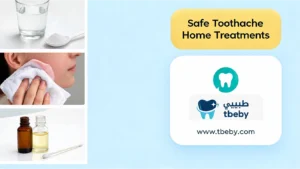
Different home treatments may help with specific symptoms, such as gum irritation, swelling, or temporary pain. However, their effects are generally short-term, and they should not replace professional dental treatment.
1. Salt Water Rinse for Toothache
A warm salt water rinse is one of the simplest natural remedies for toothache and may help soothe irritated gums while reducing bacteria and debris in the mouth.
Salt water can also help loosen food particles trapped between the teeth, which may reduce additional irritation.
How to use it
- Dissolve about 1 teaspoon of salt in a cup of warm water.
- Swish the solution around your mouth for approximately 30 seconds.
- Spit it out rather than swallowing it.
- Repeat several times a day when needed.
Salt water may provide temporary relief, but it does not treat the underlying cause of persistent tooth pain.
2. Hydrogen Peroxide Rinse for Toothache
A properly diluted hydrogen peroxide rinse may help reduce bacteria associated with certain gum problems. However, concentrated hydrogen peroxide can irritate or damage the soft tissues inside the mouth.
How to use it safely
- Use only a 3% hydrogen peroxide solution.
- Dilute it with an equal amount of water.
- Gently swish the diluted solution around your mouth.
- Spit it out completely.
- Never swallow hydrogen peroxide.
It should not be used excessively or as a replacement for regular oral hygiene or professional dental treatment.
3. Cold Compress for Toothache
A cold compress may help when tooth pain is accompanied by swelling or follows an injury. Cold temperatures can temporarily reduce blood flow to the area, helping decrease swelling and numb discomfort.
How to use it
- Wrap an ice pack or several ice cubes in a clean towel.
- Place it against the outside of your cheek near the painful tooth.
- Keep it in place for about 10–15 minutes.
- Take a break before repeating the application.
Never place ice directly against your skin or gums.
4. Peppermint Tea Bags for Toothache
A cooled peppermint tea bag may provide a soothing and cooling sensation when the gums are irritated. The menthol naturally present in peppermint may temporarily reduce the perception of discomfort.
How to use it
After brewing the tea, allow the used tea bag to cool to a comfortable temperature. Place it gently against the affected area for several minutes.
Alternatively, you can place the tea bag in the refrigerator for a short time before using it. Avoid applying an extremely cold or frozen tea bag directly to sensitive oral tissues.
5. Garlic as a Natural Remedy for Toothache
Garlic contains compounds such as allicin that have been studied for their antimicrobial properties. It has also been traditionally used as a home remedy for various types of discomfort.
However, placing raw garlic directly against a tooth or gum can irritate oral tissues and may even cause a chemical burn if it remains in contact with them for too long.
For this reason, it is safer to include garlic as part of your normal diet rather than applying raw garlic directly to a painful tooth. Garlic should not replace professional dental treatment.
6. Vanilla Extract for Toothache Relief
Vanilla extract is sometimes used as a traditional home treatment for tooth discomfort. Some commercial vanilla extracts contain alcohol, which may have a mild antiseptic or numbing effect.
However, there is limited scientific evidence that vanilla extract can effectively treat toothache.
If you choose to use it, apply only a very small amount and avoid placing large quantities directly on the gums. Persistent tooth pain still requires proper dental evaluation.
7. Clove as a Natural Remedy for Toothache
Clove has a long history of traditional use for dental pain. Clove oil contains eugenol, a compound known for its analgesic and antimicrobial properties and one that is also used in certain professional dental materials.
Because of these properties, clove is among the more commonly discussed natural remedies for toothache.
How to use clove oil safely
- Dilute a small amount of clove oil with a suitable carrier oil.
- Apply a very small amount to the affected area using a cotton swab.
- Avoid swallowing the oil.
- Stop using it if you experience burning or irritation.
Clove oil for pain relief may provide temporary comfort when properly diluted and used as directed.
8. Guava Leaves for Toothache Relief
Guava leaves have traditionally been used in oral care and have been investigated for their antimicrobial and anti-inflammatory properties.
Although some research suggests potential oral-health benefits, there is not enough clinical evidence to consider guava leaves a treatment for the underlying cause of toothache.
If you choose to use them as a traditional mouth rinse:
- Wash the leaves thoroughly.
- Prepare a mild guava leaf infusion.
- Allow it to cool before use.
- Rinse gently and spit it out.
9. Wheatgrass as a Natural Remedy for Toothache
Wheatgrass is sometimes promoted as a natural oral-care remedy because it contains chlorophyll and other plant compounds. Some people use wheatgrass juice as a mouth rinse to help freshen the mouth and soothe irritated gums.
However, there is limited clinical evidence that wheatgrass can treat toothache or the dental conditions that cause it.
If used, it should be considered only a supportive measure and not a replacement for dental treatment.
10. Thyme for Toothache Relief
Thyme contains compounds with antimicrobial and antioxidant properties, which is why it has traditionally been used in various natural remedies.
Thyme oil is sometimes diluted before being used in oral care. However, essential oils can irritate the mouth when used at high concentrations.
How to use thyme oil safely
- Dilute it appropriately according to the product instructions.
- Use only a small amount.
- Never swallow essential oils.
- Stop using it if you experience burning, irritation, or increased pain.
When Should You See a Dentist for Toothache?
Although some natural remedies for toothache may temporarily ease discomfort, they cannot repair cavities, treat dental abscesses, or restore a cracked or damaged tooth.
You should arrange a dental examination if your pain lasts longer than two days, becomes increasingly severe, or repeatedly returns.
When to Seek Urgent Dental or Medical Care
If tooth pain is accompanied by certain warning signs, it may indicate a more serious dental problem that should not be treated with home remedies alone. The following table highlights the symptoms that require prompt dental or medical attention.
| Symptom | What It May Indicate | Recommended Action |
| Severe or worsening tooth pain | A potentially serious dental problem or infection | Seek dental care promptly |
| Swelling around the tooth, jaw, or face | Possible dental infection or abscess | Arrange urgent dental evaluation |
| Fever | Possible infection | Contact a dentist or healthcare professional |
| Pain when biting or chewing | Tooth decay, inflammation, or tooth damage | Schedule a dental examination |
| Red, swollen, or unusually tender gums | Gum inflammation or infection | Seek dental advice |
| Bad taste or pus in the mouth | Possible dental abscess or infection | Seek urgent dental treatment |
| Difficulty opening your mouth | Possible spreading infection or significant inflammation | Seek urgent medical or dental care |
| Difficulty swallowing or breathing | Potentially serious infection or swelling affecting the airway | Seek emergency medical attention immediately |
Difficulty swallowing or breathing, especially when accompanied by significant facial or neck swelling, can indicate a serious dental infection that requires immediate medical attention.
What Can You Do Until Your Dental Appointment?
While waiting to see your dentist, several simple measures may help make the pain more manageable:
- Rinse your mouth gently with warm salt water.
- Apply a cold compress to the outside of your cheek if there is swelling.
- Brush gently with a soft-bristled toothbrush to keep the area clean.
- Avoid very hot, cold, sugary, or hard foods if they trigger pain.
- Choose softer foods and chew on the opposite side of the mouth.
- Use an over-the-counter pain reliever according to the package directions and your individual medical circumstances.
- Do not place aspirin directly on the tooth or gums, as it can irritate and damage soft tissues.
A toothache relief spray may also provide temporary, targeted relief while you arrange appropriate dental care.
Can Natural Toothache Remedies Cure Dental Problems?
Most home treatments only provide temporary symptom relief. They do not eliminate tooth decay, dental infections, cracked teeth, or advanced gum disease.
For example, a salt water rinse may soothe irritated gums, while a cold compress may temporarily reduce swelling. These measures can make you more comfortable, but they do not address the underlying dental problem.
The most effective way to prevent tooth pain from returning is to identify and treat its cause with the help of a dental professional. An antiseptic mouthwash may also help support oral hygiene and reduce bacteria in the mouth
Final Thoughts on Toothache Home Treatments
Simple home measures can sometimes provide temporary relief while you arrange a dental appointment. However, natural remedies for toothache should be viewed as supportive measures rather than definitive treatments.
If your pain is severe, persistent, or accompanied by swelling, fever, pus, or difficulty swallowing or breathing, do not delay professional care. Early treatment can help prevent a dental problem from becoming more serious.
Frequently Asked Questions About Natural Remedies for Toothache
1. What are the best natural remedies for toothache?
Saltwater rinses, cold compresses, and properly diluted clove oil may provide temporary relief.
They do not treat the underlying cause of tooth pain.
2. Do natural remedies for toothache actually work?
Some remedies may temporarily reduce pain, swelling, or gum irritation.
Their effectiveness varies, and they should not replace dental treatment.
3. How can I use salt water as a natural remedy for toothache?
Mix one teaspoon of salt with a cup of warm water and rinse your mouth for about 30 seconds.
Spit it out after rinsing, and do not swallow the solution.
4. Can clove oil be used as a natural remedy for toothache?
Clove oil contains eugenol, which may temporarily relieve tooth pain.
Always dilute it before use to avoid irritating the gums.
5. Are natural remedies for toothache safe for everyone?
Not always, as some remedies may irritate the mouth or cause unwanted reactions.
Children, pregnant women, and people with medical conditions should seek professional advice first.
6. Can garlic be used as one of the natural remedies for toothache?
Garlic contains antimicrobial compounds, but applying raw garlic directly to the gums may irritate.
It is better to avoid prolonged direct contact with oral tissues.
7. Can natural remedies for toothache cure a dental infection?
No, home remedies cannot reliably cure dental infections or abscesses.
A dentist must treat the underlying infection to prevent complications.
8. How long can I use natural remedies for toothache?
They should only be used for temporary relief while arranging appropriate dental care.
See a dentist if the pain lasts more than two days or gets worse.
9. What natural remedies for toothache can help with swelling?
A cold compress applied to the outside of the cheek may temporarily reduce swelling and discomfort.
Significant or spreading swelling requires prompt dental or medical attention.
10. When should I stop using natural remedies for toothache?
Stop immediately if a remedy causes burning, irritation, or increased pain.
Seek dental care if symptoms persist, worsen, or occur with fever or swelling.