
Tooth decay in children is one of the most prevalent dental conditions affecting young patients worldwide, impacting both primary (baby) teeth and permanent dentition alike.
Parents consistently seek effective strategies to protect their children’s teeth from decay for as long as possible. However, before exploring preventive approaches, it is essential to understand what tooth decay in children actually is, including its causes, clinical presentation, and the wide range of related information that has been carefully compiled to support your child’s oral health journey.
What Is Tooth Decay in Children?
Tooth decay in children is among the most common diseases affecting the teeth of both children and adults. However, the condition tends to be more severe in children due to the prevalence of unhealthy habits that are frequently practiced at a young age.
Decay occurs when cariogenic bacteria remain on the surface of the enamel layer for prolonged periods. This initially causes a weakening of the enamel. If left untreated, the bacteria may penetrate deeper layers, ultimately leading to nerve death within the tooth.
For this reason, protecting your child’s primary teeth is critically important, as they play a foundational role in determining the condition and positioning of the permanent teeth that will emerge in the future.
You can use a Children’s Toothbrush to establish early brushing habits that protect your child’s enamel from decay-causing bacteria.
What Are the Causes of Tooth Decay in Children?
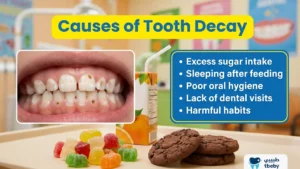
There are numerous causes that contribute to tooth decay in children’s primary teeth. Many of these are daily habits practiced without an awareness of their potential harm. The most significant causes include:
1. Falling Asleep During or Immediately After Feeding
When a child falls asleep during breastfeeding or bottle feeding, or immediately thereafter, the sugar-containing liquid found in milk or other food substances remains on the tooth surfaces for extended periods during sleep.
This creates an environment conducive to the proliferation of decay-causing bacteria and the formation of acids that erode the teeth, particularly the enamel layer.
2. Unhealthy Dietary Habits
These habits typically arise from providing children with excessive amounts of sugar throughout the day, primarily through the consumption of large quantities of sweets and sugar-rich juices.
3. Neglecting Oral Hygiene
The habit of brushing teeth and maintaining oral cleanliness should be introduced early so that children become accustomed to it. Regular dental visits are also essential, particularly from a young age, to monitor the stages of your child’s dental development and to address any minor issues promptly.
4. Placing Toys and Objects in the Mouth
One of the most common causes of decay and various other problems, including tooth alignment issues and jaw development abnormalities, is the habit of placing toys and hard objects inside the mouth. This facilitates the transfer of decay-causing bacteria and exerts pressure on teeth during their growth phase.
Does Tooth Crowding Cause Tooth Decay in Children?
Dental crowding and misalignment are among the most significant contributing factors to tooth decay in children. Crowding increases the rate at which food particles become trapped and lodged between teeth, while simultaneously making thorough cleaning more difficult, thereby accelerating the growth of bacteria and increasing the rate of decay progression in your child’s dentition.
What Does Tooth Decay Look Like?
There is no substantial visual difference between tooth decay in children and that observed in adults. In most cases, decay presents as:
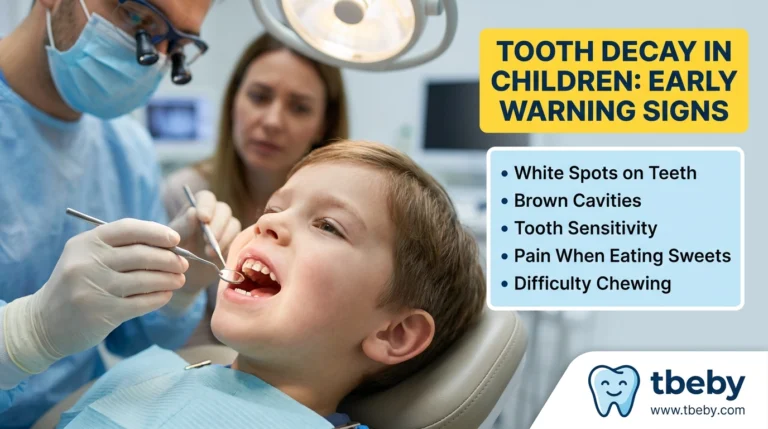
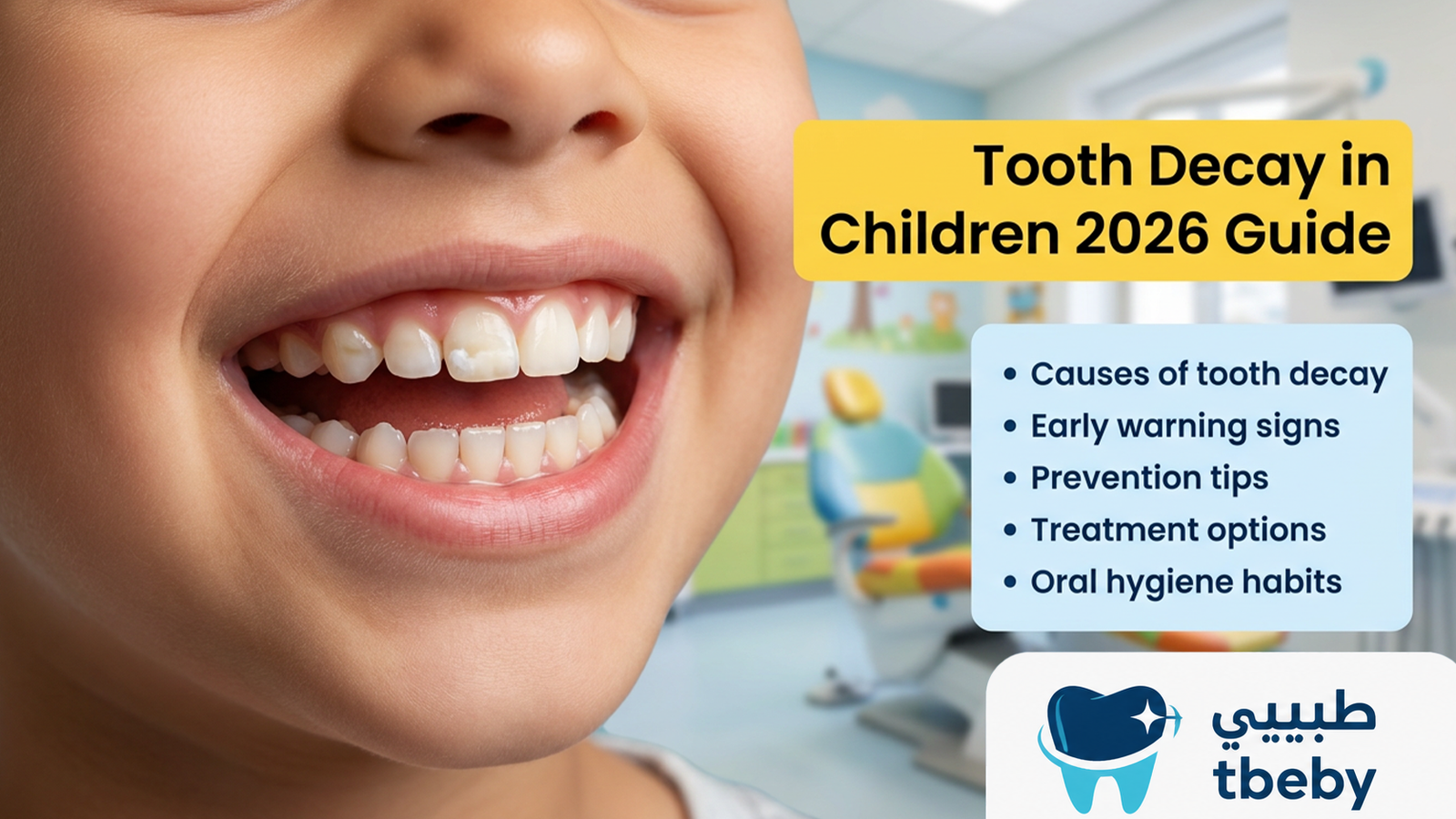
- White chalk-like spots on the tooth surface
- Black pits or cavities that may expose the underlying dentin layer
In all cases, a dentist should be consulted as soon as any such changes are observed in your child’s teeth, so that the decay can be treated before it reaches the dental nerve.
Associated symptoms may include:
- Persistent bad breath
- Chronic pain, particularly at night
- Sensitivity symptoms, especially when consuming hot or cold foods and beverages
You can use Medical Gauze to gently wipe your child’s teeth and gums when early white spots appear, helping slow the progression of decay before it deepens.
Tooth Decay in Children’s Front Teeth
Tooth decay in children’s front teeth is extremely common, as these are the first teeth to form in the child’s oral cavity and are therefore responsible for biting and initial food processing.
Front teeth are inherently small and delicate, making them particularly susceptible to the decay-causing bacteria that surround them. Decay in the front teeth is especially distressing, as it causes an unfavorable aesthetic appearance that can undermine a child’s self-confidence, in addition to affecting fundamental functions such as speaking and eating.
How to Protect Your Child from Tooth Decay
There are numerous strategies and recommendations that should be followed to protect your child from developing tooth decay. The most important of these include:
- Avoid food, juices, and milk immediately before bedtime. Replace these with water where possible.
- If your child consumes milk before sleep, brush their teeth with a toothbrush and toothpaste, or at a minimum, wipe the gums or teeth with a damp cotton pad.
- Discourage reliance on fast food and unhealthy snacks high in sugar content. Replace these with foods rich in vitamins, minerals, and essential nutrients required during your child’s early developmental stages.
- Establish a consistent oral hygiene routine using a toothbrush, toothpaste, and a fluoride-containing mouthwash.
- Schedule regular dental visits at consistent intervals to monitor proper tooth development, receive professional cleaning, identify any dental issues early, and undergo fluoride treatment sessions to enhance tooth protection.
Treatment Options for Tooth Decay in Children
There are several treatment modalities available for tooth decay in children, depending on the severity of the condition:
1. Dental Fillings
This procedure is performed in cases of mild to moderate decay. The decay is thoroughly removed, the tooth is cleaned, and a filling material that matches the appearance of the natural tooth is placed, restoring full function.
2. Dental Crowns
Crowns are indicated when a significant portion of the tooth has been damaged. Following complete removal of the decay, a crown is placed to protect the remaining tooth structure from fracture or further deterioration.
Pulp Treatment (Nerve Therapy) for Affected Teeth
When decay reaches the dental nerve, complete nerve removal becomes necessary. A pulp filling material is then placed, followed by an external filling to rebuild the tooth structure, or a fixed crown to protect it from fracture.
3. Tooth Extraction
Extraction is considered a last resort, undertaken only when the tooth has deteriorated to a degree that makes it impossible to restore through any other means.
You can use Anticavity Toothpaste to strengthen your child’s enamel and help prevent decay from progressing to the point where clinical treatment becomes necessary.
Your Child’s Smile Is a Trust: A Comprehensive Guide to Decay-Free Teeth
Tooth decay in children should not be dismissed as a minor or temporary problem that resolves itself when the primary teeth are shed. It is, in fact, an urgent warning sign that demands immediate intervention to protect your child’s overall health and the long-term integrity of their permanent smile.
As outlined throughout this guide, simple daily habits such as avoiding feeding before sleep, reducing sugar intake, and maintaining a consistent cleaning routine with a toothbrush and floss play a decisive role in preventing this widespread condition.
Always remember: early detection and regular dental visits are the first line of defense. Do not hesitate to seek specialized consultation upon noticing any spots or changes in your child’s teeth, sparing them unnecessary pain and complex clinical procedures.
FAQs About Tooth Decay in Children
When should I begin cleaning my child’s teeth?
At what age should I start brushing an infant’s teeth?
As soon as the first tooth emerges, begin wiping it with a damp cloth or using a very soft infant toothbrush.
Does breastfeeding during sleep truly cause tooth decay?
Is leaving a milk bottle in a sleeping child’s mouth harmful to their teeth?
Yes, absolutely, milk remaining on the teeth for prolonged periods overnight feeds bacteria and causes rapid enamel erosion.
How can I detect tooth decay in my child at an early stage?
What are the first signs and symptoms of tooth decay in children? Decay initially presents as chalky white spots on the tooth, which gradually progress into brown or black pits and cavities.
Is it necessary to treat decay in primary teeth if they will fall out anyway?
Does neglecting decayed baby teeth affect the permanent teeth? A: Yes, it is essential that primary teeth maintain spacing in the jaw, and neglecting them can transmit infection to permanent teeth and disrupt their development.
What is the most effective method to protect a child from tooth decay?
How can I effectively prevent enamel erosion and decay in my child’s teeth? Brush twice daily with fluoride toothpaste, reduce sweets, and maintain consistent dental check-ups.
Does tooth crowding accelerate decay in children?
What is the relationship between dental misalignment and increased decay rates?
Yes, crowding makes it difficult for the toothbrush to remove food debris effectively, creating an ideal environment for decay-causing bacteria to thrive.
Can minor decay be treated without drilling the tooth?
Are fluoride sessions sufficient to stop tooth decay in children?
Fluoride can halt decay in its earliest stage (white spot lesion), but once a cavity forms, a filling becomes unavoidable.
What does a dentist do when decay reaches the nerve of a primary tooth?
What is the treatment for a primary tooth whose nerve has been damaged by decay?
The dentist removes the damaged nerve, places a pulp filling material designed for primary teeth, and then caps the tooth with a crown until it is naturally shed.
When does extraction become the only option for a decayed primary tooth?
In what circumstances is a child’s decayed tooth necessarily extracted?
Extraction is a last resort, performed only when the tooth is completely deteriorated and cannot be salvaged through filling or crown placement.
Does placing toys and hard objects in the mouth harm a child’s teeth?
Does biting on toys contribute to decay and dental problems in children?
Yes toys transfer external bacteria into the mouth and exert continuous pressure that can weaken the enamel and negatively affect jaw development.
Sources
https://www.cdc.gov/oralhealth/basics/childrens-oral-health/index.html