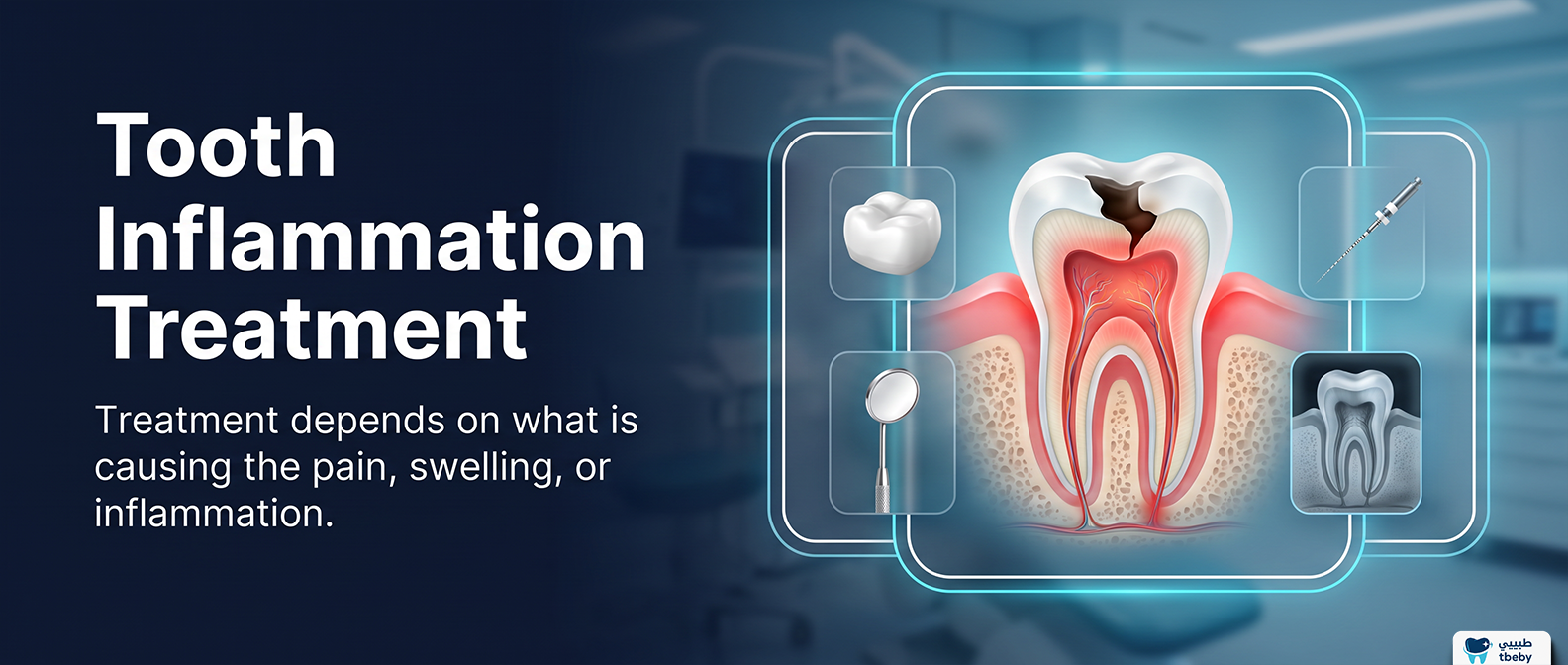

Tooth inflammation treatment depends on whether the inflammation affects the dental pulp, the tissues around the tooth, or the surrounding gums. Tooth decay, cracks, and bacterial infections can cause similar symptoms but require different treatments.
Home remedies may provide temporary relief while you wait for a dental appointment. However, an infected tooth or dental abscess requires professional care to treat the underlying cause.
What Causes Tooth Inflammation?
Inflammation can affect the pulp, the tissue inside a tooth that contains nerves and blood vessels, or the surrounding gums.
Common causes include:
- Tooth decay: Untreated dental caries can progress into deeper layers of the tooth and eventually affect the pulp.
- Cracks or injuries: Damage can expose sensitive tissue.
- Broken fillings: A damaged restoration may leave the tooth vulnerable.
- Gum disease: Infection around a tooth can cause pain and swelling.
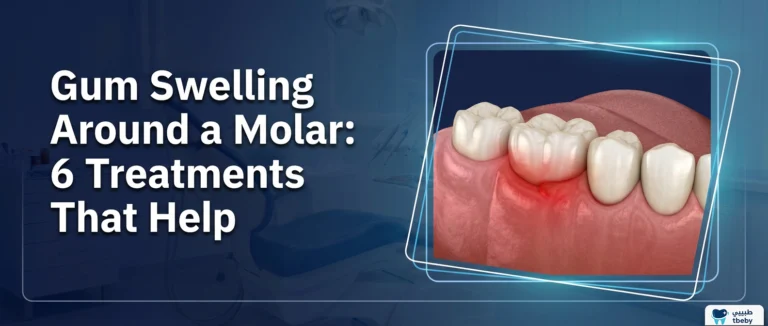
- Partially erupted wisdom teeth: The gum around a partly erupted tooth can become inflamed or infected.
Choosing the right treatment for tooth inflammation starts with identifying the affected area.
What Are the Symptoms of an Inflamed Tooth?
Symptoms range from brief sensitivity to persistent pain. Possible signs include:
- Sharp, aching, or throbbing pain.
- Sensitivity to hot or cold foods.
- Pain when biting.
- Red or swollen gums.
- An unpleasant taste.
- Swelling in the cheek or jaw.
- Fever when infection is present.
These symptoms cannot confirm the cause on their own. A dental examination helps determine the appropriate tooth inflammation treatment.
What Can You Do for Tooth Inflammation Treatment at Home?
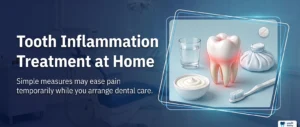
Home care offers temporary relief while you arrange treatment. It cannot repair a cavity or cure an abscess.
1. Can a Salt-Water Rinse Help?
Dissolve half a teaspoon of salt in a glass of warm water. Rinse gently and spit it out.
This may soothe irritated tissue. Children should avoid salt-water rinses because they may swallow them.
2. Can a Cold Compress Ease Discomfort?
Hold a cold compress wrapped in cloth against the outside of your cheek for short periods, taking breaks between applications.
Do not place ice directly on the tooth, gums, or skin.
3. What Should You Eat and Avoid?
Choose soft foods and chew on the opposite side. Avoid very hot, cold, or sugary foods if they trigger pain.
4. Brush gently with a soft toothbrush, and avoid forcing floss around a very sore tooth.
5. Which Painkillers May Help?
Ibuprofen, including products such as Brufen 400 for toothache, or acetaminophen may provide temporary relief when suitable for you.
Follow the label and ask a pharmacist if you take other medicines, are pregnant, or have a health condition. Painkillers support tooth inflammation treatment but do not resolve the cause.
Can Herbs Help With Tooth Inflammation Treatment?
Some remedies may briefly reduce discomfort, but they cannot reliably treat infected pulp or a dental abscess.
1. Does Clove Oil Relieve Toothache?
Clove oil may temporarily numb pain, but it can irritate or damage gums. If using a licensed dental product, follow its instructions and check with a pharmacist.
Avoid applying concentrated oil directly to soft tissue.
2. Is Garlic Safe to Apply to a Tooth?
No. Raw garlic can cause irritation and chemical burns when placed against the gums.
Do not put crushed garlic inside a cavity or leave it against painful tissue.
3. Can Thyme or Aloe Vera Cure the Problem?
Thyme oil and aloe vera are not established cures for pulp inflammation or an abscess. Homemade preparations should not replace dental care.
Gentle supportive measures are a better approach to tooth inflammation treatment than experimenting with concentrated oils.
What Does Tooth Inflammation Treatment at the Dentist Involve?
A dentist examines the tooth and may use X-rays or sensitivity tests. Treatment depends on the depth and extent of the damage.
1. When Can Fluoride or a Filling Help?
Fluoride can support remineralization of early enamel decay before a cavity forms.
Fluoride cannot repair a large hole or treat infected pulp.
For daily cavity prevention, brush with fluoride toothpaste, while remembering that an established cavity still needs dental treatment.
2. When Is Root Canal Treatment Needed?
A root canal may be necessary when the pulp is severely damaged or infected. The dentist removes the affected tissue, cleans the canals, and seals the tooth.
This tooth inflammation treatment can preserve a tooth that might otherwise need removal.
3. When Is Drainage or Extraction Necessary?
An abscess may require drainage and treatment of the affected tooth. Extraction is considered when the tooth cannot be saved.
The table below shows how the main treatments differ.
| Treatment | When it may help | Purpose |
| Fluoride | Early decay without a cavity | Support enamel repair |
| Filling | A restorable cavity | Repair tooth structure |
| Root canal | Damaged or infected pulp | Treat the tooth internally |
| Drainage | A dental abscess | Release accumulated pus |
| Extraction | A tooth that cannot be saved | Remove the affected tooth |
Are Antibiotics Needed for Tooth Inflammation Treatment?
Antibiotics are not necessary for every toothache. Many localized dental problems need a procedure, such as root canal treatment or drainage.
When an abscess is present, choosing the best antibiotic for tooth abscess depends on whether antibiotics are needed, the infection’s severity, and your medical history. Dental treatment may still be necessary to remove the source.
How Is a Painful Tooth With an Open Cavity Treated?
An open cavity, broken tooth, or missing filling may trap food and expose sensitive tissue. Avoid putting herbs, oils, or household substances into the opening.
Tooth inflammation treatment may involve a filling, root canal, or extraction, depending on the damage.
When Does Tooth Pain Need Urgent Care?
Seek urgent dental care for a suspected abscess, facial swelling, fever, or worsening pain.
Get emergency medical help if you have:
- Difficulty breathing, swallowing, or speaking.
- Significant swelling in the mouth or neck.
- Swelling around an eye or changes in vision.
- Severe difficulty opening your mouth.
Do not wait for home remedies to work when these symptoms appear.
What Is the Next Step for Tooth Inflammation Treatment?
Tooth inflammation treatment begins with identifying the cause. Home care may ease discomfort temporarily, but persistent pain needs a dental examination. If swelling or fever develops, seek urgent dental care.
Frequently Asked Questions About Tooth Inflammation Treatment
These short answers cover common concerns about relief and professional care.
What Is the Best Tooth Inflammation Treatment?
The best option depends on the cause. A dentist may recommend a filling, root canal, drainage, or extraction.
Can an Inflamed Tooth Heal on Its Own?
Some irritation may settle, but an abscess needs treatment. Persistent or worsening pain requires assessment.
Does Salt Water Cure a Tooth Infection?
No. It may soothe irritated tissue but cannot treat infection inside a tooth.
Is Clove Oil Safe for Toothache?
It may briefly relieve pain but can damage gums. Follow the instructions for an appropriate dental product.
Should I Put Garlic on a Painful Tooth?
No. Raw garlic can irritate tissue and cause chemical burns.
Do All Inflamed Teeth Need Antibiotics?
No. Many cases require dental treatment without antibiotics.
Does Every Inflamed Tooth Need a Root Canal?
No. A filling may be enough when the pulp is not severely damaged.
Can a Tooth Abscess Burst by Itself?
It may drain, but the source of infection can remain. Dental treatment is still needed.
Is Extraction Always Necessary?
No. A restorable tooth may be saved with a filling or root canal treatment.
Does Pain Relief Mean the Tooth Has Healed?
No. Reduced pain does not confirm that the underlying problem has resolved.
Source:
https://www.nhs.uk/conditions/dental-abscess/