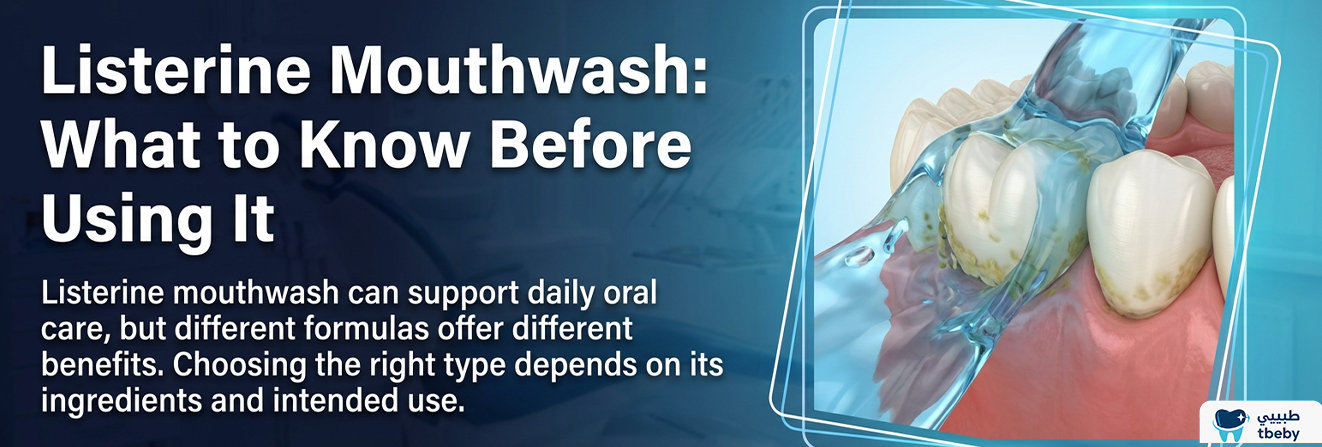

Listerine mouthwash can be a useful addition to your oral care routine, but choosing the right formula matters. Some products help reduce plaque and gingivitis, while fluoride-containing versions offer additional protection against cavities.
The fresh feeling after rinsing can be reassuring. Still, mouthwash does not replace brushing, cleaning between your teeth, or getting dental treatment when something hurts. Understanding what each formula offers helps you choose a product that suits your needs.
What Is Listerine Mouthwash?
Listerine is a brand of oral rinses with different ingredients and purposes. Its range includes antiseptic, fluoride-containing, alcohol-free, and specialized formulas.
Rather than choosing by flavor or bottle color alone, check the label for the product’s intended benefits. A rinse designed for gum health may differ from one intended for cavity prevention.
Ingredients in Listerine Mouthwash
The ingredients depend on the formula. Not every bottle contains fluoride, alcohol, or the same combination of active ingredients.
1. Essential Oils
Many antiseptic formulas contain a combination of:
- Eucalyptol
- Menthol
- Methyl salicylate
- Thymol
These ingredients work together in an antiseptic rinse. Although menthol creates a cooling sensation, that feeling should not be confused with treatment for tooth pain.
2. Fluoride and Other Ingredients
Some formulas contain sodium fluoride for cavity prevention. Others include ingredients intended to control tartar buildup or address particular oral care needs.
Flavorings, sweeteners, preservatives, and solvents may also appear on the label. An ingredient being derived from a plant does not automatically make the finished product suitable for everyone.
Benefits of Listerine Mouthwash
The benefits depend on the active ingredients and the product’s approved uses. Choose a formula that addresses your needs.
1. Plaque and Gum Health
An appropriate antiseptic rinse can help reduce plaque and gingivitis alongside regular brushing and interdental cleaning. Research on Listerine antiseptic has found reductions in plaque and gingivitis compared with control rinses.
Daily brushing remains essential, and a small-head electric toothbrush is an option to consider when choosing your cleaning tools.
Persistent gum bleeding needs assessment, as it may be a sign of gum disease. A rinse cannot correct every cause of inflamed gums.
2. Fresher Breath
Mouthwash may help control bad breath, although the effect depends on the formula. Persistent odor can require more than a mint-flavored rinse, especially when an underlying dental problem is involved.
Alongside rinsing, gentle tongue cleaning with a stainless steel tongue scraper can be part of your daily oral hygiene routine.
3. Cavity Prevention
Fluoride-containing rinses can help prevent tooth decay. An antiseptic product without fluoride should not be assumed to provide the same cavity protection.
Types of Listerine Mouthwash
Several product categories are available. This comparison explains what to look for when reading the label.
| Formula category | Main purpose | What to check |
| Antiseptic | Plaque and gingivitis control | Active ingredients and labeled benefits |
| Alcohol-free | An option for people who prefer to avoid alcohol | Whether it targets plaque, cavities, or another concern |
| Fluoride-containing | Additional cavity protection | Fluoride content and use instructions |
| Tartar-control | Helping limit new tartar buildup | Specific tartar-control claims |
| Whitening | Addressing certain surface stains | Whitening ingredients and realistic expectations |
Alcohol-free describes one feature of a product, not its complete function. Likewise, “Total Care” or a similar name is not a substitute for checking the ingredients.
Is Alcohol-Free Listerine Mouthwash Better?
Alcohol-free products may suit people who find alcohol-containing rinses uncomfortable. The better choice depends on your needs and tolerance.
1. For a Dry or Sensitive Mouth
An alcohol-free rinse may be more comfortable if you have a dry or sensitive mouth, particularly if alcohol-containing formulas cause irritation or discomfort.
However, alcohol-free products can still contain ingredients that irritate sensitive tissues.
2. For Everyday Use
Avoid assuming that a stronger taste means better results. Compare the intended benefits, age restrictions, and directions, then choose a product you can use comfortably and correctly.
How to Use Listerine Mouthwash
Follow the directions on the specific bottle. Amounts, rinsing times, and age limits can differ between products.
1. Amount and Rinsing Time
For Listerine Antiseptic products covered by the manufacturer’s general instructions:
- Measure 20 mL into a cup.
- Use the rinse without diluting it.
- Swish around your mouth for 30 seconds.
- Spit it out.
Do not swallow the rinse. These directions should not be applied automatically to every product in the range.
2. Frequency and Timing
Many antiseptic formulas are intended for twice-daily use. Follow your product label rather than increasing the frequency or rinsing longer to seek stronger results.
Possible Side Effects and Precautions
Listerine mouthwash should feel tolerable when used as directed. Significant burning or ongoing irritation is a reason to stop and seek advice.
1. Burning or Irritation
Possible problems include:
- An uncomfortable burning sensation.
- Irritation of the tongue, gums, or other oral tissues.
- Sensitivity to an ingredient.
Check the label before use, particularly if you have a known ingredient allergy. Rinsing for longer than instructed does not make the product more effective.
2. Use in Children
Mouthwash is generally not recommended for children under six unless a dentist advises otherwise. Some products have higher age limits, so being over six does not mean every formula is appropriate.
Children should use only an age-appropriate product and must be able to spit it out reliably. Keep bottles out of their reach.
What Listerine Mouthwash Cannot Do
A fresh taste does not tell you whether a dental problem has been resolved. These limits can help you recognize when professional care is needed.
1. Remove Existing Tartar
Tartar-control rinses may help limit new buildup, but they do not remove hardened deposits already attached to teeth. Existing tartar requires professional cleaning.
2. Treat Cavities or Dental Infections
Mouthwash cannot repair a cavity, restore a cracked tooth, or replace treatment for a dental abscess. Understanding the symptoms and treatment options for dental caries can help you recognize why rinsing alone is not enough. Persistent toothache or swelling should be assessed by a dentist.
Building a Daily Oral Care Routine
Listerine mouthwash works best as an optional addition to consistent daily care. The basics still deserve most of your attention.
- Brush twice daily with fluoride toothpaste, even if you also use mouthwash.
- Spit out toothpaste without rinsing immediately afterward.
- Clean between your teeth daily using dental floss or an appropriate interdental cleaner.
- Attend dental checkups at intervals recommended by your dentist.
Choosing the Right Listerine Mouthwash
Start with the benefit you need, then check the ingredients and instructions. A suitable rinse can support your daily routine, but healthy teeth and gums still depend on careful cleaning and timely dental care.
Frequently Asked Questions About Listerine Mouthwash
These short answers cover common questions about choosing a formula and using it correctly.
Is Listerine Mouthwash Suitable for Daily Use?
Many formulas are designed for daily use. Follow the bottle’s directions and stop if significant irritation develops.
Does Every Listerine Product Contain Alcohol?
No. The range includes both alcohol-containing and alcohol-free options, so check the label.
Does Listerine Mouthwash Prevent Cavities?
Fluoride-containing formulas can help prevent cavities. Do not assume every antiseptic rinse offers the same benefit.
Can It Replace Brushing and Flossing?
No. Mouthwash supplements daily cleaning; it does not replace brushing or cleaning between your teeth.
How Long Should I Rinse?
Many antiseptic products specify 30 seconds. Use the rinsing time printed on your particular bottle.
Should I Dilute It With Water?
Use it as directed. The manufacturer’s standard antiseptic instructions say to use the rinse undiluted.
Can Children Use It?
Only if the product is appropriate for their age and they can spit reliably. Check the label and ask a dentist when unsure.
Can It Remove Tartar?
No. It may help control new buildup, but hardened tartar requires professional removal.
Why Does My Mouth Burn When I Use It?
The formula may be irritating your oral tissues. Stop if burning is significant or persistent and ask for advice.
Is It a Treatment for Toothache?
No. It does not treat the underlying cause of tooth pain, so persistent symptoms need dental assessment.
source
Mouthrinse (Mouthwash) — American Dental Association