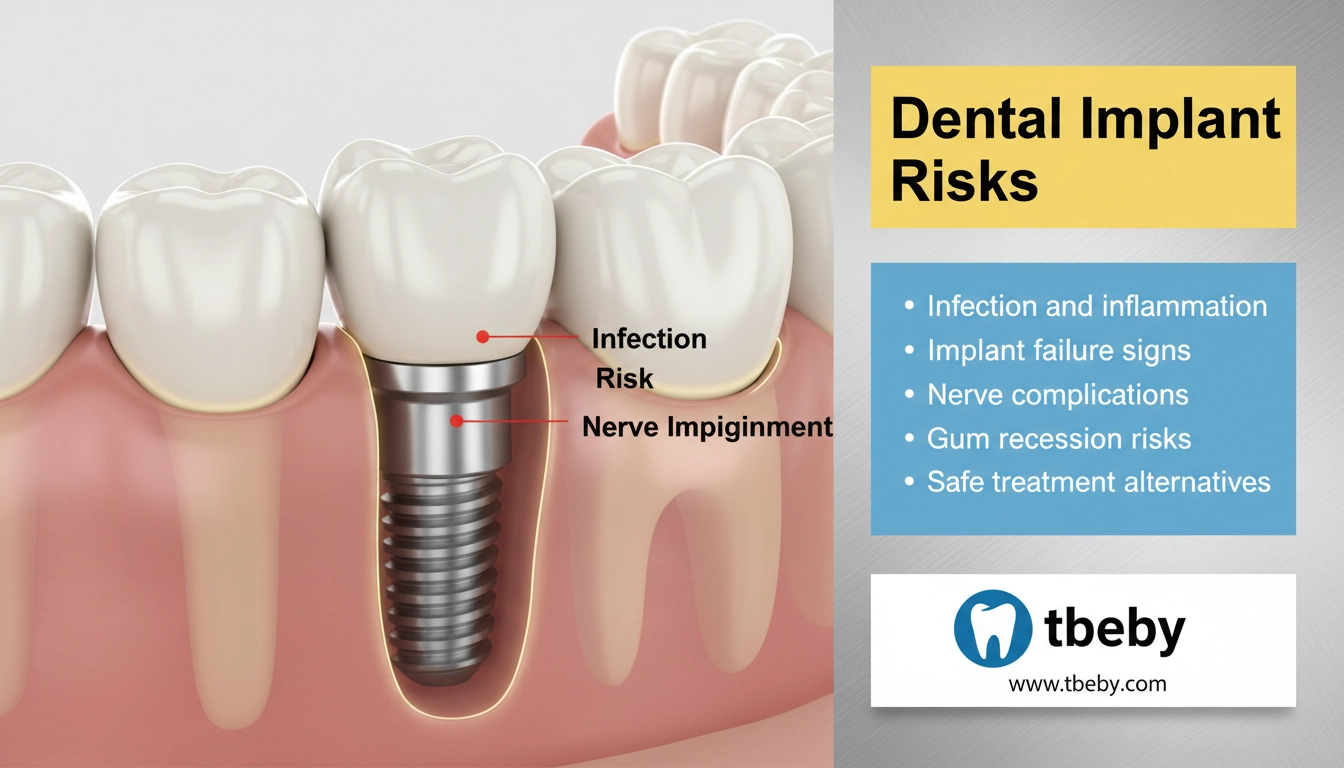

Dental implant risks represent one of the most frequently searched concerns among patients considering restorative dental procedures today. Dental implantation is among the most significant surgical interventions currently available in modern dentistry, employed to replace missing teeth or molars and to prevent the cascade of complications that inevitably follows untreated tooth loss. Yet a critical question persists: what are the actual risks associated with dental implants, and can they pose long-term problems for the patient?
In certain clinical scenarios, dental implantation becomes not merely an option but a medical necessity, particularly in cases of severe dental deterioration or irreversible tooth loss. This article presents a comprehensive, evidence-based examination of dental implantation: its clinical importance, potential risks, documented complications, and the most effective alternatives currently available.
What Is a Dental Implant?
Dental implantation is a multi-phase restorative procedure designed to replace missing teeth through a series of sequential surgical steps performed over an extended period.
The process begins with the surgical placement of an artificial tooth root, typically a titanium post, into the jawbone and surrounding gum tissue. A recovery period of several months follows, during which the gum heals and the jawbone gradually grows around and fuses to the implant in a biological process known as osseointegration.
Once osseointegration is complete, an abutment is attached to the implanted post to support the prosthetic crown. The final crown is fabricated to closely replicate the morphology of a natural tooth. While this procedure carries numerous clinical benefits, it is also associated with a range of potential complications that warrant careful consideration.
You can use Teeth Whitening with Coconut Oil to maintain a bright, healthy smile while supporting your gum health throughout the implant recovery process.
The Clinical Importance of Dental Implantation
Despite the documented dental implant risks and their association with various contributing factors, the clinical importance of this procedure cannot be overstated. In many cases, dental implantation is the only viable solution to prevent further oral deterioration.
A patient requires dental implantation when a natural tooth is lost or sustains damage so severe that conventional treatments such as fillings or root canal therapy are no longer clinically feasible, leaving extraction as the sole remaining option.
Following extraction, leaving the socket vacant is clinically inadvisable. Research has consistently demonstrated that adjacent teeth share structural interdependencies; once a tooth is removed, the neighbouring teeth lose their lateral support, becoming progressively unstable. This instability can lead to tooth migration and, in more severe cases, the sequential loss of an entire dental arch.
An empty socket also renders adjacent teeth significantly more susceptible to dental caries, periodontal disease, and bacterial or fungal infections, collectively threatening overall oral health. For these reasons, dental professionals universally recommend implantation following the extraction of a permanent tooth.
Potential Dental Implant Risks
Dental implant risks may manifest as adverse side effects or post-procedural complications, occurring in approximately 5% to 10% of cases. These include:
- Infection of the gum tissue and oral cavity
- Periodontal inflammation secondary to the presence of a foreign body
- Gingival hemorrhage
- Potential fractures within the oral cavity
- Nerve-related complications, presenting as numbness or paresthesia in the gums, tongue, or lips
- Damage to adjacent teeth resulting from a procedural error
- Gingival recession
- Failure of wound healing at the implant site
You can use Purple Teeth Whitening Powder as a gentle, enamel-safe whitening option that minimises additional stress on sensitive gum tissue during your dental treatment.
Documented Adverse Effects of Dental Implants
1. Allergic Reaction
Dental implants are commonly fabricated from titanium and other metallic alloys, materials that are generally biocompatible and well-tolerated by the human body. However, in a minority of patients, the immune system may identify these materials as foreign substances and mount an inflammatory response.
This hypersensitivity reaction typically presents as localised redness, swelling, and significant gingival pain. Patients experiencing these symptoms are strongly advised to consult a qualified dental specialist without delay.
2. Sinus Cavity Infection
Among the dental implant risks specifically associated with maxillary (upper jaw) implantation is the potential for damage to the nasal cavity tissues. Implants placed in proximity to the sinus floor may compromise sinus tissue integrity, potentially resulting in sinusitis or localised tissue damage.
3. Oral Infection
A well-documented complication of dental implantation is the development of significant oral infection. An improperly placed implant or faulty prosthetic components can cause deterioration of the surrounding gingival tissues, creating a microenvironment conducive to bacterial proliferation.
The resulting infection may produce severe inflammation, pronounced swelling, suppuration, oral ulceration, extreme pain, systemic fever, halitosis, and gingival bleeding. In unmanaged cases, a localised oral infection can progress to a systemic infection affecting the broader organism.
4. Implant Fracture
Implant fracture involving either the prosthetic crown or the supporting abutment constitutes one of the most serious dental implant risks. In such cases, re-implantation may not be clinically viable, as the surrounding bone structure is likely to have sustained damage and may lack the density required to support a new implant.
Is Dental Implantation a Painful Procedure?
The presence of dental implant risks does not necessarily imply that the procedure itself is painful. Under appropriate anesthesia, whether local, regional, or combined with topical gingival anesthetics, the patient experiences no discomfort during the surgical procedure.
Post-operative discomfort following the cessation of anesthesia is variable, depending on individual pain tolerance and procedural complexity. Dental professionals routinely recommend analgesic medications for at least the first post-operative day, in conjunction with anti-inflammatory agents to minimise the risk of complications.
You can use Temporary Dental Fillings to protect exposed or sensitive teeth and manage minor discomfort effectively while awaiting your next dental appointment.
Warning Signs of Dental Implant Failure
Certain clinical signs warrant immediate medical attention, as they may indicate implant failure:
- Severe and persistent post-operative pain
- Noticeable mobility or instability of the implanted tooth
- Inability to chew or bite effectively despite completion of the recovery period
- Persistent swelling and hypersensitivity symptoms lasting one week or longer without resolution
- Visible exposure of the metallic abutment or implant post through the gum tissue
- Prolonged numbness or tingling in the gum tissue persists beyond 24 hours after full anesthetic clearance
Alternatives to Dental Implantation
Having examined dental implant risks comprehensively, it is important to acknowledge the medically recognised alternatives currently available:
| Alternative | Description | Key Advantage | Risk Profile |
| Dental Bridge | A series of artificial teeth anchored between two adjacent natural teeth or supported by minimal implants, filling the gap left by an extracted tooth. | Fewer implants are required; often, a single implant supports the entire bridgework. | Lower than full implantation |
| Dental Prosthesis (Dentures) | Removable or fixed dentures that replace missing teeth without introducing foreign materials into the jawbone. | Non-invasive; no osseointegration period required. | Lowest surgical risk |
| Dental Crown | A crown supported by a single minimal implant placed in the vacant socket, replicating the aesthetic and function of the natural tooth. | Closely mimics the natural tooth in appearance and function with minimal intervention. | Minimal |
Balancing Clinical Necessity and Risk Management
Despite the potential complications associated with dental implantation, it remains the most clinically robust and functionally effective solution for replacing missing teeth and protecting the oral cavity from serious sequelae, including progressive destabilisation and loss of adjacent dentition.
The procedure demands patience and meticulous oral hygiene to successfully navigate its relatively low failure rate of 5% to 10%, and to avoid complications such as infection or implant rejection. For patients seeking a durable, long-term solution, implantation provides a definitive resolution that restores both dental function and aesthetic confidence.
For those for whom surgery is not indicated or preferred, evidence-based alternatives, including dental bridges, prostheses, and crowns remain viable and effective options.
If you are considering restoring your smile and oral health, scheduling a consultation with a qualified dental specialist is the recommended first step toward identifying the most appropriate and safest treatment pathway for your individual case.
FAQs About Dental Implant Risks
Is dental implantation a painful procedure?
Will I experience pain during the implant procedure?
The procedure itself is entirely painless under local anaesthesia, and any post-operative discomfort can be effectively managed with standard analgesics.
What is the rate of complications following dental implantation?
Is dental implant failure a common occurrence?
The procedure is considered highly safe, with documented complication rates including infection and inflammation ranging from only 5% to 10%.
What happens if an extracted tooth socket is left unfilled?
Is it necessary to replace a missing tooth after extraction?
Leaving the socket vacant causes adjacent teeth to weaken and shift, significantly increasing the risk of dental caries and bacterial or fungal periodontal infection.
How can I tell if my dental implant has failed?
What symptoms indicate a serious problem?
Failure signs include persistent severe pain, implant mobility, unresolved swelling lasting over one week, or prolonged numbness in the gum tissue and lips.
What alternatives exist for tooth replacement besides implantation?
Are there safe options for patients who prefer to avoid surgery?
Yes, effective alternatives include dental bridges, fixed or removable dentures, and dental crowns, all associated with comparatively lower risk profiles.
Can the human body reject the materials used in dental implants?
Do embedded metals cause allergic reactions?
In rare cases, the body may identify titanium as a foreign substance and trigger an immune response, causing pronounced redness and swelling that requires immediate clinical attention.
Does upper jaw implantation affect the sinus cavities?
Can dental implants cause infection in the nasal passages?
Yes, implants placed in the upper jaw may compromise nasal cavity tissue, leading to sinus infection as a recognised complication.
What happens if the dental implant or abutment fractures?
Can a fractured implant post be repaired or replaced?
Implant fracture is among the more serious complications and may preclude re-implantation due to damage and bone-density loss in the surrounding jawbone.
What causes severe oral infection after dental implant surgery?
Why do the gums become inflamed and swollen?
Infection typically arises from improper implant placement or bacterial proliferation in compromised tissue, resulting in suppuration, severe pain, and halitosis.
How long does the jaw need to heal before the final crown is placed?
Why does the implantation process take several months?
A multi-month recovery period is necessary to allow the jawbone to fully integrate with the implant root before the crown is secured, ensuring long-term stability.
Source
https://www.fda.gov/medical-devices/dental-devices/dental-implants-what-you-should-know