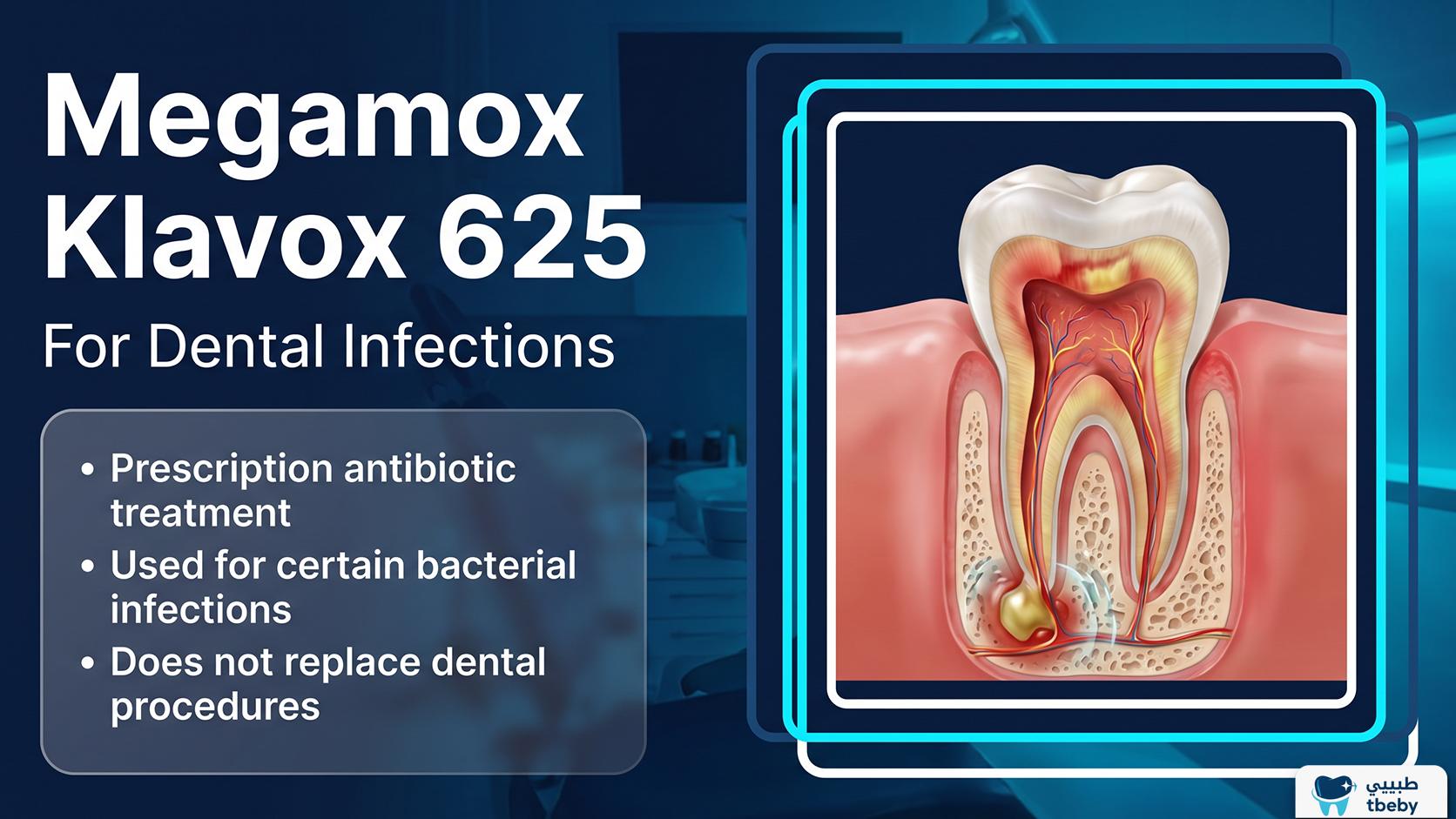

Megamox Klavox 625 for Dental Infections is a prescription antibiotic containing amoxicillin and clavulanic acid. A dentist may prescribe it for certain bacterial dental infections, especially when swelling is spreading or accompanied by fever or other systemic symptoms.
Megamox and Klavox are separate brand names, but their 625 mg formulations commonly contain the same active ingredients. They should not be taken together. This antibiotic may control susceptible bacteria, but it cannot drain an abscess, repair tooth decay, or replace professional dental treatment.
What Is Megamox Klavox 625 for Dental Infections?
The 625 mg tablet commonly contains two active ingredients:
| Active ingredient | Common amount | Function |
| Amoxicillin | 500 mg | Attacks susceptible bacteria |
| Clavulanic acid | 125 mg | Protects amoxicillin from certain resistance enzymes |
Amoxicillin is a penicillin-type antibiotic. Clavulanic acid blocks certain beta-lactamase enzymes that could otherwise make some bacteria resistant to amoxicillin.
The exact formulation may vary between manufacturers, so patients should always check the package leaflet and follow their prescription.
When Is Megamox Klavox 625 for Dental Infections Prescribed?
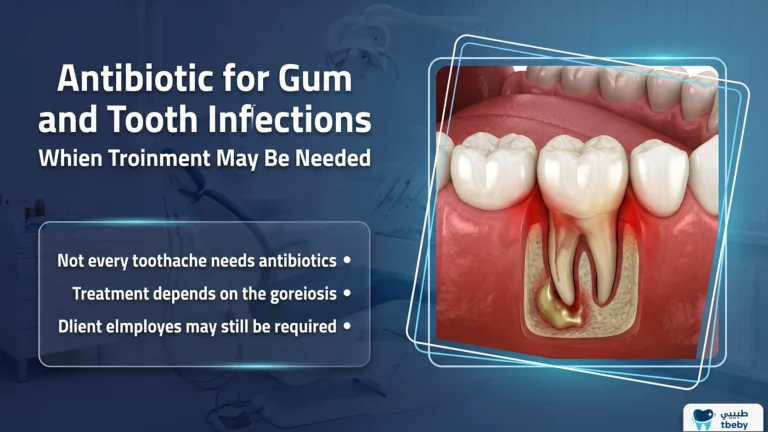
Antibiotics are not needed for every toothache. A dentist may prescribe this medicine when there is evidence that a bacterial infection is spreading or affecting the patient’s general health.
Possible indications include:
- A dental abscess with spreading gum or facial swelling.
- Fever, fatigue, or swollen lymph nodes.
- Cellulitis around the mouth or face.
- Infection spreading beyond the affected tooth.
- Certain infections following dental procedures.
- Infection that has not responded to a more suitable first-line antibiotic.
- Cases in which immediate drainage is not possible.
The best antibiotic for tooth abscess depends on the infection’s severity, the patient’s allergy history, previous antibiotic use, and whether the infection has begun to spread.
How Does Megamox Klavox 625 for Dental Infections Work?
The two ingredients work together, but each has a different role in controlling susceptible bacteria.
1. The Role of Amoxicillin
Amoxicillin interferes with bacterial cell-wall formation. This weakens susceptible bacteria and helps the immune system clear the infection.
2. The Role of Clavulanic Acid
Some bacteria produce enzymes that can break down amoxicillin. Clavulanic acid blocks certain forms of these enzymes, allowing amoxicillin to remain effective.
The medicine does not work against viruses and cannot treat pain caused only by sensitivity, gum recession, or a cracked filling.
When discomfort comes from minor irritation around the gums, a gum care gel may provide temporary soothing when used as directed. However, it cannot treat a dental abscess or an infection inside the tooth.
Does Every Dental Infection Need an Antibiotic?
No. Most dental pain requires treatment of the underlying tooth rather than antibiotics alone.
| Dental problem | Antibiotic usually needed? | Common treatment |
| Early tooth decay | No | Filling |
| Inflamed dental pulp | Usually no | Root canal treatment |
| Localized dental abscess | Not always | Drainage or root canal |
| Cracked tooth | Usually no | Restoration or extraction |
| Spreading infection with fever | May be needed | Urgent dental care and a prescribed antibiotic |
Antibiotics may reduce the spread of infection, but they cannot remove infected tissue from inside the tooth. Depending on the diagnosis, the patient may still need root canal treatment, abscess drainage, a filling, or tooth extraction.
Dosage of Megamox Klavox 625 for Dental Infections
The dose and duration must be determined by a dentist or physician. They depend on the severity of the infection, age, body weight, kidney function, medical history, and the exact product formulation.
Important dosage precautions include:
- Follow the prescription label exactly.
- Do not increase the dose because the pain is severe.
- Do not use another person’s prescription.
- Do not give an adult tablet to a child unless specifically prescribed.
- Do not replace one tablet strength with another without medical advice.
- Ask a pharmacist what to do if a dose is missed.
Taking more antibiotic does not provide faster pain relief. Instead, it may increase the risk of side effects.
Because antibiotics are not painkillers, a dentist or pharmacist may recommend suitable toothache pain relief tablets based on the patient’s age, medical history, and current medications.
How to Take Megamox Klavox 625 for Dental Infections
Correct use helps reduce avoidable side effects and treatment failure.
- Take each dose at the scheduled time.
- Swallow the tablet with water.
- Taking it at the beginning of a meal may reduce stomach discomfort.
- Space the doses as evenly as possible.
- Do not take two doses together after missing one.
- Do not use tablets left over from a previous infection.
- Follow the prescribed course unless the prescriber changes the plan.
If vomiting or severe diarrhea prevents the medicine from staying in the body, contact the prescriber or pharmacist for advice.
Side Effects of Megamox Klavox 625 for Dental Infections
Some side effects are mild, while others require urgent medical attention.
1. Common Side Effects
Possible common reactions include:
- Nausea or vomiting.
- Stomach discomfort.
- Mild skin rash.
- Oral or vaginal thrush.
Persistent or troublesome symptoms should be discussed with a healthcare professional.
2. Serious Side Effects
Stop taking the medicine and seek urgent help if you develop:
- Difficulty breathing or swallowing.
- Swelling of the face, lips, tongue, or throat.
- A rapidly spreading or blistering rash.
- Severe, persistent, or bloody diarrhea.
- Yellowing of the skin or eyes.
- Dark urine or unusually pale stools.
- Unexplained bruising or bleeding.
- Severe abdominal pain or seizures.
Breathing difficulty or facial swelling may indicate a severe allergic reaction and should be treated as an emergency.
Who Should Avoid This Antibiotic?
The dentist or physician should review allergies, medical conditions, and current medicines before prescribing treatment.
Tell the prescriber if you:
- Are allergic to penicillin, amoxicillin, or similar antibiotics.
- Previously developed liver problems while taking this combination.
- Have kidney or liver disease.
- Have a history of severe antibiotic-associated diarrhea.
- Have infectious mononucleosis.
- Are pregnant or breastfeeding.
- Take warfarin, methotrexate, allopurinol, probenecid, or mycophenolate.
- Have recently completed another antibiotic course.
A suspected penicillin allergy should be medically assessed before the medicine is taken.
Megamox Klavox 625 for Dental Infections During Pregnancy
Amoxicillin with clavulanic acid may be prescribed during pregnancy or breastfeeding when the expected benefit is considered greater than the possible risk. Pregnancy is not a reason to leave a serious dental infection untreated.
The prescriber will consider the infection’s severity, the pregnancy stage, allergy history, other medicines, and whether a dental procedure can remove the source of infection.
Small amounts may pass into breast milk. A breastfed infant should be monitored for diarrhea, rash, or oral thrush.
Can Children Take the 625 mg Tablet?
Children may receive amoxicillin with clavulanic acid when prescribed, but their dose is usually calculated according to body weight, age, infection severity, and kidney function.
The adult 625 mg tablet should not be given to a child without clear medical instructions. Liquid preparations are often more suitable because they allow accurate measurement using the supplied syringe.
Does the Antibiotic Replace Dental Treatment?
No. An antibiotic may control bacterial spread, but it does not remove the cause of the infection.
The patient may still require:
- Abscess drainage.
- A dental filling.
- Root canal treatment.
- Gum treatment.
- Replacement of a damaged restoration.
- Extraction of a tooth that cannot be saved.
While waiting for the required dental procedure, a toothache relief spray may briefly reduce discomfort when used according to its label, but it does not remove decay, drain an abscess, or cure the infection.
Even if the pain improves, the dental appointment should not be cancelled.
When Is a Dental Infection an Emergency?
While arranging dental care, a reusable cold compress applied to the outside of the cheek may temporarily reduce mild swelling and discomfort. It should be wrapped in cloth and must not delay urgent care when the swelling is spreading.
Seek urgent dental or medical care if you notice:
- Rapidly increasing facial, jaw, or neck swelling.
- Difficulty breathing, speaking, or swallowing.
- Swelling extending toward the eye.
- Inability to open the mouth normally.
- High fever, confusion, or severe weakness.
- Drooling or difficulty controlling saliva.
- Symptoms worsening despite prescribed treatment.
Do not try to open or drain an abscess at home, as this can damage the tissues and spread the infection.
Using Megamox Klavox 625 Safely
Megamox Klavox 625 for Dental Infections may be prescribed when a bacterial infection is spreading or causing systemic symptoms. It should not be used simply because a tooth hurts.
A proper dental diagnosis remains essential. The prescribed antibiotic can support treatment, but drainage, root canal therapy, restoration, or extraction may still be needed to remove the source of infection.
H2: Frequently Asked Questions About Megamox Klavox 625
Is Megamox Klavox 625 for Dental Infections a Painkiller?
No. It is an antibiotic. Pain may gradually improve as a susceptible bacterial infection responds.
How Quickly Does It Work?
Improvement may appear within a few days. Symptoms that worsen require reassessment.
Can It Treat an Abscess Without Drainage?
Not always. Many dental abscesses require drainage, root canal treatment, or extraction.
Can Megamox and Klavox Be Taken Together?
No. They may contain the same ingredients, which could result in an excessive dose.
Can I Stop Taking It When I Feel Better?
Follow the prescribed treatment plan unless the prescriber tells you to stop.
Can I Use Leftover Tablets for Toothache?
No. Toothache does not always require an antibiotic, and the cause should be diagnosed.
What Should I Do After Missing a Dose?
Follow the package instructions or ask a pharmacist. Do not double the next dose.
Is Diarrhea a Normal Side Effect?
Mild diarrhea can occur. Severe, persistent, or bloody diarrhea needs medical attention.
Can Someone With a Penicillin Allergy Take It?
Not without medical assessment, as the medicine contains a penicillin-type antibiotic.
Why Does the Tooth Still Hurt After Treatment?
Decay, inflamed pulp, pus, or structural damage may remain and require dental treatment.
source
https://medlineplus.gov/druginfo/meds/a685024.htm