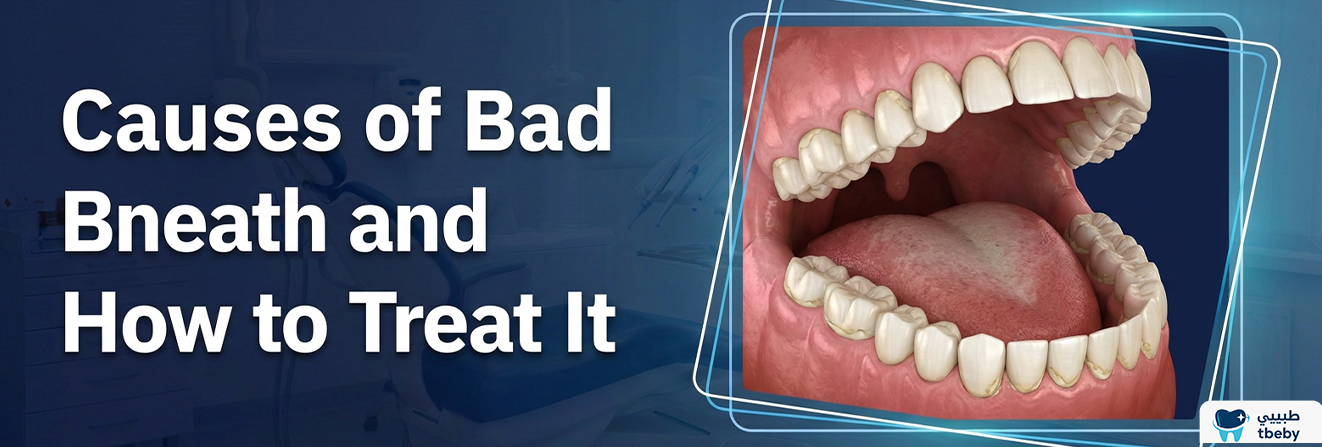

Bad breath can be embarrassing, but it is often treatable once its source is clear. Most cases begin in the mouth: bacteria on the teeth, gums, or tongue produce odors, particularly when saliva is scarce. Other causes of bad breath include food, tobacco, sinus or throat conditions, and occasionally a wider health problem.
This guide explains what to check first, what helps at home, and when professional care matters.
What Are the Main Causes of Bad Breath?
The causes of bad breath vary, so a mint or mouthwash cannot solve every case. Morning breath that fades after eating, drinking, and brushing is common. A persistent odor, especially alongside bleeding gums, tooth pain, or dry mouth, deserves a closer look.
A coating on the tongue may also hold odor-producing bacteria. If you notice one, a tongue scraper can be used gently during your daily cleaning routine.
1. Plaque, Food Debris, and Gum Disease
When plaque collects around teeth and under the gumline, bacteria break down trapped debris and release unpleasant-smelling compounds. Gingivitis and periodontitis can make the odor persist.
When plaque hardens, it becomes calculus that brushing cannot remove. Learn more about black tartar on teeth and how it affects the gums.
Calculus, or hardened plaque, requires professional removal; a toothbrush cannot scrape it away. Cavities, infected teeth, poorly cleaned dentures, and other mouth infections may contribute as well.
2. Dry Mouth, Tobacco, and Diet
Saliva helps wash away debris. Dry mouth can follow dehydration, mouth breathing, some medicines, or a health condition. Tobacco adds odor and increases the risk of gum disease.
Garlic, onions, alcohol, and prolonged fasting may also affect breath, though food-related odors usually pass.
3. Conditions Beyond the Mouth
Less often, the causes of bad breath involve tonsil problems, sinusitis, or acid reflux. A distinctive breath odor may occasionally accompany a serious medical condition, but smell alone cannot identify a diagnosis.
An ordinary digestive upset or “colon fermentation” should not be assumed to be the source of persistent bad breath.
How to Identify the Causes of Bad Breath
A pattern of symptoms can help you decide where to seek care. The table is a starting point, not a diagnosis.
| Clue | Possible explanation | Useful next step |
| Bleeding gums or visible buildup | Plaque or gum disease | Book a dental examination and cleaning |
| Tooth pain, swelling, or a bad taste | Decay or dental infection | Arrange a prompt dental assessment |
| Sticky mouth or frequent thirst | Dry mouth from several possible causes | Review hydration and medicines with a clinician |
| Nasal blockage or sore throat | Sinus or tonsil condition | Seek medical advice if it persists |
| Sour taste or frequent heartburn | Possible acid reflux | Discuss recurring symptoms with a clinician |
How to Treat the Causes of Bad Breath
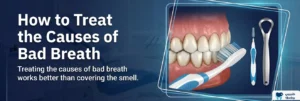
Treating the causes of bad breath works better than covering the smell. Start with a consistent routine, then seek an assessment if the odor remains.
1. Build a Daily Oral Care Routine
- Brush all tooth surfaces twice daily for about two minutes with fluoride toothpaste. Clean gently along the gumline.
- Clean between your teeth once a day. Floss works for narrow spaces, while correctly sized interdental brushes may be easier to use in wider spaces.
- Clean the tongue gently if it has a coating, and clean dentures or removable appliances as instructed.
- Drink water regularly. If your mouth feels dry, sugar-free gum may help stimulate saliva.
- Avoid tobacco and arrange dental checkups at an interval suited to your oral health.
An electric toothbrush or water flosser may be useful for some people, but the technique and a routine you can maintain matter most. Mouthwash can complement cleaning; it cannot replace brushing, cleaning between teeth, or treatment for infection.
If you use a rinse, our guide to Listerine mouthwash explains how formulas differ and where mouthwash fits into daily care.
2. Treat the Underlying Problem
A dentist can remove calculus, assess gum inflammation, and treat cavities or infected teeth. Persistent dry mouth may call for a medicine review or evaluation of an underlying condition; do not stop a prescribed medicine on your own.
Bleeding or swollen gums may point to gingival inflammation, which needs attention to the underlying plaque and gum health.
If the mouth is healthy, a clinician can check symptoms such as recurrent reflux, sinus congestion, or tonsil problems. This is the most reliable route to lasting relief from the causes of bad breath.
Causes of Bad Breath in Children
In children, the causes of bad breath commonly include an oral hygiene problem, dry mouth, dental decay, or a nose or throat condition. Check whether the child can brush effectively and whether there is tooth pain, congestion, or a sore throat. A pediatric dentist or clinician can assess an odor that persists.
Breath odor alone does not mean a child has a bowel obstruction. Seek urgent medical help for green vomit, a swollen or painful abdomen, or repeated vomiting with signs of dehydration. Fruity breath together with marked thirst, frequent urination, vomiting, or unusual sleepiness also needs urgent medical assessment.
Can Home Remedies Treat the Causes of Bad Breath?
Parsley, anise, flavored drinks, or chewing gum may briefly mask an odor, but they do not remove calculus or cure gum disease, infection, or reflux. Citrus juice may irritate the mouth and expose teeth to acid.
Probiotic supplements are not an established general treatment for bad breath. Use simple measures such as water and regular oral care while you investigate a persistent smell; avoid treating an assumed “gut cause” without an assessment.
When to Seek Care for the Causes of Bad Breath
Book a dental appointment if bad breath persists despite several weeks of careful cleaning, or sooner if you have bleeding gums, a loose tooth, dental pain, or a bad taste with swelling.
A clinician can investigate symptoms beyond the mouth if the dental examination does not explain the odor. Get urgent care for rapidly increasing facial swelling, trouble breathing or swallowing, or the concerning symptoms described above in a child.
Managing the Causes of Bad Breath for Lasting Relief
The causes of bad breath are usually manageable once you know where the odor begins.
Brush twice daily with fluoride toothpaste, clean between your teeth, and seek a dental assessment if the odor continues.
A targeted treatment is more useful than repeatedly masking the smell.
Frequently Asked Questions About the Causes of Bad Breath
These quick answers address common concerns, but a persistent odor needs an individual assessment.
What is the most common cause of bad breath?
Bacteria and debris in the mouth are frequent causes, especially when plaque builds up or the mouth is dry.
Can gum disease cause constant bad breath?
Yes. Inflamed gums and plaque below the gumline can cause an odor that often needs professional care.
Why does my breath smell bad in the morning?
Saliva flow falls during sleep, so bacteria and odors can build up until you drink, eat, and clean your mouth.
Can a cavity cause bad breath?
A cavity, trapped food, or a dental infection can contribute. A dentist can check the tooth and treat the cause.
Does acid reflux cause bad breath?
It can in some people, especially with a sour taste or recurrent heartburn, but it is not the only explanation.
Is bad breath always caused by the stomach?
No. The mouth is usually the first place to investigate; digestive symptoms need their own assessment.
Can mouthwash cure bad breath permanently?
It may reduce odor for a time, but lasting improvement depends on treating the underlying cause.
Does flossing help with bad breath?
Cleaning between teeth removes plaque and trapped food that a toothbrush may miss.
Why does my child have bad breath?
Dental plaque, decay, dry mouth, or nose and throat problems are possible. Persistent odor merits an examination.
When should I seek help for bad breath?
See a dentist when it continues despite good oral care, or promptly if pain, bleeding, swelling, or a loose tooth appears.
Sources
https://www.nhs.uk/symptoms/bad-breath/