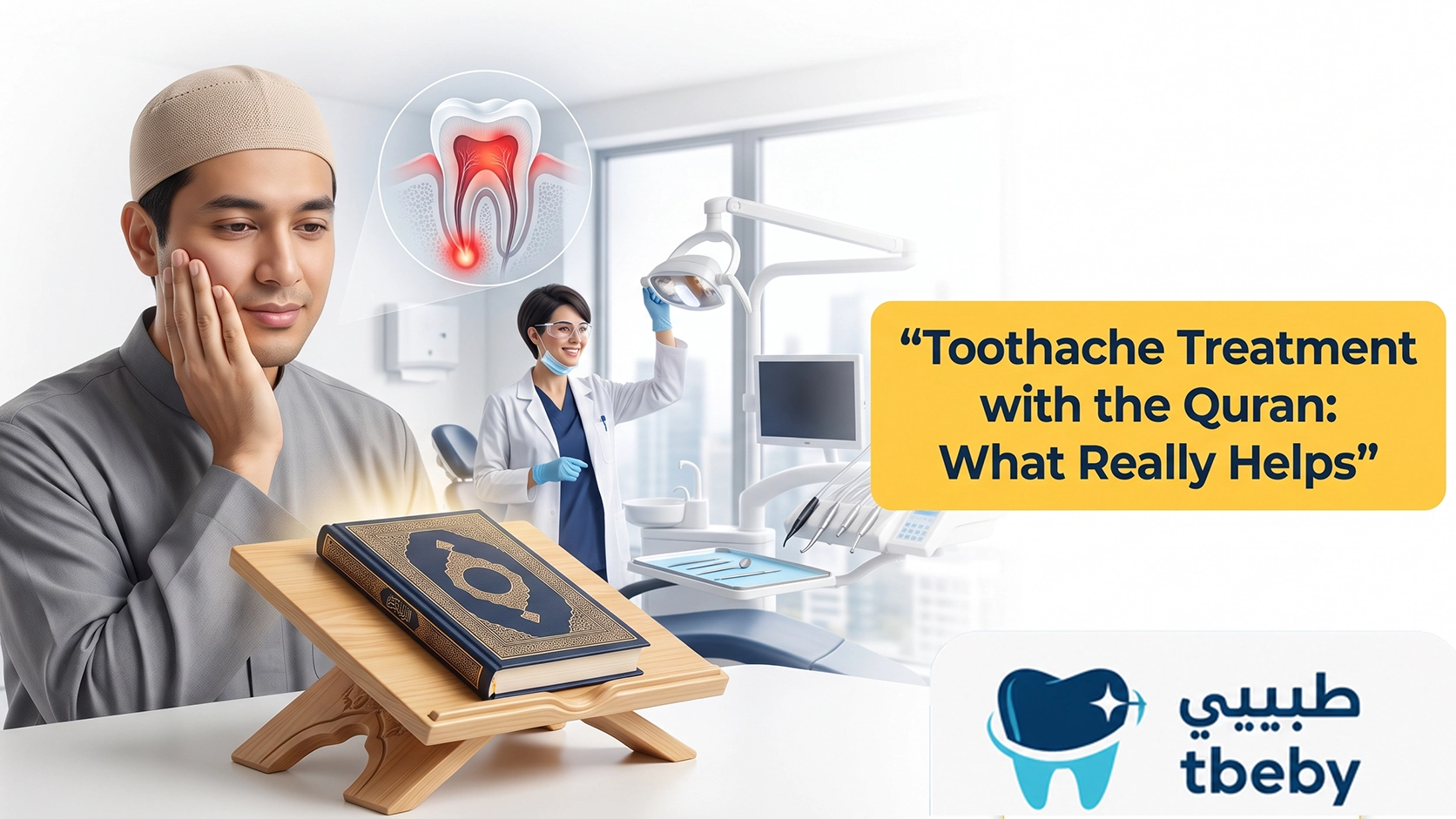

Toothache treatment with the Quran is often searched by people who want relief that respects their faith. Quran recitation, du’a, and ruqyah may offer reassurance and help a person cope with pain, but they do not treat the physical cause of dental disease.
A toothache is usually a warning sign of decay, inflammation, infection, gum disease, or a damaged tooth. Understanding the cause is important because delaying treatment may allow the problem to become worse.
What Causes Toothache?
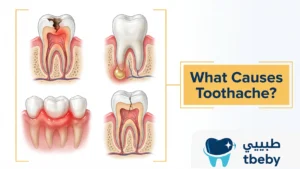
Tooth pain may originate from the tooth, gums, or nearby tissues. The symptoms can provide clues, but a dental examination is needed to confirm the cause.
1. Tooth Decay and Pulp Inflammation
Tooth decay may begin in the enamel and progress toward the dentine and dental pulp. Early discomfort often appears after eating sweet foods or drinking something hot or cold.
As decay progresses toward the pulp, symptoms may resemble those of an exposed dental nerve, including sharp sensitivity and persistent pain.
If the pulp becomes inflamed or infected, the pain may:
- Feel sharp, throbbing, or continuous.
- Linger after exposure to hot or cold temperatures.
- Become worse at night.
- Increase when chewing or biting.
- Spread toward the jaw, ear, or nearby teeth.
2. Dental Abscess
A dental abscess is a pocket of infection that can develop near the tooth root or inside the gums. It may cause severe pain, swelling, fever, tenderness when chewing, or an unpleasant taste in the mouth.
An abscess does not reliably disappear with painkillers or traditional remedies. Depending on its severity, treatment may involve drainage, root canal therapy, extraction, or antibiotics when clinically necessary.
Similar symptoms may also develop around a previous restoration, especially in the case of an abscessed filled tooth that requires prompt dental evaluation.
3. Gum Disease and Other Causes
Inflamed gums, trapped food, cracked teeth, loose fillings, grinding, wisdom-tooth problems, sinus pressure, and recent dental work can all cause tooth pain.
The following table summarizes common causes and their typical signs, while treatment depends on the underlying problem and dental examination.
| Possible cause | Common signs | What usually helps |
| Tooth decay | Sensitivity or a visible cavity | Filling or another restorative treatment |
| Pulp inflammation | Lingering, throbbing, or nighttime pain | Dental assessment and possibly root canal treatment |
| Dental abscess | Swelling, fever, bad taste, or biting pain | Urgent treatment and antibiotics when indicated |
| Gum irritation | Redness, bleeding, or trapped food | Cleaning and treatment of the gum problem |
| Cracked tooth | Sharp pain when biting | Repair, crown, root canal treatment, or extraction |
Can Toothache Treatment with the Quran Cure Dental Pain?
The Quran is a source of guidance, mercy, and spiritual healing for Muslims. However, no particular Quranic verse is established as a dental procedure that removes decay, repairs a fracture, or drains an infection.
A balanced understanding of toothache treatment with the Quran is therefore essential. Recitation and du’a’ may support the believer emotionally and spiritually, while dental care addresses the physical source of pain.
Ruqayah and Supplication for Pain
A Muslim may recite the Quran, including Surah Al-Fatihah, and sincerely ask Allah for healing. However, fixed numbers should not be assigned to particular verses unless supported by an authentic religious source.
Authentic hadith in Sahih Muslim provides a general supplication for bodily pain. A person may place a hand gently over the painful area and say:
“Bismillah” three times.
Then repeat seven times:
“A’udhu billahi wa qudratihi min sharri ma ajidu wa uhadhir.”
This means:
“I seek refuge in Allah and His power from the evil of what I feel and fear.”
For tooth pain, the hand may be placed over the cheek without pressing the swollen or inflamed area. Nothing should be inserted into a dental abscess or placed directly against injured gums.
Toothache treatment with the Quran can provide comfort and strengthen patience, but it should accompany appropriate dental care rather than delay it.
What the Sunnah Teaches About Oral Care
The Sunnah encourages cleanliness and the use of Siwak. These practices support oral hygiene, but they are not treatments for an existing cavity or infection.
Using Siwak Safely
Siwak may help clean the teeth when used gently and correctly. Aggressive scrubbing should be avoided because it can irritate the gums.
It may complement oral-care habits such as:
- Brushing twice daily with fluoride toothpaste.
- Cleaning between the teeth.
- Limiting frequent sugary foods and drinks.
- Replacing worn Siwak sticks or toothbrushes.
- Attending regular dental examinations.
Siwak supports cleanliness, but it cannot restore a damaged tooth or eliminate an infection inside the dental pulp.
An electric toothbrush can also support effective daily cleaning, provided it is used gently around sensitive teeth or irritated gums.
How Toothache Treatment with the Quran Fits with Dental Care
Faith and medical treatment do not need to be treated as opposing choices. Toothache treatment with the Quran can offer spiritual reassurance while a dentist diagnoses and treats the underlying condition.
When inflammation reaches the dental pulp, many patients wonder whether root canal treatment is painful and what they should expect during the procedure.
A balanced response includes:
- Reciting the Quran and making authentic supplications.
- Using appropriate measures to control pain temporarily.
- Avoiding substances that may burn or injure the gums.
- Visiting a dentist when pain persists or returns.
- Seeking urgent care when swelling or fever appears.
Prayer may help a person feel calmer and more hopeful, while dental treatment deals with decay, infection, inflammation, or structural damage.
What May Calm Tooth Pain Temporarily?
A few simple measures may make discomfort easier to tolerate until the cause is treated. Their role is limited to symptom control, and none can repair or cure the affected tooth.
| Temporary measure | How it may help | Important limitation |
| Warm salt-water rinse | May clean the area and soothe irritated gums | Does not treat decay or an abscess |
| Cold compress | May reduce discomfort and external swelling | Use only outside the cheek |
| Labelled pain medicine | May reduce pain for a limited period | Not suitable for everyone |
| Prayer and Ruqayah | May provide spiritual reassurance | Does not replace dental treatment |
A warm salt-water rinse may soothe irritated gums, while an antibacterial mouthwash used as directed may support plaque control. A cold pack wrapped in cloth may also temporarily ease pain or external swelling.
Over-the-counter pain relievers may also help when medically appropriate. Always follow the product label and consult a healthcare professional if unsure.
Remedies and Claims to Avoid
Some traditional remedies may injure the mouth or delay effective treatment. A safe approach to toothache treatment with the Quran requires distinguishing spiritual support from potentially harmful dental practices.
1. Raw Garlic
Placing crushed raw garlic against a painful tooth or gum is unsafe. Documented cases have shown that it can cause chemical burns to oral tissues, and it cannot treat an infection inside the tooth.
2. Aspirin on the Gum
An aspirin tablet should never be placed directly against the tooth or gum. Aspirin can burn the lining of the mouth when used this way and should only be taken according to its label when appropriate.
3. Concentrated Clove Oil and Essential Oils
Concentrated clove oil and other undiluted essential oils may irritate or burn oral tissues and can be harmful if swallowed. They should not be applied directly to a painful tooth unless the product is specifically designed for oral use and used according to its label.
4. Pressing or Draining the Swelling
There is no reliable evidence that pressing the thumb against a tooth treats the cause of pain. Never cut, squeeze, or attempt to drain a dental swelling at home because this may spread infection or injure the tissues.
5. Leftover Antibiotics
Antibiotics are not painkillers and are not needed for every toothache. Many dental problems require treatment of the tooth itself, and only a qualified professional should decide when antibiotics are necessary.
When Toothache Needs Urgent Care
Do not wait for toothache treatment with the Quran or temporary remedies to work if the symptoms suggest a spreading infection or serious dental problem.
A toothache pain relief spray may briefly reduce discomfort when used according to its label, but persistent pain, fever, or swelling still requires prompt dental care.
Seek prompt dental or medical care if you experience:
- Swelling in the face, jaw, neck, or around the eye.
- Fever or rapidly worsening illness.
- Difficulty opening the mouth.
- Discharge or a persistent bad taste.
- Severe pain after an injury.
- Uncontrolled bleeding.
- Pain that lasts longer than one or two days.
- Pain that repeatedly returns or prevents sleep.
Difficulty breathing or swallowing with dental swelling requires immediate emergency care.
Faith and Dental Care: A Balanced Approach
Toothache treatment with the Quran can be meaningful as spiritual support through recitation, authentic du’a, patience, and trust in Allah. However, persistent pain usually has a physical cause that may require a filling, gum treatment, root canal therapy, drainage, or extraction.
Avoid remedies that may burn or damage the mouth, and do not let temporary improvement create false reassurance. Faith can accompany treatment at every step, but toothache treatment with the Quran should never be used as a reason to delay necessary dental care.
Frequently Asked Questions About Toothache Treatment with the Quran
The following answers clarify the difference between spiritual comfort and medical treatment.
Is there a Quranic verse specifically for toothache?
No particular verse is established as a dental cure. A Muslim may recite the Quran and ask Allah for healing while seeking proper treatment.
Can toothache treatment with the Quran replace a dentist?
No. It may provide spiritual reassurance, but it cannot remove decay, repair a crack, or drain an abscess.
What authentic supplication can be said for pain?
Say “Bismillah” three times, then repeat the supplication reported in Sahih Muslim seven times while placing a hand gently over the painful area.
Can Siwak treat a painful tooth?
Siwak supports oral cleanliness, but it cannot cure an established cavity, pulp infection, or dental abscess.
Can salt water eliminate a tooth infection?
No. It may clean and soothe the mouth temporarily, but it cannot remove an infection located inside the tooth.
Is applying garlic to the tooth safe?
No. Crushed raw garlic may burn the gums and other oral tissues.
Does clove oil cure tooth decay?
No. It may briefly reduce discomfort, but it does not treat decay and may irritate the gums when concentrated.
Are antibiotics necessary for every toothache?
No. Many toothaches require dental treatment rather than antibiotics.
When should I visit a dentist?
Arrange an appointment if pain lasts longer than one or two days, returns repeatedly, or occurs with swelling, fever, or biting pain.
When is toothache an emergency?
Seek emergency help if swelling spreads across the face or neck or causes difficulty breathing or swallowing.
Sources
https://www.nhs.uk/symptoms/toothache/
Meta Title:
Meta Description:
Learn what Islam says about tooth pain, which Sunnah practices support oral care, what may ease discomfort, and when dental treatment is necessary.
Primary Keyword:
toothache treatment with the Quran