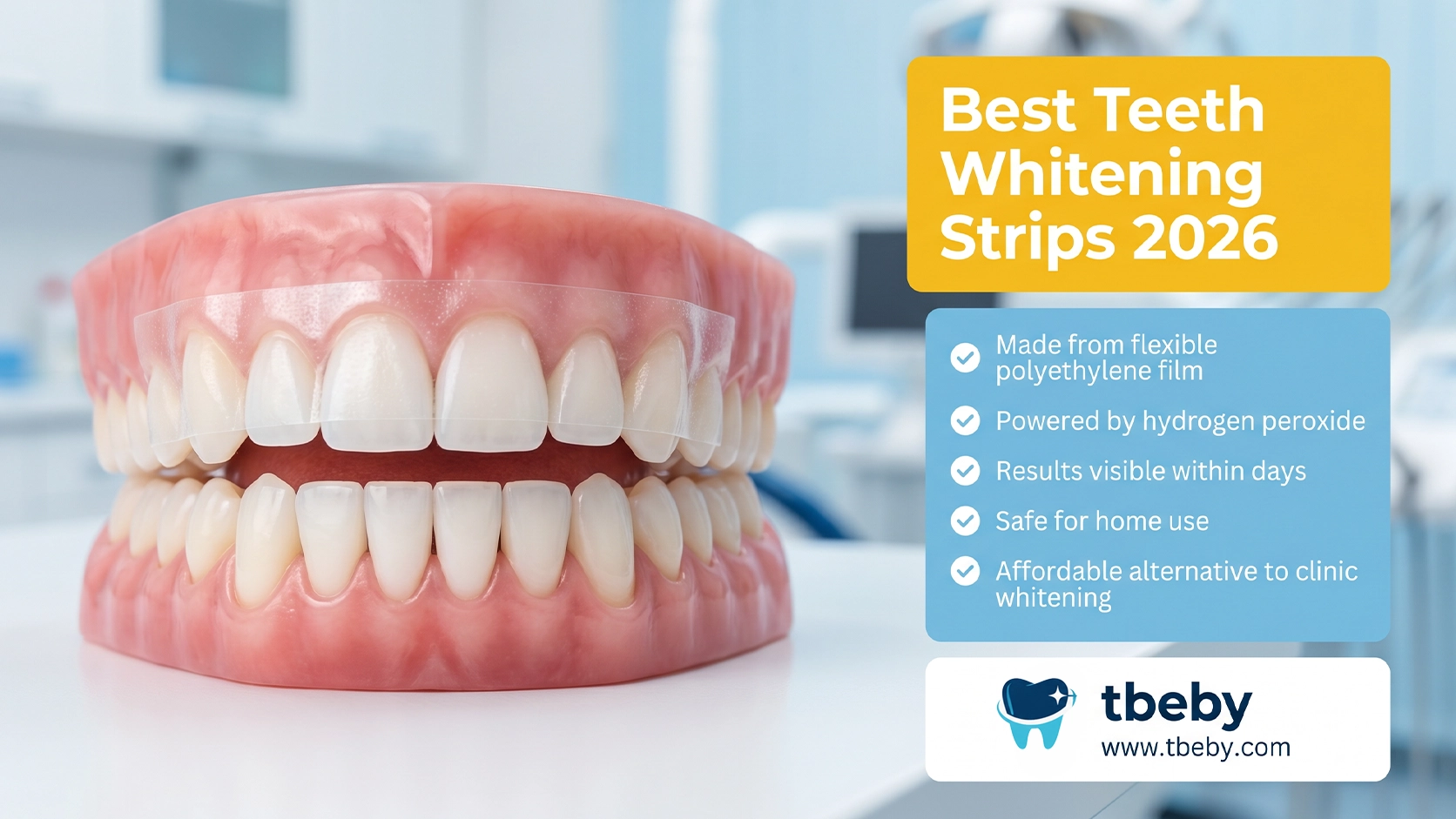

Teeth whitening strips are among the most effective and widely accessible tools for achieving a brighter smile, recommended by dental professionals and available for safe home use. Millions of people worldwide struggle with tooth discoloration caused by poor dietary habits, smoking, or inadequate oral hygiene, and whitening strips have emerged as one of the most practical and affordable solutions available today. In this comprehensive guide, we will explore everything you need to know about teeth whitening strips: their composition, mechanism of action, advantages, potential risks, top-rated brands, and essential usage tips.
What Are Teeth Whitening Strips Made Of?
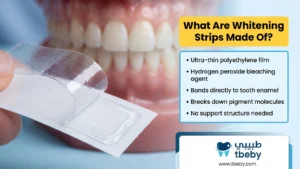
Teeth whitening strips consist of ultra-thin, flexible plastic films manufactured from polyethylene, a highly pliable material that allows the strips to conform closely and directly to the tooth surface without requiring any additional support structure.
Each strip is coated with an active bleaching agent, most commonly hydrogen peroxide, which penetrates the tooth enamel upon application. Once the strip adheres to the teeth, the whitening compound bonds with the enamel and initiates a chemical reaction that breaks down the molecular bonds of pigmented compounds responsible for yellow or dark discoloration.
This mechanism makes teeth whitening strips a clinically recognized method for addressing both surface stains and deeper intrinsic discoloration.
You can use Purple Teeth Whitening Powder to enhance enamel brightness and remove deep pigmentation before applying your whitening strips for more effective results.
Benefits of Teeth Whitening Strips
Teeth whitening strips offer several distinct advantages over alternative bleaching methods and professional treatments:
1. Cost-Effectiveness
Compared to in-office whitening sessions and professional-grade home bleaching kits, teeth whitening strips represent the most budget-friendly option available. Prices vary depending on brand, formulation, and retail channel, but strips remain significantly more affordable than clinical alternatives without sacrificing effectiveness.
2. Ease of Use
Strips are designed for straightforward home application with no specialized equipment or dental assistance required. Each package typically contains two strips, one for the upper arch and one for the lower, allowing complete treatment in a single session. While professional consultation is always advisable, strips can generally be used independently by following the enclosed instructions.
3. Rapid and Visible Results
Users typically begin to observe a reduction in yellowing and surface staining within just a few days of consistent use. With continued application, optimal results are generally achieved within an average of four months. For enhanced and accelerated outcomes, pairing strips with a teeth whitening LED lamp, which emits targeted blue light to break down deeper pigmentation, can significantly improve both the speed and longevity of results, delivering clinic-comparable whiteness from the comfort of home.
How to Use Teeth Whitening Strips: Step-by-Step
Proper application is essential to maximizing the efficacy of teeth whitening strips and minimizing any potential adverse effects:
| Step | Action | Key Detail |
| 1 | Brush & Dry Teeth | Remove all saliva and moisture to ensure proper strip adhesion |
| 2 | Open Packaging | Remove the upper arch strip and peel away the protective backing |
| 3 | Apply Upper Strip | Press firmly onto upper teeth for full contact and secure adhesion |
| 4 | Apply Lower Strip | Repeat the same process with the lower arch strip |
| 5 | Leave in Place | Keep strips on for 30 minutes to 2 hours as directed by product instructions |
| 6 | Remove & Discard | Peel off strips after use and dispose of them; never reuse |
You can use Toothpaste for Teeth Whitening to clean and prepare your teeth before strip application, ensuring maximum adhesion and optimal whitening results.
Important Tips for Using Whitening Strips Safely
To ensure safe and effective results with teeth whitening strips, adhere to the following professional recommendations:
- Brush and floss immediately after removal to eliminate any residual bleaching agent from the tooth surface and gum line.
- Read all product instructions carefully before use, even if you have used similar products before.
- Never reuse strips; each strip is designed for single-use application only.
- Avoid eating or drinking for at least 30 to 60 minutes following strip removal to prevent immediate re-staining.
- Eliminate staining agents during the treatment period, including tobacco, coffee, tea, and red wine.
- Incorporate a sea salt toothpaste into your post-strip routine as a natural antibacterial complement that removes bleaching residue, soothes gum tissue, and helps sustain whitening results over time.
Best Teeth Whitening Strips: Top Brands Reviewed
The market offers a wide range of teeth whitening strips, most of which utilize peroxide-based formulations. The following brands consistently rank among the most effective and trusted options available globally:
1. Crest Whitestrips
Crest is the world’s most recognized and widely used whitening strip brand. Its strips are praised for their ease of application, universal fit across various tooth shapes and jaw sizes, and clinically proven safety. While Crest products are priced at a premium relative to competing brands, their demonstrated efficacy and reliability justify the investment.
2. Crest Product Variants:
3D White Professional Effects Whitestrips. This flagship variant delivers results lasting up to one full year with just 30 minutes of daily use. Visible whitening is typically noticeable within three days of initiation.
3D White Luxe Glamorous Whitestrips. This formulation produces rapid whitening within three to fourteen days, with results sustained for up to six months, making it an excellent option for those seeking fast, event-ready results.
- IVISMILE Whitening Strips
IVISMILE strips are formulated with a reduced concentration of bleaching agent, making them an ideal option for individuals with sensitive teeth or those using strips as a maintenance tool following professional whitening sessions. Their lightweight design causes minimal gum irritation when applied correctly.
4. MySmile™ Whitening Strips
MySmile strips integrate sodium bicarbonate as an additional whitening booster, alongside natural aloe vera gel, which acts as a soothing, antibacterial, and anti-inflammatory agent, and natural peppermint flavoring. This combination positions MySmile as a gentle yet effective option for daily whitening maintenance.
Potential Side Effects and Risks of Teeth Whitening Strips
Despite their convenience, teeth whitening strips carry potential risks, particularly when misused or overused:
1. Tooth Sensitivity
The most commonly reported side effect is increased tooth sensitivity. Users may experience sharp pain or discomfort when consuming cold or hot beverages during or following a whitening course, an indication that enamel may be temporarily compromised.
2. Enamel Erosion
The adhesive nature of the strips, combined with the chemical action of bleaching agents, particularly chlorine dioxide, an acidic compound present in many formulations, can cause enamel wear over time. Gradual enamel erosion increases tooth fragility, susceptibility to decay, and long-term sensitivity if strips are used excessively or incorrectly.
3. Gum Irritation and Inflammation
If whitening strips come into direct contact with gingival tissue, they may cause irritation, redness, swelling, or gum ulceration. Should any of these symptoms arise, the strips should be removed immediately and a dental professional consulted promptly. Prolonged contact between bleaching agents and gum tissue can result in significant mucosal damage.
You can use Teeth Whitening Foam to soothe gum sensitivity and neutralize residual bleaching agents after strip removal, helping to minimize irritation and protect your enamel.
A Safe Path to a Brighter Smile
Teeth whitening strips are an affordable, convenient home solution for eliminating stubborn stains and restoring dental brightness through proven peroxide-based formulations. Results are fast and satisfying, yet achieving them safely requires strict adherence to product instructions to prevent enamel erosion, sensitivity, or gum irritation. Consulting your dentist before starting any whitening regimen ensures the product suits your dental condition. Complement your strips with daily flossing to remove plaque from hard-to-reach areas and maintain long-lasting, uniform whiteness.
FAQs About Teeth Whitening Strips
Are teeth whitening strips safe for home use?
Can I use whitening strips on my own without seeing a dentist?
Yes, they are completely safe when used in moderation and strictly according to the product instructions to avoid overexposing tooth enamel.
How long does it take to see results from whitening strips?
When do teeth whitening strips start showing visible effects?
Initial results typically appear within a few days of regular use, with full results developing over several weeks to months depending on the product quality and consistency of application.
Do whitening strips cause pain or tooth sensitivity?
What should I do if I feel sensitivity after using whitening strips?
They may cause temporary sensitivity in some users; discontinue use immediately and consult a dentist if discomfort becomes pronounced, particularly when consuming hot or cold beverages.
Are the results of teeth whitening strips permanent?
How long does whitening last after using whitening strips?
Results are not permanent; they typically last from several months up to one year, depending largely on your commitment to avoiding staining agents such as tobacco and coffee.
When can I eat or drink after removing whitening strips?
How long should I wait before eating following home whitening treatment?
It is advisable to wait at least 30 to 60 minutes before consuming any food or beverages to protect teeth from immediate re-staining.
Should I brush my teeth after removing a whitening strip?
What is the correct oral hygiene step immediately after removing a whitening strip?
Yes, it is essential to brush thoroughly with toothpaste and use dental floss to remove any residual bleaching agent and protect the gums from irritation.
Can I reuse the same whitening strip a second time?
Are teeth whitening strips designed for repeated use?
No, all whitening strips are designed for single-use only and must be discarded immediately after removal to prevent bacterial transfer.
What is the best teeth whitening strip brand available on the market?
Which whitening strip is recommended for the most effective results?
Crest Whitestrips are globally recognized as the most effective and reputable brand, offering multiple product variants suited to different levels of discoloration.
Do I need a prescription to purchase whitening strips?
Is a dental visit required before buying and using whitening strips?
No prescription is required; strips can be purchased directly from pharmacies or online retailers. However, a prior dental consultation is strongly recommended to rule out any conditions that may contraindicate whitening.
Can teeth whitening strips negatively affect the gums?
Can whitening strips cause oral inflammation or gum irritation?
Improper application or direct gum contact with the strip can cause irritation and redness; ensure strips are applied exclusively to the tooth surface and avoid gum overlap.
Sources:
https://www.ada.org/resources/ada-library/oral-health-topics/whitening