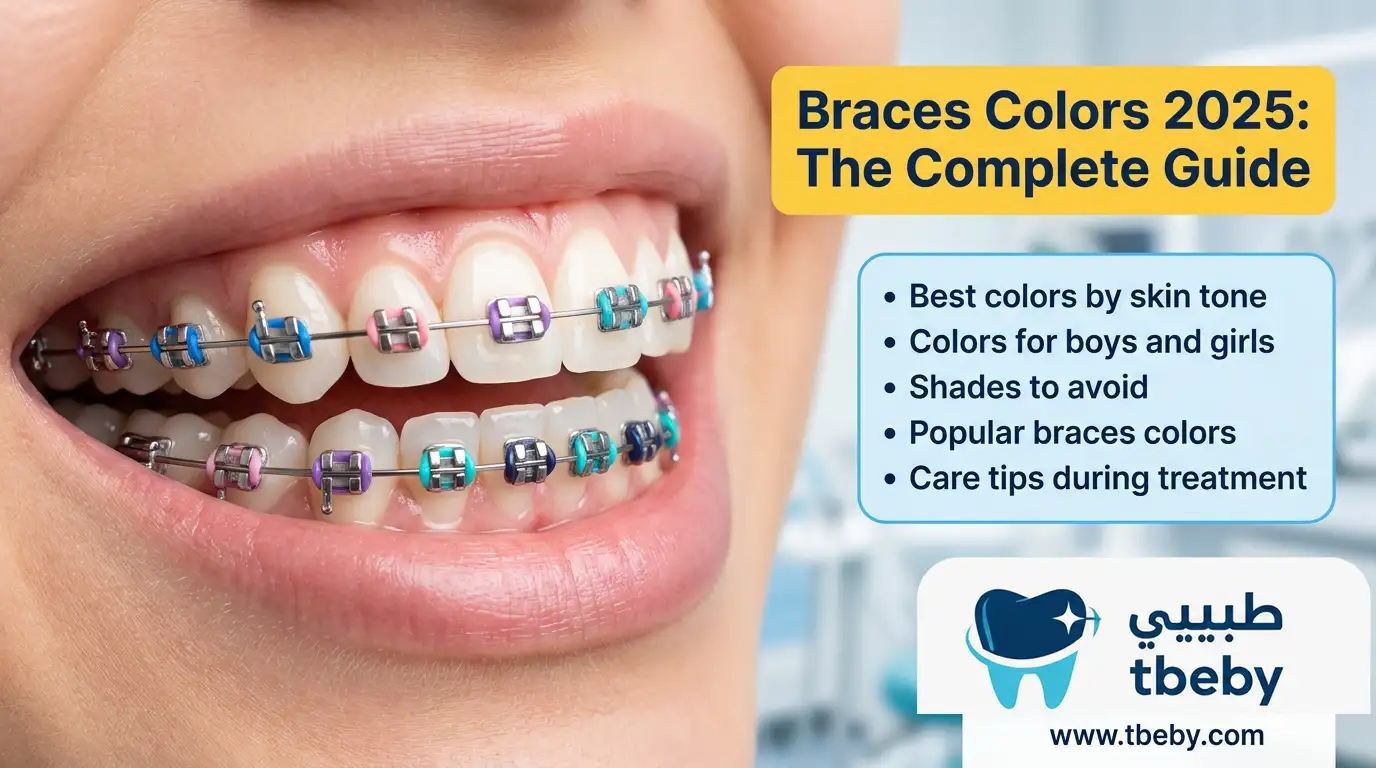

Brace colors represent one of the most personally significant decisions a patient makes throughout the entire orthodontic journey, as the wide spectrum of available rubber band shades directly influences daily appearance and overall confidence. Selecting the right color from the many options available requires understanding several personal factors, including skin tone, eye color, age, and lifestyle. This comprehensive guide will walk you through every essential consideration, from the most flattering shades for each complexion to the colors professionals recommend avoiding entirely.
What Is Orthodontic Braces Treatment?
Orthodontic treatment using fixed or removable appliances is among the most effective and widely practiced procedures in modern dentistry. It addresses a broad range of dental conditions, including tooth crowding, spacing irregularities, jaw misalignment, and bite disorders, all with minimal invasiveness compared to surgical alternatives.
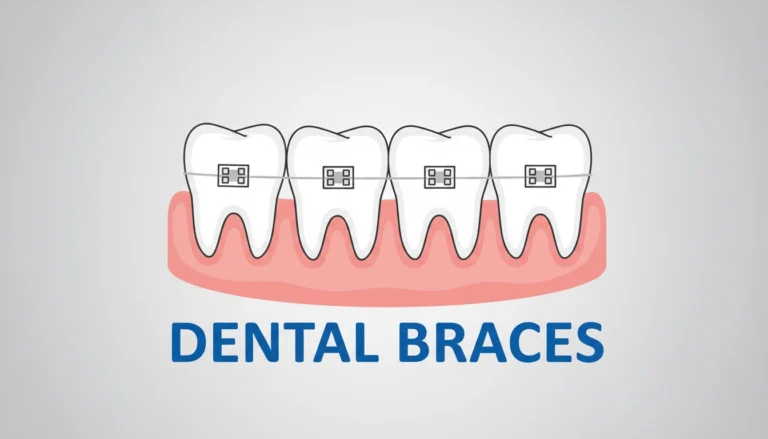
A standard fixed braces system consists of three primary components. First, brackets are bonded directly to the tooth surface and serve as anchors for the entire system. Second, arch wires thread through the brackets and apply the controlled pressure responsible for tooth movement. Third, elastic rubber bands are fitted over the brackets, and these are the colored components that patients can personalize according to their preferences.
Maintaining thorough oral hygiene during orthodontic treatment is essential. An oral irrigator is an excellent tool for flushing food debris and plaque from around brackets and wires, supporting gum health and improving overall treatment outcomes.
You can use Dental Cleaning for Braces to keep your brackets and wires free from plaque and food buildup throughout your orthodontic treatment.
Types of Orthodontic Braces You Can Choose From
Selecting the right type of braces depends on both patient preference and clinical recommendation, based on the complexity of each individual case.
1. Clear Aligners
Clear aligners are removable, transparent trays worn over the teeth and replaced every two to three weeks. They are particularly preferred by adult patients and professionals who wish to avoid the visible appearance of traditional hardware. This option is best suited to mild-to-moderate cases involving spacing correction and bite adjustment.
2. Traditional Fixed Braces
Fixed braces remain the most widely used orthodontic appliance globally. They consist of brackets bonded to the front surface of the teeth, connected by an arch wire, and secured with elastic bands. This system is effective across virtually all levels of case complexity and can be customized with various coloured rubber bands.
3. Preventive Orthodontic Appliances
Preventive appliances are designed exclusively for children between the ages of eight and twelve. Their purpose is to guide emerging permanent teeth into proper alignment before malocclusion develops, reducing or eliminating the need for fixed braces later in adolescence.
4. Lingual Braces
Lingual braces are a variation of fixed braces positioned on the inner surface of the teeth, making them entirely invisible from the outside. However, they carry notable disadvantages: they are significantly more expensive than conventional options, they are unsuitable for many case types, and they require longer treatment timelines to achieve comparable results.
Cleaning lingual braces presents a particular challenge due to their posterior placement. Patients are strongly advised to use specialized dental floss designed to access narrow interdental spaces, effectively removing plaque and food particles to prevent cavities and maintain gum health throughout treatment.
You can use Temporary Dental Fillings to protect vulnerable teeth during orthodontic treatment while awaiting permanent restorative procedures.
Key Factors That Help You Choose the Right Braces Color
When selecting from the full range of brace colors, several personal characteristics should guide the decision to ensure a flattering and aesthetically pleasing result.
1. Skin Tone
Skin tone is perhaps the single most important factor when evaluating braces’ colors. Individuals with fair or light skin tones are best complemented by deep, rich shades such as dark navy blue, dark brown, and deep mauve, as these create contrast that enhances the natural complexion.
Those with medium or olive skin tones benefit from lighter, warmer shades such as soft pink, light blue, and pale rose, which add a luminous quality to the overall appearance. Darker skin tones can carry virtually any color confidently, with jewel tones and vivid shades producing particularly striking results.
2. Eye Color
Eye color offers another creative dimension when choosing from available braces colors. Patients with brown or hazel eyes find that warm greens, teals, and navy blues create a beautifully complementary effect. Those with blue eyes can amplify their natural eye color by selecting blue or violet rubber bands.
Patients with green eyes achieve a vivid contrast using warm shades such as red, light orange, or mauve, which make the eyes appear more pronounced and expressive.
3. Age and Gender
Younger patients and teenagers generally gravitate toward bold, expressive shades, including bright blue, orange, red, purple, and pink, using their braces as a form of personal expression. Adult patients typically prefer more understated choices that remain less noticeable during professional and social interactions.
Gender preferences also play a meaningful role. Male patients generally favor neutral or subdued tones, while female patients enjoy a broader palette with fewer social constraints.
Best Braces Colors for Males
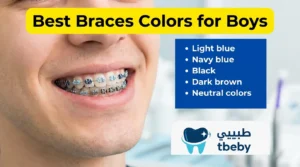
Male patients frequently express a preference for colors that are subtle, professional, and not overtly attention-drawing. The most recommended brace colors for men include soft pastel shades, various shades of blue ranging from light to dark, shades of navy and steel blue, purple in muted tones, black, and dark brown.
Among all available options, light blue consistently ranks as the most popular choice among male orthodontic patients worldwide. It strikes an ideal balance between visibility and subtlety, complementing most skin tones effectively.
Best Braces Colors for Girls and Women
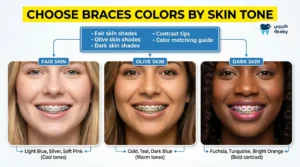
Female patients enjoy considerably greater creative freedom when selecting from the range of brace colors. In addition to factoring in skin tone and eye color guidance discussed above, the following shades are consistently among the most popular choices for girls and women:
| Color | Variations |
| Pink | Blush, baby pink, hot pink |
| Turquoise | Turquoise, teal |
| Blue | Sky blue, royal blue |
| Purple | Purple, violet |
| Red | Deep red, burgundy |
These colors offer vibrant, expressive options that complement a wide range of skin tones and personal styles.
Colors to Avoid When Choosing Your Braces Color
Not all shades within the spectrum of braces colors produce attractive or hygienic-looking results. The following options are generally best avoided:
Green: Despite its popularity as a general color preference, green rubber bands closely resemble food particles trapped between teeth, creating an unflattering and unhygienic appearance.
Clear or Transparent: While seemingly a neutral choice, clear bands absorb pigment from food and beverages over time, gradually taking on a stained, yellowish appearance that gives the impression of poor dental hygiene.
White and Very Light Shades: These colors visually accentuate any natural tooth yellowing and can make the complexion appear washed out, particularly for individuals with lighter skin tones.
To minimize staining and discoloration associated with certain brace colors, using an electric toothbrush is highly recommended. Electric toothbrushes remove plaque more effectively than manual brushing and help maintain a consistently cleaner, brighter smile throughout treatment.
You can use Medical Gauze to gently relieve irritation and protect sensitive gum areas caused by brackets or wires during the early stages of orthodontic treatment.
Essential Tips for Maintaining Your Teeth During Orthodontic Treatment
Caring for teeth during orthodontic treatment requires consistent attention and the right tools. The following evidence-based guidelines will protect both the teeth and the appliance:
- Brush thoroughly after every meal, paying careful attention to all bracket surfaces and the spaces beneath the arch wire.
- Avoid hard foods such as raw carrots, apples, nuts, and hard candies that may dislodge or fracture brackets.
- Eliminate or drastically reduce sticky foods such as caramel, chewing gum, and dried fruit, which adhere to brackets and are difficult to remove.
- Minimize sugar intake and avoid carbonated beverages to reduce the risk of enamel erosion and cavities.
- Use an orthodontic toothbrush specifically designed to clean around bracket architecture with ease.
- Select a fluoride-containing toothpaste to reinforce enamel strength and resist demineralization.
- Attend all scheduled orthodontic appointments without interruption to ensure timely and optimal results.
Express Your Personality Through Your Smile
The orthodontic journey has evolved far beyond a purely clinical procedure. Today, selecting your ideal braces colors is a meaningful opportunity to express personal identity, style, and character. Whether you choose the understated elegance of clear aligners, bold and vibrant shades for maximum self-expression, or the quiet confidence of dark neutral tones, the ultimate goal remains consistent: achieving a healthy, beautiful, and lasting smile.
The commitment that matters most, however, is not the color you select but the daily discipline of proper oral care. Use the right tools, follow professional guidance, and attend every scheduled visit. Discuss your color preferences with your orthodontist at your next appointment and take your first confident step toward the smile you have always envisioned.
FAQs About Braces Colors
What are the best braces colors for people with fair skin?
Which rubber band colors look most flattering on light skin tones?
Deep shades such as dark blue, mauve, and dark brown create the most flattering contrast against fair and light skin tones.
Which braces colors do dentists recommend avoiding?
Are there rubber band colors that make teeth look dirty or stained?
Clear, white, and green shades are best avoided as they either stain over time or resemble food particles trapped on the teeth.
What are the most popular braces colors among girls?
Which rubber band shades do young women and girls prefer most?
Pink, turquoise, purple, royal blue, and deep red are consistently the most chosen brace colors among female patients.
What colors of braces are most suitable for men and teenage boys?
Which shades work best for male orthodontic patients?
Males typically prefer neutral and dark shades such as black, brown, and pastel tones, with light blue being the most popular choice overall.
How does eye color influence the choice of braces color?
Should I consider my eye color when selecting orthodontic rubber band shades?
Brown eyes suit green and blue tones, blue eyes are enhanced by violet shades, and green eyes are complemented by warm oranges and mauve.
How should lingual braces be cleaned effectively?
What is the best oral hygiene routine for patients wearing hidden inner braces?
Lingual braces require specialized dental floss and an oral irrigator to clean tight spaces and prevent cavities behind the teeth.
At what age should children begin preventive orthodontic treatment?
When is the right time to fit a child with a preventive orthodontic appliance?
Preventive orthodontic appliances are typically recommended for children between the ages of eight and twelve as permanent teeth emerge.
What is the difference between clear aligners and traditional fixed braces?
Which is more effective: removable clear aligners or fixed metal braces?
Clear aligners are removable and suited to mild cases, while fixed braces address complex malocclusions through permanent bracket bonding.
What foods should be avoided during orthodontic treatment?
Are there dietary restrictions patients must follow while wearing braces?
Hard, sticky, and sugary foods must be avoided as they risk breaking brackets, adhering to wires, and accelerating enamel decay.
When can I change my rubber band color during orthodontic treatment?
How often am I allowed to switch brace colors throughout my treatment period?
Rubber band colors can be changed at every scheduled tightening appointment with your orthodontist throughout the full treatment duration.
Source:
https://www.ada.org/sitecore/content/ADA-Organization/ADA/MouthHealthy/home/all-topics-a-z/braces