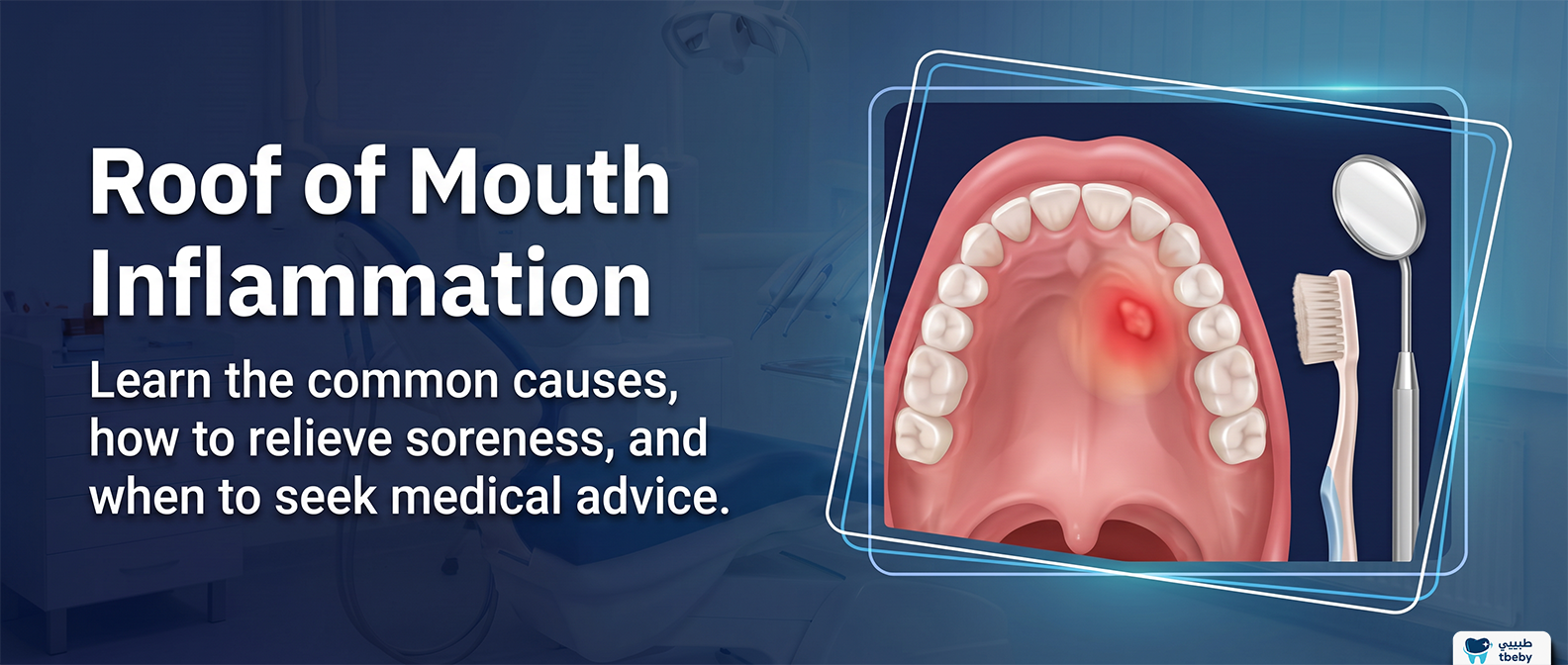

Roof of mouth inflammation can turn a simple meal into an uncomfortable experience. A sip of coffee may sting, crunchy food may scrape the sore spot, and swallowing may hurt. Sometimes you know exactly what happened: you ate something before it cooled. At other times, the soreness appears without an obvious reason.
The roof of your mouth is called the palate. It can become sore after a burn or scratch, but ulcers, dry mouth, and infections can also affect it. Most minor injuries improve with gentle care. The useful first step is to notice what the area looks like, when the discomfort began, and whether it is getting better.
What Does Roof of Mouth Inflammation Feel Like?
Roof of mouth inflammation may affect one small spot or a larger area. The symptoms depend on what caused it, but you might notice:
- Pain, tenderness, or a burning feeling
- Redness or swelling
- A raw patch, blister, or ulcer
- Discomfort while eating or swallowing
- White patches inside the mouth
- A dry or sticky feeling
These signs can help you describe the problem, but they cannot identify the cause with certainty. A white patch, for example, needs more than a quick look in the mirror to diagnose.
Why Does the Roof of My Mouth Hurt When I Swallow?
Food and drink touch the palate as you swallow. If that tissue is burned or has an ulcer, even soft food may cause pain. Sometimes the discomfort actually comes from farther back in the throat. If swallowing becomes difficult, or the pain is severe or worsening, seek medical advice.
What Causes Roof of Mouth Inflammation?
There is no single cause of roof of mouth inflammation. The table below gives you a quick way to compare common possibilities. It is a guide to what you may notice, not a way to diagnose yourself.
| Possible cause | What you may notice | What to do next |
| Hot food or drink | Soreness begins soon after eating or drinking something hot | Let the area heal and avoid further heat or irritation |
| A scratch or friction | One tender spot after hard food or contact with a dental appliance | Avoid rubbing the area; see a dentist if it keeps happening |
| A mouth ulcer | A distinct sore that hurts when touched by food | Monitor healing and seek advice if it persists |
| Oral thrush | Redness and soreness, sometimes with white patches | Ask a clinician to assess whether treatment is needed |
| Dry mouth | Sticky dryness alongside soreness or irritation | Drink water and seek advice if the dryness continues |
| A persistent unexplained change | A sore, lump, or red or white patch that does not go away | Arrange an examination with a dentist or doctor |
Can Children Get Roof of Mouth Inflammation?
Yes. Children can burn or scrape their palate, and they can develop mouth ulcers or oral thrush. In infants, thrush may also cause white patches elsewhere in the mouth and discomfort during feeding; our guide to oral thrush in infants explains what parents may notice. A young child may not be able to explain where it hurts.
If you can, look inside the child’s mouth gently without pressing on the sore area. Seek medical advice if the child cannot drink normally, seems unwell, or has a sore that is getting worse or not healing. Check before using a medicated mouthwash or oral gel, since a product suitable for an adult may not be appropriate for a child.
How Can You Relieve Roof of Mouth Inflammation?
The best approach to roof of mouth inflammation depends on its cause. A mild burn often needs time and protection from further irritation. Thrush may need antifungal treatment, while a sore caused by a rubbing appliance will keep returning until the friction is addressed.
For mild soreness, a few simple steps can make meals easier:
- Choose soft foods while the area is tender.
- Let hot meals and drinks cool before consuming them.
- Drink water regularly, particularly if your mouth feels dry.
- Keep brushing gently while your palate is sore. An extra-soft toothbrush may make your usual cleaning routine more comfortable; take care not to brush directly over the tender spot.
You can also ask a pharmacist whether a pain-relief product is suitable for you. Your age, other medicines, and health conditions matter when choosing one. Avoid picking at a blister or repeatedly touching the sore with your tongue.
Should You Use Mouthwash for a Sore Palate?
Mouthwash is not a cure for every cause of roof of mouth inflammation. Some formulas may sting an irritated area, and the ingredients differ between products. If you are unsure what a rinse contains, this guide to Listerine mouthwash explains why checking the formula matters. Ask a pharmacist or dentist whether a rinse is suitable for your sore palate.
Regular brushing with a fluoride toothpaste and cleaning between the teeth remain useful for oral hygiene. Neither replaces treatment for a diagnosed infection or an examination of a sore that will not heal.
What Treatment Might a Dentist or Doctor Recommend?
A dentist or doctor will usually ask when the soreness started, whether it returns, and whether anything touches or irritates the spot. They may also ask about dry mouth, medicines, and other symptoms before examining the area.
The next step depends on what they find. They may address friction from an appliance, recommend care for dry mouth, or prescribe treatment for a confirmed infection. If a change remains unexplained or persists, they may arrange further assessment. There is no single gel, rinse, or medicine that treats every sore palate.
How Long Does Roof of Mouth Inflammation Last?
Roof of mouth inflammation does not have one fixed healing time. A minor scrape or mild burn may gradually settle over several days. Common mouth ulcers usually heal within one to two weeks. Soreness caused by repeated rubbing may continue until that rubbing stops, while an infection may need specific treatment.
Watch the pattern as well as the calendar. An area that becomes less painful each day is reassuring. One that grows, bleeds, or stays unchanged needs attention. If you cannot tell whether a sore is healing, arrange a check rather than continuing to guess at its cause.
When Should You See a Dentist or Doctor?
Arrange an appointment if roof of mouth inflammation keeps returning, interferes with eating or drinking, or does not improve as expected. If the soreness comes with a throbbing toothache, gum swelling, or fever, a dental infection is another possibility; the symptoms described in our tooth abscess guide can help you recognize why prompt dental assessment matters. Seek advice sooner for spreading swelling or difficulty swallowing.
Have an ulcer checked if it lasts more than three weeks. A persistent lump or red or white patch also needs an examination, even when it does not hurt. These signs do not tell you the diagnosis; they tell you it is time to find out what is causing the change.
How Can You Help Prevent Roof of Mouth Inflammation?
You cannot prevent every sore, but you can reduce some common sources of irritation. Give hot food and drinks time to cool. Chew carefully when eating hard or sharp foods, and ask your dentist to check an appliance that rubs your palate.
Keep up gentle daily oral care, including cleaning between your teeth with dental floss if you use it comfortably. Mention ongoing dry mouth to a healthcare professional. If roof of mouth inflammation happens repeatedly, note when it starts and what you had been eating or drinking; those details may help identify a pattern.
Frequently Asked Questions About Roof of Mouth Inflammation
What commonly causes roof of mouth inflammation?
Hot food, minor scratches, and mouth ulcers are possible causes. Dry mouth and oral thrush can also make the palate sore. The timing and appearance offer clues, but an examination may be needed.
Can hot pizza burn the roof of my mouth?
Yes. Hot cheese or sauce can burn the palate. Let food cool before eating, and avoid irritating the sore area while it heals.
Is roof of mouth inflammation contagious?
Inflammation itself is a symptom, not a diagnosis. Whether the underlying cause can spread depends on what is causing the soreness.
Can dry mouth make my palate sore?
Yes. A lack of saliva can leave oral tissues uncomfortable and more easily irritated. If your mouth stays dry, ask a healthcare professional about the cause.
Do white patches on the palate always mean thrush?
No. Thrush is one possibility, but white patches can have other causes. Have a persistent or unexplained patch examined.
Should I pop a blister on the roof of my mouth?
No. Avoid picking at or opening it. Seek advice if it is very painful, getting worse, or not healing.
Will mouthwash heal roof of mouth inflammation?
Not necessarily. Treatment depends on the cause, and some mouthwashes may sting. Ask a pharmacist or dentist before using one on a sore area.
How long does a mouth ulcer usually last?
Common mouth ulcers generally clear within a week or two. See a dentist or doctor if an ulcer lasts more than three weeks.
Can a child get a sore on the roof of the mouth?
Yes. Burns, scratches, ulcers, and thrush are possible causes. Get advice if the child struggles to drink, appears unwell, or is not improving.
When should I worry about a sore palate?
Arrange an examination if the soreness persists, worsens, or repeatedly returns, or if you notice a lasting lump or red or white patch.
source