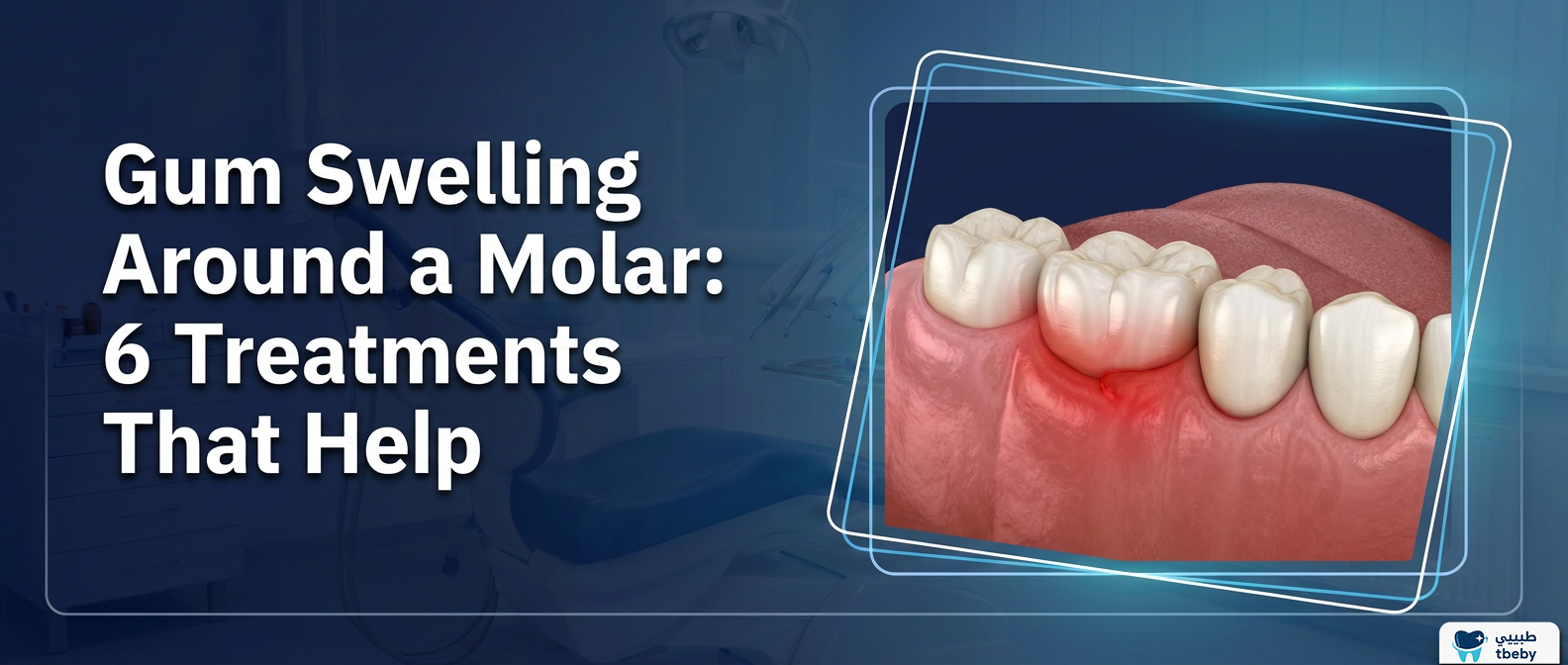

Gum swelling around a molar can make chewing uncomfortable, and the cause is not always obvious. Trapped food or plaque may irritate the gum, while an infected tooth, a partially erupted wisdom tooth, or an abscess may need dental treatment.
Relief depends on what is causing the swelling. A mouth rinse may ease discomfort, but it cannot remove tartar or treat an infection. Here are the common causes, six possible treatments, and the signs that call for prompt care.
What Causes Gum Swelling Around a Molar?
Gum swelling around a molar can have several causes. The symptoms may offer clues, but a dentist needs to examine the area to identify the problem.
| Possible cause | What you might notice |
| Plaque and gum disease | Redness or bleeding along the gumline, sometimes affecting more than one tooth. |
| Trapped food | Tenderness in one spot, especially after eating or when cleaning between teeth. |
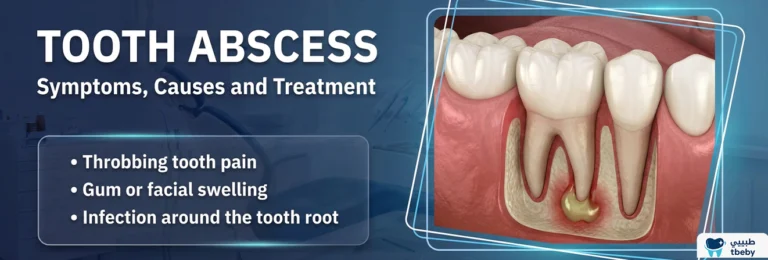
| An infected tooth or abscess | Tooth pain, pain when biting, a bad taste, or a swollen lump near the molar. |
| A partially erupted wisdom tooth | Swelling and soreness behind the last molar that may return. |
| A damaged tooth or filling | Irritation near a broken tooth, rough edge, or filling that makes the area hard to clean. |
These signs are not enough to diagnose the cause on your own. If the swelling persists, worsens, or keeps returning, arrange a dental examination.
If redness or bleeding extends beyond one molar, learning more about gum disease can help you understand why the dentist may examine the surrounding gums as well.
How Is Gum Swelling Around a Molar Treated?
There is no single treatment for gum swelling around a molar. The dentist first identifies where the problem began: at the gumline, beneath a wisdom tooth flap, or inside the molar itself. The six approaches below address different causes; you may need only one of them or a combination.
1. Professional cleaning
If plaque and tartar are irritating the gum, a professional cleaning can remove deposits that brushing cannot reach. The dentist will also check whether the inflammation extends below the gumline and show you how to clean around the molar at home, including whether interdental brushes would suit the spaces between your teeth. Polishing may smooth the tooth afterward, but an abscess or infected tooth needs separate treatment.
2. Deep cleaning below the gumline
If gum disease extends below the gumline, your dentist may recommend scaling and root planing to remove plaque and tartar and clean the molar’s root surfaces. Treatment may take more than one visit, followed by a check on how the gum is healing. Ask your dentist which areas need deep cleaning and how to care for them afterward.
3. Draining an abscess
If the swelling is an abscess, the dentist may drain the pus to relieve pressure and then treat the source of the infection. Do not squeeze or pierce the gum yourself. Even if the abscess bursts and the pain eases, you still need a dental examination because the infection may remain.
If you have been told you have an abscess, you may also want to know when antibiotics are used for a tooth abscess and why dental treatment is still necessary.
4. Root canal treatment
If an infection starts inside a molar, root canal treatment may save the tooth. The dentist removes the infected tissue, cleans and seals the canals, then restores the tooth if needed. Because molars can have several canals, your dentist will examine the tooth and an X-ray to decide whether this treatment is suitable.
If your molar can be saved, this guide to root canal treatment explains what happens during the procedure and how the tooth is protected afterward.
5. Tooth extraction
Extraction may be recommended if a molar cannot be restored or a wisdom tooth repeatedly causes problems. Swelling alone does not mean the tooth must be removed; your dentist will consider its condition, position, and other treatment options.
6. Medication or a prescribed mouth rinse
A dentist may recommend a pain reliever or a short course of mouth rinse to ease symptoms, but these do not replace treatment of the cause. Antibiotics are not routinely needed for localized dental pain and swelling. They may be prescribed if an infection is spreading or other clinical factors call for them. Do not take leftover antibiotics without a dental assessment.
What Can You Do While Waiting for a Dental Appointment?
If gum swelling around a molar has just appeared, gentle care may help you stay comfortable until a dentist can find the cause. Keep brushing the rest of your teeth, and use a very soft toothbrush to clean the sore area carefully rather than scrubbing it. If food is caught between teeth, use floss or an interdental cleaner gently; stop if you cannot remove it without hurting the gum.
A warm saltwater rinse may soothe an irritated area. You can also ask a pharmacist which pain reliever is suitable for you, particularly if you take other medicines or have a health condition. These steps offer temporary relief. Arrange a dental visit if the swelling persists, worsens, or keeps coming back.
When Does Gum Swelling Around a Molar Need Urgent Care?
Contact a dentist promptly if you have a swollen, painful area near a tooth, particularly if you notice a bad taste, pus, worsening pain, or swelling in your face or jaw. An abscess will not be reliably resolved by waiting for it to drain on its own.
Seek emergency medical help if swelling makes it difficult to breathe, swallow, or speak. Severe swelling in the mouth, throat, or neck also needs immediate attention.
How Can You Help Prevent Gum Swelling Around a Molar?
Good daily cleaning reduces one common cause of gum swelling around a molar: plaque collecting where the tooth meets the gum. Brush twice a day with fluoride toothpaste and clean between your teeth regularly, using floss or another interdental cleaner that suits the space.
Pay attention to the very back teeth, but use a gentle touch around sore gums. If you often struggle to reach a wisdom tooth or repeatedly notice swelling in the same place, mention it at your next dental visit. Regular checkups give your dentist a chance to spot gum disease, decay, or a difficult-to-clean area before it becomes more troublesome.
What Should You Do About Gum Swelling Around a Molar?
Gum swelling around a molar is worth paying attention to, especially if it lasts, returns, or makes chewing painful. Sometimes gentle cleaning helps when the gum is irritated by trapped food or plaque. If the cause is gum disease, an abscess, or an infection inside the tooth, the swelling may persist until that problem is treated.
The right approach could be a professional cleaning, drainage, root canal treatment, or another option based on what the dentist finds. If swelling spreads or makes it difficult to swallow or breathe, seek urgent help. Otherwise, arranging a dental examination is the best way to understand the cause and prevent the problem from getting worse.
Frequently Asked Questions About Gum Swelling Around a Molar
Can gum swelling around a molar go away on its own?
Mild irritation may settle, but recurring or worsening swelling needs a dental examination. An abscess or trapped tartar requires treatment of its cause.
Why is the gum swollen around just one molar?
Possible causes include trapped food, local gum disease, a problem with the tooth, or an erupting wisdom tooth. An examination helps distinguish them.
Does a swollen gum always mean an abscess?
No. Many problems can cause swelling. Pain, pus, or a bad taste may raise concern about an abscess, but a dentist must assess the area.
Should I brush a swollen gum?
Yes, clean gently with a soft toothbrush. Avoid harsh scrubbing, and ask a dentist for advice if cleaning is very painful.
Will a saltwater rinse cure gum swelling around a molar?
It may provide temporary comfort, but it cannot remove tartar or treat an infection inside a tooth.
Do I need antibiotics for a swollen gum?
Not necessarily. Dentists usually focus on treating the source of the problem and prescribe antibiotics only when they are clinically appropriate.
Can a wisdom tooth cause swelling behind a molar?
Yes. Gum around a partly erupted wisdom tooth can become inflamed, particularly when the area is difficult to keep clean.
Can a root canal stop the swelling?
It may help when the swelling comes from an infection inside a tooth that can be saved. It will not treat every cause of gum swelling.
Is gum swelling around a molar an emergency?
It needs prompt dental attention if an infection is suspected. Difficulty breathing, swallowing, or speaking requires emergency medical help.
Why does the swelling keep coming back?
The original cause may still be present. Repeated swelling can occur around a difficult-to-clean wisdom tooth or an untreated gum or tooth problem.
source
National Institute of Dental and Craniofacial Research (NIDCR) — Periodontal (Gum) Disease