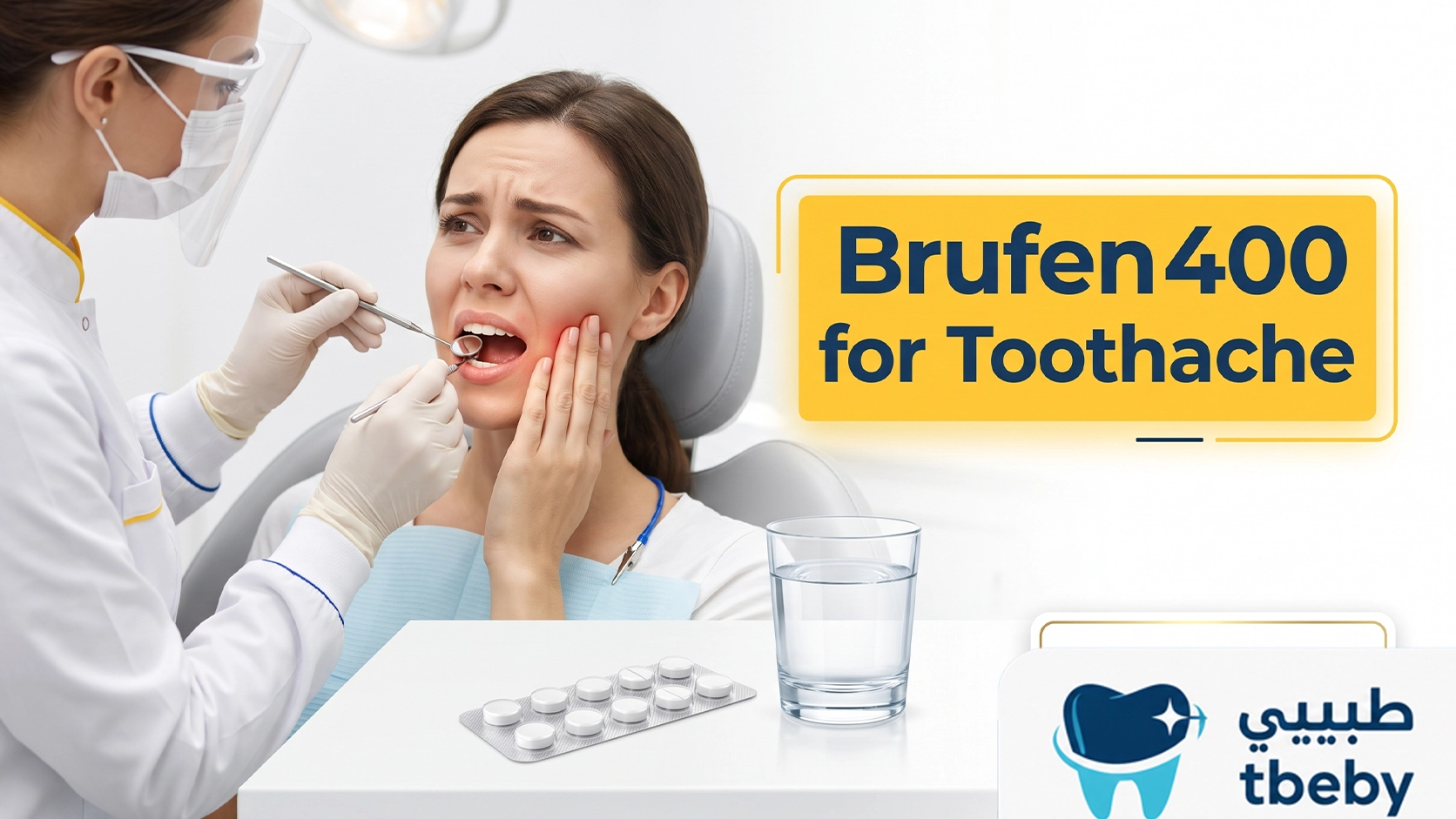

Brufen 400 for toothache is commonly used for short-term relief of dental pain and inflammation. It contains ibuprofen, a nonsteroidal anti-inflammatory drug (NSAID) that can help reduce pain, swelling, and inflammation while you arrange appropriate dental treatment.
Ibuprofen can temporarily ease tooth pain but does not treat its cause. This guide covers how Brufen works, its uses, side effects, precautions, and when dental care is necessary.
What Is Brufen 400 for Toothache?
Brufen 400 for toothache contains 400 mg of ibuprofen. Ibuprofen belongs to a group of medicines called nonsteroidal anti-inflammatory drugs, or NSAIDs.
These medicines reduce the production of substances called prostaglandins, which contribute to pain, inflammation, and fever.
Because dental pain is often associated with inflammation, ibuprofen may provide temporary relief from symptoms such as:
- Toothache
- Gum pain
- Dental inflammation
- Pain following certain dental procedures
- Mild swelling associated with inflammation
However, pain relief should not be confused with treatment. If a cavity, infection, damaged filling, cracked tooth, or another dental condition is causing the pain, the underlying problem still needs to be addressed.
A toothache spray may provide brief topical relief, but it should not replace professional dental treatment.
What Can Cause Tooth Pain?
Before using Brufen 400 for toothache, it is useful to understand what may be causing the discomfort. Tooth pain does not always come from tooth decay, and identifying the cause is important for choosing the right treatment.
Common causes include:
- Dental caries: Decay can gradually reach deeper layers of the tooth and irritate the dental pulp.
- Pulp inflammation: Inflammation inside the tooth can cause sensitivity or persistent, throbbing pain.
- Dental abscess: A bacterial infection may cause severe pain, tooth swelling, gum tenderness, or pus formation and usually requires prompt dental treatment.
- Gum disease: Inflamed or infected gums may become painful, swollen, or bleed.
- Cracked tooth: Cracks can cause pain when biting or when consuming hot or cold foods.
- Damaged or loose fillings: An old or damaged restoration may expose sensitive areas of the tooth.
- Dental procedures: Temporary discomfort can occur following some dental treatments.
A painkiller can reduce symptoms temporarily, but recurring or severe pain should be evaluated by a dentist.
How Does Brufen 400 Help Dental Pain?

The main benefit of Brufen 400 for toothache comes from ibuprofen’s ability to reduce both pain and inflammation.
For dental pain, ibuprofen may help with:
- Reducing toothache temporarily
- Decreasing inflammation around affected tissues
- Relieving discomfort following some dental procedures
- Reducing pain associated with inflamed gums
- Making eating or resting more comfortable while awaiting dental treatment
Dental guidelines generally recommend NSAIDs as first-line treatment for acute dental pain when appropriate. Ibuprofen may sometimes be combined with acetaminophen, depending on the patient’s health and medications.
How Long Does Brufen 400 Take to Work?
When taking Brufen 400 for toothache, pain relief does not occur instantly. Ibuprofen is absorbed after it is taken, and the time until noticeable relief varies between individuals.
Some people may begin noticing pain relief within approximately 20–30 minutes, while the effect may take longer in others.
The duration and strength of relief can also vary depending on:
- The severity of the dental problem
- Individual response to ibuprofen
- Whether the medicine was taken with food
- Other medicines being used
- The underlying cause of the toothache
If severe pain persists despite pain medication, do not simply continue increasing the dose. Persistent dental pain needs professional evaluation.
Brufen 400 Dosage and Safe Use
The appropriate ibuprofen dose depends on the product, age, and health status. Adults and adolescents aged 12 or older may take a 400 mg dose when suitable, following the label or professional advice.
| Safety Point | Recommendation |
| Tablet strength | 400 mg ibuprofen |
| Who can use it? | Depends on age, medical history, and product instructions |
| How often? | Follow the medicine label or medical advice |
| Maximum daily dose | Do not exceed the product’s recommended limit |
| Duration | Use the lowest effective dose for the shortest necessary time |
| Children | Use only an age- and weight-appropriate formulation and dose |
Never calculate a child’s dose from adult Brufen tablets unless specifically instructed by a qualified healthcare professional. Pediatric ibuprofen dosing is generally based on the child’s weight and the concentration of the product.
Do not take extra tablets simply because dental pain remains severe.
Possible Side Effects of Brufen 400
Like other NSAIDs, Brufen 400 for toothache can cause side effects. Many people use ibuprofen without serious problems when it is appropriate for them, but risks increase with higher doses, prolonged use, certain health conditions, and some drug combinations.
Common or possible side effects include:
- Indigestion
- Stomach discomfort
- Nausea or vomiting
- Heartburn
- Dizziness
- Headache
More serious reactions can occur less commonly, including gastrointestinal bleeding, kidney problems, severe allergic reactions, and cardiovascular complications.
Stop taking the medicine and seek urgent medical attention if you develop symptoms such as difficulty breathing, facial or throat swelling, vomiting blood, black stools, severe abdominal pain, or another severe reaction.
Who Should Avoid Brufen 400?
Brufen 400 for toothache is not appropriate for everyone. Certain medical conditions and medications can increase the risk of complications from ibuprofen.
Speak with a doctor or pharmacist before taking it if you:
- Have had an allergic reaction to ibuprofen, aspirin, or another NSAID.
- Have or previously had a stomach ulcer or gastrointestinal bleeding.
- Have kidney, liver, or heart disease.
- Have asthma that is triggered or worsened by aspirin or NSAIDs.
- Have a bleeding disorder.
- Are taking anticoagulants or certain other medicines.
- Are pregnant, trying to become pregnant, or breastfeeding.
- Are taking another NSAID-containing medication.
Brufen 400 During Pregnancy
Ibuprofen requires particular caution during pregnancy.
NSAIDs should generally be avoided from around 20 weeks of pregnancy unless specifically advised by a healthcare professional because they may affect fetal kidney function and amniotic fluid. Use later in pregnancy carries additional risks and should be avoided unless specifically directed by a qualified clinician.
If you are pregnant and experiencing dental pain, speak with your dentist, doctor, or pharmacist before taking medication.
Important Precautions Before Taking Brufen
Before using Brufen 400 for toothache, read the product information carefully and check whether any other medicines you take contain ibuprofen or another NSAID.
Important precautions include:
- Use the lowest effective dose for the shortest necessary period.
- Do not exceed the recommended dose.
- Avoid taking two NSAIDs together unless specifically instructed.
- Tell your healthcare professional about other medicines and supplements you use.
- Ask for medical advice if you have chronic kidney, liver, heart, or gastrointestinal conditions.
- Stop taking the medicine and seek medical attention if you develop signs of a serious allergic reaction or gastrointestinal bleeding.
Taking ibuprofen with food or milk may help reduce stomach upset for some people, although this does not eliminate the risk of gastrointestinal complications.
Brufen 400 vs Other Dental Pain Relievers
Different pain relievers work in different ways, and the most appropriate option depends on your medical history and the cause of the pain.
| Pain Reliever | Reduces Pain | Reduces Inflammation | Important Consideration |
| Ibuprofen | Yes | Yes | Not appropriate for everyone |
| Naproxen | Yes | Yes | Another NSAID with similar precautions |
| Acetaminophen / Paracetamol | Yes | Limited anti-inflammatory effect | Excessive doses can seriously damage the liver |
| Ibuprofen + Acetaminophen | Yes | Yes | May be appropriate in some cases when used correctly |
Do not combine medicines without checking their active ingredients and recommended doses.
Does Brufen Treat a Dental Infection?
No. Brufen 400 for toothache can reduce pain and inflammation, but it does not eliminate bacteria or cure a dental infection.
A dental infection may require professional treatment such as:
- Drainage of an abscess
- Root canal treatment
- Treatment of tooth decay
- Extraction when a tooth cannot be restored
- Antibiotics in selected cases when clinically indicated
Antibiotics are not required for every toothache and should only be used when prescribed for an appropriate bacterial infection.
An antiseptic mouthwash may support daily oral hygiene, but it cannot cure a dental infection or abscess.
When Should You See a Dentist?
Temporary pain relief can be useful, but it should not delay necessary dental care.
Contact a dentist if:
- Tooth pain lasts longer than a day or two.
- Pain is severe or getting worse.
- You have swelling around the tooth, gum, jaw, or face.
- You have pain when biting.
- You notice pus or a bad taste coming from the affected area.
- The tooth is cracked or damaged.
- Pain repeatedly returns after medication wears off.
Seek urgent medical or dental attention for significant facial or neck swelling, difficulty breathing or swallowing, or other signs that an infection may be spreading.
How to Reduce the Risk of Toothache
While not every dental problem can be prevented, consistent oral care can reduce the risk of tooth decay and gum disease.
Useful habits include:
- Brush your teeth twice daily with fluoride toothpaste.
- Clean between the teeth every day using floss or another appropriate interdental cleaner.
- Limit frequent sugary foods and drinks.
- Avoid smoking and tobacco products.
- Attend regular dental checkups according to your dentist’s recommendations.
- Do not ignore persistent tooth sensitivity, bleeding gums, or recurring pain.
An electric toothbrush may help remove plaque more consistently as part of a regular oral-care routine.
Managing Tooth Pain Safely
Brufen 400 for toothache can provide useful short-term relief because ibuprofen reduces both pain and inflammation. However, the medicine controls symptoms rather than repairing the dental problem itself.
If tooth pain continues, becomes severe, or occurs with swelling, fever, or other concerning symptoms, dental evaluation is more important than repeatedly relying on pain medication. Identifying and treating the cause is the most effective way to achieve lasting relief.
Frequently Asked Questions About Brufen 400 for Toothache
Is Brufen 400 good for toothache?
It can temporarily reduce dental pain and inflammation when ibuprofen is medically appropriate for you, but it does not treat the underlying cause.
How quickly does Brufen 400 work for dental pain?
Some people notice improvement within about 20–30 minutes, although the onset and degree of pain relief can vary.
Can Brufen 400 cure a tooth infection?
No. Ibuprofen reduces pain and inflammation but does not eliminate the bacteria responsible for a dental infection.
Can I take Brufen 400 on an empty stomach?
Ibuprofen can irritate the stomach. Taking it with food or milk may reduce stomach discomfort for some people.
Can I take Brufen 400 with paracetamol?
Ibuprofen and paracetamol may sometimes be used together when appropriate, but you should follow product instructions or professional advice and avoid exceeding recommended doses.
Can I take Brufen 400 with another anti-inflammatory medicine?
Do not combine ibuprofen with another NSAID, such as naproxen, unless a healthcare professional specifically recommends it.
Is Brufen 400 safe during pregnancy?
Ibuprofen is not appropriate during certain stages of pregnancy. Pregnant patients should ask a healthcare professional before using it.
Can Brufen 400 reduce gum swelling?
Ibuprofen can temporarily reduce inflammation and associated discomfort, but persistent gum swelling needs dental evaluation.
What should I do if Brufen does not relieve my toothache?
Do not exceed the recommended dose. Severe or persistent pain may indicate a dental condition that requires professional treatment.
How long can I use Brufen for tooth pain?
Use it for the shortest necessary period according to the medicine label or professional advice. Recurring or persistent toothache should be assessed by a dentist.
https://www.ada.org/resources/research/science/evidence-based-dental-research/