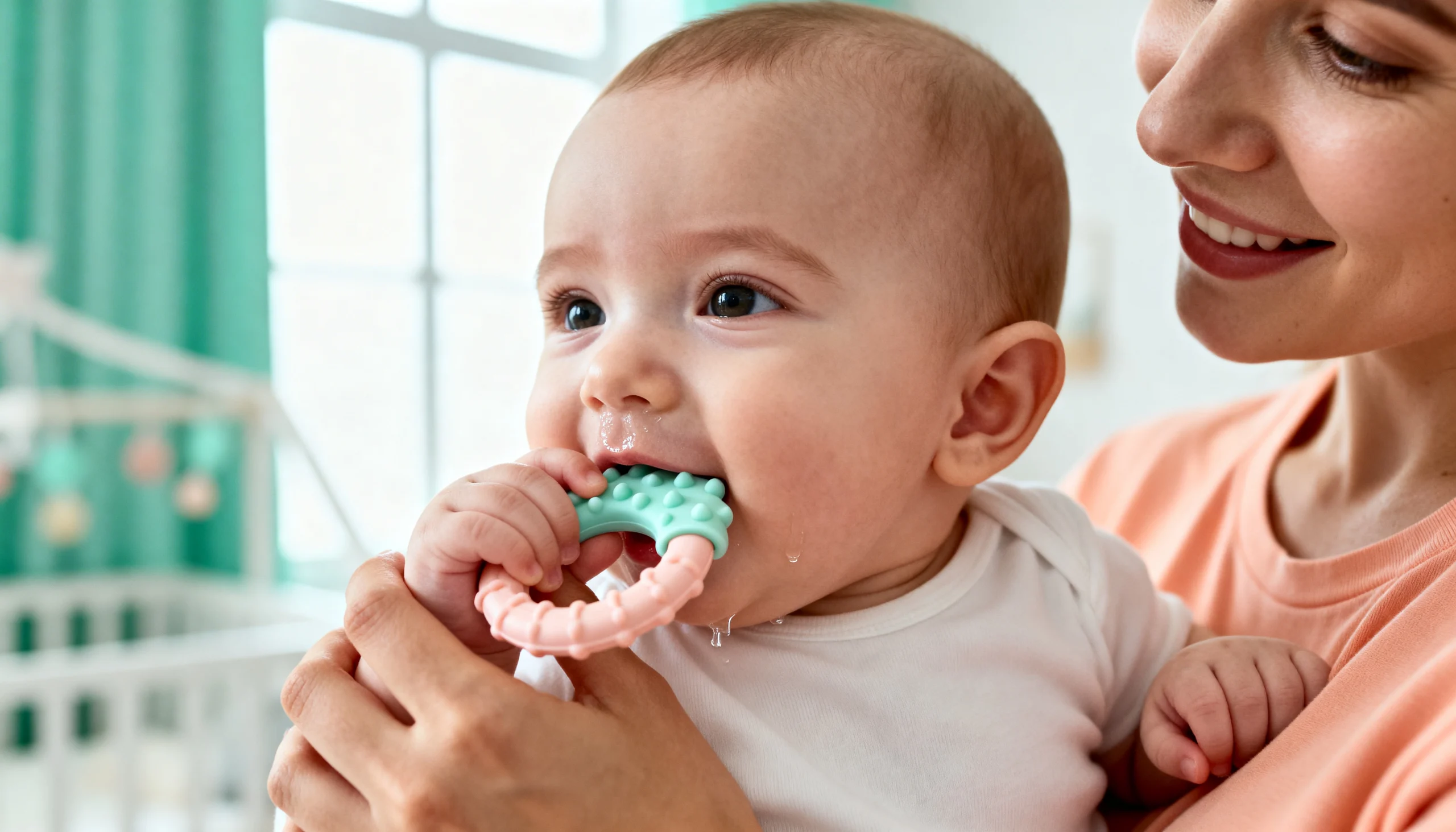

Teething Symptoms in babies are a normal part of a baby’s development, but it can be a challenging stage for both babies and parents. As the first teeth begin to emerge, babies may experience discomfort, increased fussiness, excessive drooling, and changes in their sleep or feeding habits.
For first-time parents, these changes can sometimes be concerning, especially when they are unsure whether their baby’s symptoms are related to teething or another health problem. Understanding the common teething symptoms can help parents know what to expect and when medical advice may be needed.
When Do Teething Symptoms in Babies

A baby’s teeth begin developing before birth while the baby is still in the womb. However, the first teeth usually begin to appear between 4 and 7 months of age, although the timing can vary from one child to another. These first teeth are called primary teeth or baby teeth.
Some babies may develop their first tooth earlier or later than this range. A baby who does not have a visible tooth by their first birthday may still be developing normally, but parents who are concerned about delayed tooth eruption should discuss it with a pediatrician or pediatric dentist.
What Are the Symptoms of Teething in Babies?
As primary teeth begin to emerge, babies may experience various physical and behavioral changes.
Some babies may have noticeable discomfort, while others show few symptoms.
For first-time parents, these changes can sometimes be concerning.
Common Teething Symptoms
- Excessive drooling
Babies often drool more than usual during teething. Frequent exposure to saliva can irritate the skin around the mouth and chin and may cause a mild rash. Gently wiping the area regularly can help reduce irritation.
- Increased irritability
A baby experiencing teething discomfort may become more fussy, cry more often, or seem generally unsettled.
- Swollen or tender gums
The gums around an emerging tooth may appear swollen, red, or tender and may feel sensitive when touched gently.
Gum repair drops may help soothe irritated and sensitive gums during the teething stage.
- A slight increase in body temperature
Some babies may have a small rise in temperature while teething. However, teething should not be assumed to cause a true fever.
- A runny nose
Some parents notice a runny nose during the teething period. However, a runny nose is not considered a specific or reliable sign of teething and may have another cause.
- Diarrhea
Diarrhea may occur during teething, but there is no clear evidence that teething directly causes it.
Persistent diarrhea, fever, or other concerning symptoms should not be attributed to teething.
If these symptoms occur, consult a healthcare professional to determine the cause.
What Do a Baby’s Gums Look Like During Teething?
During teething in babies, the gums may become swollen, tender, and sensitive as teeth begin to emerge. You may notice a small white spot, raised area, or bump where the tooth is coming through.
Some babies may also experience discomfort while feeding or sleeping
Other common signs of teething include:
- Excessive drooling
- Chewing or biting on objects
- Swollen or tender gums
- A slight increase in body temperature, but not a true fever
Gently massaging your baby’s gums with a clean finger or cool, damp cloth may help relieve discomfort.
If your baby is in significant pain, an age-appropriate pain reliever such as acetaminophen (paracetamol) or ibuprofen may help.
An antiseptic mouthwash may also help maintain oral hygiene and reduce the buildup of bacteria in the mouth.
How Can You Relieve Teething Pain?
Several simple measures may help relieve teething pain and make your baby more comfortable.
| Method | How It May Help | Safety Guidance |
|---|---|---|
| Offer Cool Foods | If your baby has started eating solids, cool or room-temperature foods may feel more comfortable against sore gums. | Choose foods suitable for the baby’s age and development, and supervise them while eating. |
| Provide Safe Things to Chew | Gentle pressure from chewing may temporarily soothe tender gums. | Only provide properly prepared, age-appropriate foods or objects that do not present a choking risk. |
| Use a Teething Ring | A teething ring provides gentle pressure and may help soothe sore gums. Cooling it in the refrigerator may provide additional relief. | The teething ring should not be frozen, as extreme cold can damage the baby’s gums. |
If your baby continues to experience significant teething pain, consult a pediatrician for appropriate pain-relief options.
How Should You Care for Your Baby’s Teeth?
1. Clean Your Baby’s Teeth and Gums Regularly
Before teeth appear, you can gently clean your baby’s gums using a clean, soft, damp cloth.
Once the first tooth emerges, use a small, soft-bristled toothbrush designed for babies and an appropriate amount of fluoride toothpaste according to current dental recommendations.
Cleaning your baby’s teeth regularly, particularly before bedtime, helps maintain good oral hygiene and remove food particles and bacteria from the mouth.
2. Use an Age-Appropriate Toothbrush
A small, soft-bristled toothbrush is ideal for cleaning your baby’s newly erupted teeth. A finger toothbrush can also be used to gently clean the teeth and gums.
Choose a fluoride toothpaste suitable for your child’s age and use the recommended amount. A pediatric dentist can guide you on the right brushing routine.
A soft-bristled baby toothbrush is ideal for gently cleaning your baby’s newly erupted teeth and sensitive gums.
What Causes Delayed Teething in Babies?
Caring for your baby’s teeth should begin as soon as the first tooth appears.
Baby teeth are important for chewing, speech development, and maintaining space for permanent teeth.
Good oral hygiene helps protect primary teeth and support healthy oral development.
Possible Causes of Delayed Teething
1. Genetic Factors
The timing of tooth eruption can be influenced by genetics. If one or both parents had their first teeth relatively late, their child may also develop teeth later than average.
2. Nutrition and Nutritional Deficiencies
Adequate nutrition is important for healthy growth and tooth development..
Once babies start eating solid foods, they should gradually be offered a varied, nutrient-rich diet suitable for their age. Foods rich in iron and protein, such as meat, fish, poultry, eggs, and beans, support healthy growth and development.
However, delayed tooth eruption does not necessarily indicate a nutritional deficiency.
3. Vitamin D
Vitamin D is essential for healthy bones and teeth and helps the body absorb calcium.
Babies should receive enough vitamin D based on their age, feeding pattern, and current pediatric recommendations, which may include supplements
Although sunlight helps the body produce vitamin D, direct sun exposure is not a safe or reliable source for infants. Parents should protect babies from direct sunlight and follow their pediatrician’s advice on vitamin D supplementation.
4. Calcium
Calcium is essential for healthy bones and teeth. Babies can get calcium from breast milk or infant formula and, once solids are introduced, from age-appropriate dairy products and other calcium-rich foods.
Calcium supplements should only be given when recommended by a healthcare professional, based on the child’s age, diet, and individual needs.
When Should You See a Doctor About Teething?
Teething is a normal developmental process, and variations in the timing of tooth eruption are common. However, parents should seek medical advice if their baby develops symptoms that seem more severe than expected or cannot reasonably be explained by teething.
A pediatrician or pediatric dentist can assess the baby if there are concerns about delayed teething, significant pain, persistent diarrhea, a true fever, feeding difficulties, or other unusual symptoms.
Understanding the normal signs of teething in babies can help parents distinguish ordinary teething discomfort from symptoms that may require medical attention.
Frequently Asked Questions About Teething in Babies
1. When Do Teething Symptoms Usually Start?
Teething symptoms typically begin when a baby is around 4 to 7 months old, although the timing varies from one child to another.
2. What Are the Normal Symptoms of Teething?
Common signs include drooling, swollen or tender gums, increased fussiness, chewing on objects, and mild discomfort.
3. Can Teething Cause a Fever?
Teething may cause a slight increase in body temperature, but it should not cause a high fever. A significant fever may indicate an illness that needs medical attention.
4. Can Teething Cause Diarrhea or Vomiting?
There is no clear evidence that teething directly causes diarrhea or vomiting. These symptoms may have another underlying cause and should not automatically be blamed on teething.
5. How Can I Safely Relieve Teething Pain?
Gently massage the gums, offer a cool teething ring, and provide age-appropriate cool foods. Pain medication should only be used according to proper dosing guidance.
6. Which Teething Remedies Should Be Avoided?
Avoid frozen teething objects, unsafe foods that pose a choking risk,
ND unapproved teething gels or remedies that may be harmful to babies.
7. When Should I Take My Baby to a Pediatrician?
Seek medical advice if your baby has a high fever, persistent diarrhea or vomiting, severe pain, difficulty feeding, or other unusual symptoms
Sources