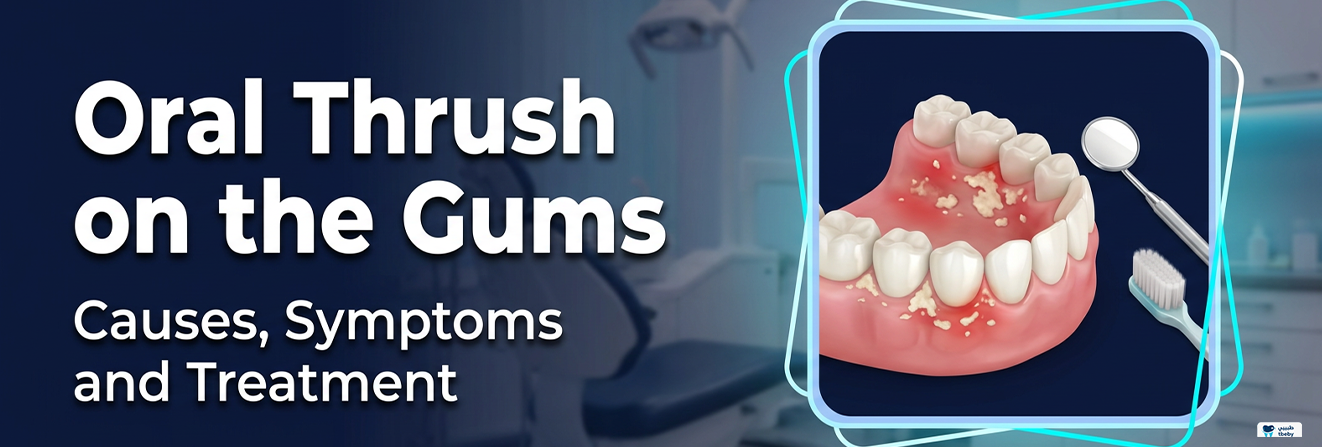

Oral thrush on the gums is a fungal infection that can cause white patches, redness, and soreness inside the mouth.
It is usually treatable, although persistent or recurrent infection may require further assessment.
Oral thrush on the gums may occur alongside patches on the tongue and inner cheeks. The tissue beneath the patches can appear red and may bleed if rubbed.
What causes this infection? How is oral thrush on the gums treated? This article explains its symptoms, risk factors, and treatment options.
Oral Thrush on the Gums and in the Mouth
Oral thrush, also called oral candidiasis, develops when Candida yeast overgrows in the mouth.
White patches commonly affect the tongue and inner cheeks and may also involve the gums. Avoid scraping them, as this can irritate the underlying tissue.
The infection presents differently across age groups and commonly affects children and infants, but treatment is available.
You can use a toothpaste for sensitive gums for daily brushing, following the product instructions.
Causes of Oral Thrush on the Gums
Understanding oral thrush causes starts with Candida, a yeast that can naturally live in the mouth without causing symptoms.
Infection develops when changes in immunity or the normal balance of microorganisms allow Candida to overgrow.
What Causes Candida to Grow Out of Control?
Factors that increase the risk include:
- Weakened immunity: For example, from HIV, cancer treatment, or immunosuppressive medicines.
- Diabetes: Particularly when blood glucose is poorly controlled.
- Medicines: Antibiotics and corticosteroids, including steroid inhalers.
- Dry mouth: Reduced saliva can favour fungal overgrowth.
- Dentures: Poor cleaning, overnight wear, or an unsuitable fit can increase risk.
Candida can also pass between a breastfeeding mother and her baby, allowing infection to recur.
Symptoms of Oral Thrush on the Gums
A person with oral thrush on the gums may experience several oral thrush symptoms:
- Creamy white patches on the tongue, inner cheeks, or gums.
- Redness, soreness, or a burning sensation.
- Slight bleeding if the patches are rubbed or scraped.
- Cracking and redness at the corners of the mouth.
- Altered taste or a cottony feeling in the mouth.
Spread of these patches into the oesophagus, particularly in people with weakened immune systems or serious illnesses such as AIDS and cancer.
Symptoms Associated with Breastfeeding
Candida can pass between a breastfeeding mother and her baby, potentially causing recurrent infection.
Possible symptoms in the mother include:
- Burning nipple pain during or after feeds.
- Sore, itchy, or cracked nipples.
- Shiny or flaky skin on the nipple or areola.
These symptoms do not confirm thrush. Poor attachment and other conditions can cause similar discomfort, so assessment is needed before treatment.
Medical Treatment for Oral Thrush on the Gums
To treat oral thrush on the gums, a doctor or dentist usually begins by examining the mouth. A scraping or additional tests may be needed if the diagnosis is uncertain or an underlying condition is suspected.
Forms and Duration of Medication
Oral thrush treatment usually involves an antifungal medicine selected according to age, infection severity, and medical history.
Options may include:
- Nystatin oral suspension: An antifungal liquid used for oral Candida infections.
- Antifungal oral gels or lozenges: Suitability depends on age, other medicines, and local availability.
- Systemic antifungal medicines: These may be needed for selected persistent or more extensive infections.
Follow the prescribed course; treatment duration varies by medicine and clinical response.
Plaque-disclosing tablets reveal dental plaque and do not treat thrush. Mouthwashes and gum gels should not be presented as antifungal treatments without evidence for the specific formulation.
You can use gum repair drops as directed on the product label, alongside your prescribed oral care routine.
Treatment of Oral Thrush on the Gums in Children
Management of oral thrush in children depends on age, symptoms, and feeding or drinking difficulties.
To treat oral thrush on the gums in children, a healthcare professional may recommend an age-appropriate antifungal medicine. Supportive care includes:
- Offering cool drinks and soft foods to older children who can manage them comfortably.
- Continuing usual breast or formula feeds for infants and monitoring feeding.
- Avoiding rinses in babies and children who cannot reliably spit them out.
Oral thrush in babies requires age-specific advice. Seek prompt assessment if feeding decreases or signs of dehydration develop; do not scrape the patches or apply home remedies.
Home Treatment for Oral Thrush on the Gums
Home care may ease discomfort from oral thrush on the gums, but it does not replace antifungal treatment. Natural products should not be described as proven cures without adequate clinical evidence.
1. Salt
Salt is considered one of the best home remedies for treating all fungal infections inside the mouth.
It can be used by mixing a spoonful of salt thoroughly into a glass of warm water and using the mixture as a mouth rinse several times throughout the day.
Salt can also be used without water. Place a few grains inside the mouth and gently rub them onto the patches on the gums.
Then rinse with water and repeat the procedure several times.
2. Yoghurt
Yoghurt is also a highly effective treatment for eliminating oral thrush on the gums. It also improves digestion and can be used by eating whole pots of yoghurt.
Alternatively, massage yoghurt onto the areas inside the mouth where the white patches occur.
Repeat this process several times until the patches gradually begin to disappear.
3. Coconut Oil
Coconut oil is considered one of the best-known treatments for fungal infections in general because it contains antioxidants that help treat inflammation and combat bacteria.
It can be used in several ways:
- Place a few drops on a finger and apply it to the patches inside the mouth.
- Place some oil inside the mouth and use it as a rinse.
- Apply a cotton ball containing a few drops of oil to the affected area.
Another option is to dip an old toothbrush into the oil and gently brush the gums, taking care not to injure them or cause adverse complications.
4. Cinnamon
Cinnamon is considered one of the best home remedies for oral thrush on the gums.
It can be used by drinking a cup of cinnamon infusion daily, with a few drops of chilled lemon juice added if desired.
Alternatively, mix a few drops of cinnamon oil with a few drops of olive oil and apply the mixture inside the mouth for 10 minutes.
A difference should become noticeable after several applications.
However, if you are pregnant, caution is necessary when using cinnamon because it may pose a risk to you or your unborn baby.
5. Garlic
Garlic is one of the most potent natural plants for strengthening the immune system. It also helps eliminate fungi inside the mouth.
It can be used by applying a few drops of garlic oil to the white patches.
Chewing a piece of garlic can also substantially reduce the fungal infection.
You can use an antiseptic mouthwash according to its label instructions, without replacing prescribed antifungal treatment.
Understanding Oral Thrush and Its Treatment Options
Effective management of oral thrush on the gums involves confirming the diagnosis, using an appropriate antifungal medicine, and addressing contributing factors.
Gentle oral care can support comfort. Persistent symptoms, feeding problems, or painful swallowing require further assessment.
Frequently Asked Questions
What is oral thrush on the gums?
It is a fungal infection that produces white patches on the gums, tongue, and other areas inside the mouth.
What causes oral thrush?
It develops when Candida, a fungus naturally present in the digestive system, grows out of control.
Can children and infants develop oral thrush?
Yes, oral thrush commonly affects children and infants.
What happens when oral thrush patches are rubbed?
The affected areas can become red and inflamed.
What are the main symptoms of oral thrush on the gums?
Symptoms include white patches, redness, burning, mild bleeding, difficulty swallowing, and cracked mouth corners.
Is dry mouth associated with oral thrush?
Yes, dry mouth is one of the factors associated with its development.
Can poorly cleaned dentures contribute to oral thrush?
Yes, inadequate cleaning of removable dentures may contribute to the infection.
Can oral thrush pass between a mother and her infant?
Yes, the infection can pass from the infant to the mother and then back to the infant.
Can oral thrush spread to the oesophagus?
Yes, it can spread to the oesophagus, particularly in people with weakened immune systems.
What symptoms can occur in a mother when the infection is transmitted during breastfeeding?
Symptoms include cracked, red nipples, flaking skin around the breast, and severe breast pain when touched by the infant.
External Sources