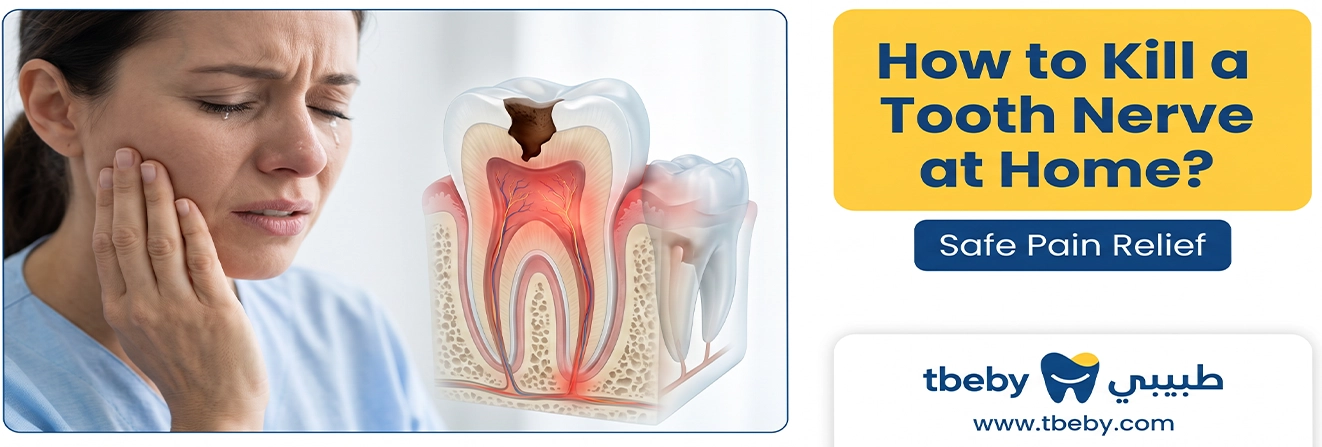

If you are searching for how to kill a tooth nerve at home, you are likely dealing with severe tooth pain that affects eating, sleeping, or daily activities.
There is no safe or reliable way to kill a tooth nerve at home. Severe tooth pain may result from deep decay, infection, inflammation, a cracked tooth, or damage to a filling or crown, and these problems often require dental treatment.
In this guide, we’ll cover safe ways to manage the pain temporarily, what to avoid, and when to seek urgent dental care.
Can You Kill a Tooth Nerve at Home?
No, there is no safe or reliable way to kill a tooth nerve at home. The dental pulp inside your tooth contains sensitive nerves and blood vessels, and attempting to destroy it yourself carries serious risks:
- Chemical Burns & Tissue Damage: Applying harsh, acidic, or corrosive home remedies won’t kill the nerve, but it can severely burn your gums and surrounding mouth tissues.
- Fails to Fix the Root Cause: Self-treatment cannot resolve deep decay, cracks, dental abscesses, or gum inflammation, meaning your pain will likely return—or worsen.
- Delays Proper Healing: Home remedies only offer temporary comfort; they cannot replace a medical evaluation.
How a Dentist Safely Treats the Pain
Only a professional dental examination can address the underlying issue and protect your tooth through safe procedures such as:
- Fillings or Pulp Therapy
- Root Canal Treatment
- Infection Drainage or Extraction
What Causes Tooth Nerve Pain?
Several dental problems can irritate or damage the pulp inside a tooth.
Common causes include:
- Deep tooth decay: A cavity can eventually reach or irritate the dental pulp.
- Pulpitis: Inflammation of the pulp can cause sensitivity and significant tooth pain.
- A cracked or injured tooth: Damage may expose or irritate the inner part of the tooth.
- Dental abscess: An infection around the root can cause pain, swelling, and other symptoms.
- Damaged fillings or crowns: A leaking or broken restoration can allow bacteria to reach deeper tissues.
- Gum problems: Inflammation or infection around a tooth can sometimes cause pain that feels similar to tooth nerve pain.
The treatment depends on what is actually causing the symptoms.
sign of a Tooth Nerve Problem
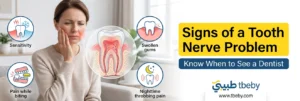
Tooth nerve problems do not always feel the same. Depending on the cause, you may notice:
- Sensitivity to hot or cold foods and drinks.
- Throbbing or spontaneous tooth pain.
- Pain when biting or chewing.
- Pain that continues after the original trigger is gone.
- Red or swollen gums.
- Swelling around the cheek or jaw.
- A bad taste or discharge in the mouth.
- Fever or feeling generally unwell.
Severe or persistent symptoms should not be repeatedly managed with home remedies. A dental examination can identify the source of the pain and determine whether treatment such as a root canal or Tooth Extraction may be necessary to prevent the problem from getting worse.
Home Remedies for Temporary Tooth Pain Relief
If you cannot see a dentist immediately, a few simple measures may make the pain easier to manage.
These remedies do not kill the tooth nerve or cure an infection, but they can provide temporary relief.
1. Warm Salt Water Rinse
A warm salt-water rinse can help clean the mouth and soothe irritated tissues.
To make one:
- Dissolve about half a teaspoon of salt in a glass of warm water.
- Gently rinse your mouth.
- Spit it out instead of swallowing it.
- Salt water is a temporary measure, not a treatment for an infected or damaged tooth.
2. Cold Compress
A cold compress may help reduce pain and swelling around the affected area.
Wrap an ice pack or another cold source in a clean cloth and place it against the outside of your cheek for short periods. Do not put ice directly on your skin.
3. Clove or Clove Oil
Clove has traditionally been used for tooth discomfort, and clove-derived compounds can have a numbing effect.
However, clove oil does not kill a tooth nerve and should not be considered a substitute for dental treatment. Concentrated clove oil can also irritate or burn oral tissues if it is used excessively.
If it causes burning or irritation, stop using it.
4. Over-the-Counter Pain Relief
For adults and adolescents aged 12 and older, non-opioid pain relievers such as ibuprofen, naproxen, or acetaminophen may provide temporary relief from toothache when dental treatment is not immediately available.
Always follow the recommended dosage and check whether the medication is suitable for you, especially if you have medical conditions, allergies, take other medications, or are pregnant. When in doubt, consult a pharmacist or healthcare professional.
5. Choose Soft Foods and Avoid Triggers
Until you can get dental treatment, try to avoid putting extra pressure on the painful tooth.
You may find it easier to:
- Eat soft foods.
- Chew on the opposite side of your mouth.
- Avoid very hot or very cold foods and drinks.
- Limit sugary foods and drinks.
Avoid hard or crunchy foods that may aggravate the tooth.
These steps can make eating more comfortable, but they will not treat the underlying dental problem.
How a Dentist Treats a Damaged or Infected Tooth Nerve
The appropriate treatment depends on the condition of the tooth and how much damage has occurred.
| Treatment | Main purpose |
| Filling or restoration | Repairs decay before it causes deeper damage. |
| Pulp therapy | Removes affected pulp tissue in selected cases. |
| Root canal treatment | Removes diseased pulp and cleans and seals the inside of the tooth. |
| Abscess drainage | Drains accumulated pus when drainage is needed. |
| Tooth extraction | Removes a tooth that cannot be predictably saved. |
For most dental infections involving the pulp or tissues around the tooth root, treating the source is more important than antibiotics alone. Depending on the diagnosis, treatment may include root canal therapy, drainage, or extraction. The ADA recommends prioritizing dental treatment rather than antibiotics for most pulpal and periapical conditions.
When Is a Toothache a Dental Emergency?
Some symptoms require urgent medical attention rather than waiting for a routine dental appointment.
Seek emergency care if you have significant swelling around the eye or neck, or if swelling in your mouth or neck makes it difficult to:
These symptoms can indicate that a dental infection is spreading and needs urgent assessment.
Can a Dentist Save a Tooth With a Damaged Nerve?
In many cases, yes.
A tooth with severely inflamed or infected pulp may still be restorable. Root canal treatment can remove the diseased pulp, clean the inside of the tooth, and seal it so the natural tooth can remain in place.
However, not every tooth can be saved. A dentist will consider factors such as the amount of remaining tooth structure, the extent of infection, cracks or fractures, and whether the tooth can be properly restored.
The earlier the problem is assessed, the more options there may be for preserving the tooth.
Protect Teeth, Prevent Nerve Damage
Good oral hygiene and early dental care can reduce the risk of deep decay and other problems that can eventually affect the pulp.
Helpful habits include:
- Brush your teeth twice a day with fluoride toothpaste. Choosing the best toothpaste for your oral health can also help provide effective protection against cavities and plaque buildup.
- Clean between your teeth every day with floss or an interdental brush.
- Limit frequent sugary foods and drinks.
- Have regular dental checkups.
- Treat cavities before they become deeper.
- Replace damaged or leaking fillings when necessary.
- Have cracked or injured teeth checked promptly.
- Do not ignore persistent tooth pain.
Early treatment is generally much simpler than waiting until decay or infection reaches the inner part of the tooth.
Temporary Toothache Relief vs. Dental Treatment
Home remedies can make a painful tooth easier to tolerate, but they cannot remove the underlying cause.
| Option | What it may do | Treats the underlying problem? |
| Salt-water rinse | Soothes and cleans the mouth | No |
| Cold compress | May reduce pain and swelling | No |
| Clove or clove oil | May provide temporary comfort | No |
| Pain relievers | Temporarily reduce pain | No |
| Root canal treatment | Removes diseased pulp and seals the tooth | Yes, when indicated |
| Tooth extraction | Removes a tooth that cannot be saved | Yes, by removing the affected tooth |
The ADA describes temporary pain management as a bridge until definitive dental treatment can be provided, rather than a replacement for that treatment.
The Safest Approach to Tooth Nerve Pain at Home
If you are searching for how to kill a tooth nerve at home, the safest answer is that you should not try to destroy the nerve yourself.
If your toothache persists for more than two days, keeps getting worse, or is accompanied by swelling, fever, a bad taste, or pain when biting, arrange a dental evaluation. If swelling affects your ability to breathe, swallow, or speak, seek emergency medical care.
Getting the tooth examined early can help identify the cause of the pain and, when possible, give you a better chance of keeping the natural tooth.
FAQs About How to Kill a Tooth Nerve at Home
Can you really kill a tooth nerve at home?
No. There is no safe and reliable home method for intentionally destroying the nerve inside a tooth. If the pulp is badly inflamed or infected, a dentist needs to determine the appropriate treatment.
Does clove oil kill a tooth nerve?
No. Clove oil may temporarily reduce discomfort because clove-derived compounds can have a numbing effect, but it does not safely destroy the dental nerve or treat an infection.
Can salt water kill the nerve inside a tooth?
No. A salt-water rinse may soothe irritated tissues and help clean the mouth, but it cannot reach and destroy the pulp inside a tooth.
Why does tooth nerve pain sometimes feel worse at night?
Tooth pain may feel more noticeable at night because there are fewer distractions. Lying down can also make some types of dental pain feel more intense.
Does a dead tooth nerve stop all pain?
Not necessarily. Even if the pulp inside a tooth becomes non-vital, infection or inflammation around the root can continue to cause pain.
How long can you wait with severe tooth pain?
Do not ignore persistent tooth pain. The NHS recommends seeing a dentist when toothache lasts more than two days, does not improve with painkillers, or occurs with symptoms such as fever, swelling, pain when biting, or a bad taste.
Can a dentist save a tooth with an infected nerve?
Often, yes. Root canal treatment can save many teeth when enough healthy tooth structure remains and the tooth can be restored.
Is tooth nerve pain always caused by tooth decay?
No. Cracks, trauma, damaged fillings or crowns, pulp inflammation, and infections can also cause pain.
Can home remedies cure a dental abscess?
No. Home remedies may temporarily reduce discomfort, but they do not remove the source of a dental abscess. Professional dental evaluation and treatment are needed.