
A comprehensive guide to root canal treatment, explaining how the procedure works, when it may be needed, and what patients can expect before, during, and after treatment. This article also covers the benefits and potential risks, the types of root canal procedures, how long pain and discomfort may last, common root canal filling materials, recovery and aftercare tips, and the main factors that can affect the overall cost of treatment.
What Is Root Canal Treatment?
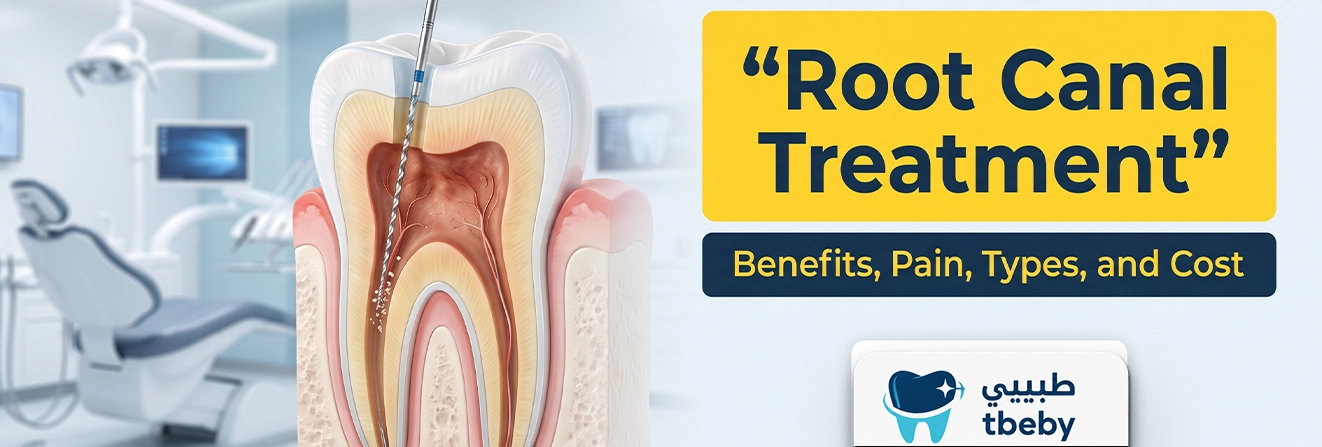
Also called root canal therapy, it is a dental procedure used to save a tooth when its inner pulp becomes inflamed or infected. During treatment, the dentist removes the damaged pulp, cleans and disinfects the root canals, shapes them, and seals them to prevent bacteria from entering again.
Without appropriate treatment, an infected tooth may develop an abscess, and the infection can spread to the surrounding tissues.
Is Root Canal Treatment Painful?
The procedure is usually performed under local anesthesia, so most patients do not feel significant pain during treatment. Mild to moderate soreness or sensitivity can occur after the anesthesia wears off, particularly when biting.
Post-treatment discomfort generally improves over several days. Severe, worsening, or persistent pain should be assessed by a dentist because it may indicate that additional treatment is needed.
Root Canal Treatment: Step-by-Step

The exact technique varies according to the tooth and the complexity of the infection, but the procedure generally includes:
- Local anesthesia: The area around the tooth is numbed.
- Access to the pulp: The dentist creates an opening to reach the infected pulp.
- Removal of infected tissue: Damaged pulp and bacteria are removed from the root canal system.
- Cleaning and disinfection: The canals are cleaned, shaped, and disinfected.
- Canal filling: The cleaned canals are sealed with a suitable root canal filling material.
- Final restoration: A permanent filling or dental crown may be placed to restore function and protect the weakened tooth.
Why Does a Tooth Hurt After Root Canal Treatment?
Some discomfort after the procedure is common. Possible reasons include:
- Inflammation in the tissues surrounding the tooth.
- Pre-existing infection or inflammation before treatment.
- Temporary irritation caused by dental instruments.
- A temporary or permanent filling that is slightly too high and places excessive pressure on the tooth when biting.
- Persistent infection that requires further evaluation.
To manage mild discomfort, using a toothache pain relief spray or over-the-counter pain relievers can help ease the pain during the first few days of recovery
If pain is severe, continues to worsen, or is accompanied by swelling or fever, contact a dentist promptly.
How to Relieve Pain After Root Canal Treatment
Follow your dentist’s instructions. Depending on your individual situation, helpful measures may include:
- Eating softer foods and avoiding heavy chewing on the treated tooth until the final restoration is completed.
- Maintaining regular brushing and flossing around the area.
- Using a salt-water rinse or gentle products like salt-whitening enzyme tooth cleaning and care if recommended by your dental professional, to keep the area clean and soothe the gums.
- Taking an appropriate over-the-counter pain reliever if it is safe for you and according to the product directions or your dentist’s advice.
- Using a cold compress externally for short periods if swelling occurs.
Avoid placing undiluted chemicals, garlic, or other irritating substances directly on the tooth or gums.
How Long Does Pain Last After Root Canal Treatment?

Mild soreness may begin as the anesthetic wears off and commonly decreases over the following few days. The exact recovery time varies depending on the severity of the infection and the complexity of the procedure.
You should contact your dentist if:
- Pain becomes severe or keeps increasing.
- Swelling develops or gets worse.
- You develop fever or feel generally unwell.
- Your bite feels uneven or the treated tooth hits first.
- Symptoms persist without improvement.
How Many Appointments Does Root Canal Treatment Take?
Some procedures can be completed in one appointment, while others require two or more visits. The number of appointments depends on the tooth’s anatomy, the extent of infection, the presence of an abscess, the treatment approach, and the dentist’s clinical assessment.
Types of Dental Filling Materials
An important distinction is that the procedure seals the inside of the root canals, while the tooth may then require a separate restoration such as a composite filling, ceramic restoration, or crown.
| Restoration Material | Main Characteristics | Common Consideration |
| Composite resin | Tooth-colored and versatile | Often used for visible or smaller restorations |
| Dental amalgam | Strong and durable | Less commonly chosen today in many settings |
| Ceramic/porcelain | Natural-looking and stain-resistant | Often more expensive |
| Glass ionomer | Bonds to tooth structure and can release fluoride | Generally less durable under heavy chewing forces |
| Gold | Highly durable and long-lasting | Higher cost and metallic appearance |
The best material depends on the tooth’s location, remaining tooth structure, bite forces, aesthetic needs, and the dentist’s recommendation.
Benefits and Potential Risks of Root Canal Treatment
The main goal of this treatment is to remove infection and preserve the natural tooth.
Benefits
- Helps relieve pain caused by infected or inflamed pulp.
- Preserves the natural tooth instead of requiring extraction.
- Restores the tooth’s ability to function after appropriate restoration.
- Helps prevent an untreated dental infection from progressing.
Potential Risks and Limitations
Although the procedure has a high success rate when appropriately performed, complications can occur. These may include:
- A missed or untreated canal.
- Persistent or recurrent infection.
- Incomplete sealing of the root canal system.
- Instrument separation or other procedural complications.
- Cracks or structural damage to the tooth.
- The need for retreatment or, in some cases, extraction.
A tooth that has undergone this treatment may also need a crown or another protective restoration, particularly when substantial tooth structure has been lost.
Root Canal Treatment for Children
Children may need pulp therapy when a primary or permanent tooth has extensive decay, trauma, or infection. Treatment depends on whether the tooth is primary or permanent and on the child’s stage of dental development.
Common warning signs include:
- Pain when chewing or touching the tooth.
- Sensitivity or discomfort.
- Swelling or redness around the tooth.
- A dental abscess or draining area.
- Deep decay or a dental injury.
A pediatric dentist can determine whether pulp therapy, another appropriate treatment, or extraction is needed.
Following treatment, maintaining gentle oral hygiene using a soft kids toothbrush helps protect sensitive gums and prevent further decay while the tooth heals.
What Should You Do If a Filling Falls Out?
If a restoration falls out:
- Contact your dentist and arrange an appointment as soon as possible.
- Keep the area clean with gentle brushing and flossing.
- Avoid hard, sticky, or crunchy foods on that side.
- Do not attempt to permanently glue the restoration back yourself.
- If the tooth has sharp edges, ask your dentist or pharmacist about temporary dental repair materials where appropriate.
- Seek urgent dental care if there is significant swelling, severe pain, fever, or difficulty swallowing or breathing.
Prompt replacement or repair can help protect the tooth from fracture and reinfection.
Root Canal Treatment for Front Teeth
Front teeth can require pulp treatment after deep decay, trauma, cracks, or significant damage to the pulp. Because front teeth are highly visible, the final restoration is often selected with appearance as well as function in mind. Tooth-colored composite resin, ceramic restorations, or other appropriate options may be considered depending on the amount of remaining tooth structure.
Does Root Canal Treatment Cause Cancer?
There is no established scientific evidence that this procedure causes cancer. Modern dental treatment is intended to remove infected or inflamed pulp, disinfect the canal system, and seal the tooth.
Claims that this procedure causes cancer are not supported by reliable clinical evidence. If you have concerns about a specific dental procedure, discuss them with a qualified dentist who can assess your individual case.
Root Canal Treatment Cost
The cost of the procedure varies considerably and should not be based on a single price list. Factors that can affect the total cost include:
- The tooth being treated and the number of canals.
- The complexity of the infection.
- Whether an abscess or retreatment is involved.
- The dentist’s experience and the clinic’s equipment.
- The need for X-rays or other diagnostic imaging.
- Whether a permanent filling, crown, or another restoration is required.
| Cost Factor | Why It Matters |
| Tooth type | Molars usually have more complex canal systems |
| Number of canals | More canals can mean more treatment time |
| Infection severity | Extensive infection may require additional care |
| Retreatment | Previously treated teeth can be more technically challenging |
| Final restoration | A crown or other restoration adds to the overall cost |
| Location and clinic | Fees vary between practices and regions |
For an accurate estimate, a dentist needs to examine the tooth and determine the treatment and restoration required.
Root Canal Treatment: Final Takeaway
Root canal treatment can be an effective way to treat an infected or inflamed tooth while preserving the natural tooth. Mild soreness after treatment is common, but persistent or severe symptoms require professional evaluation. The final restoration is an important part of treatment because it helps protect the tooth and restore its function.
For the safest treatment plan and an accurate cost estimate, consult a qualified dental professional.
Root Canal Treatment: Frequently Asked Questions
What is root canal treatment?
It is a procedure that removes infected or inflamed pulp, cleans the root canals, and seals the tooth to preserve it.
Is root canal treatment painful?
Most patients are comfortable during treatment because local anesthesia is used. Some soreness afterward is normal.
How long does root canal pain last?
Mild discomfort commonly improves within a few days, but recovery varies from person to person.
Can a root canal-treated tooth get infected again?
Yes. Reinfection can occur, especially if a canal was missed, the seal fails, or the tooth develops new decay or damage.
Does every root canal-treated tooth need a crown?
Not necessarily. The need for a crown depends on the tooth’s location, remaining structure, and risk of fracture.
How many appointments are needed?
Some cases can be completed in one visit, while complex infections may require multiple appointments.
Can children have root canal treatment?
Yes. Children may receive pulp therapy or root canal treatment depending on the type of tooth and the extent of damage.
What should I eat after root canal treatment?
Soft foods are generally easier to tolerate. Avoid hard or sticky foods until your dentist confirms that the tooth is adequately restored.
What if my filling falls out?
Contact your dentist promptly, keep the area clean, and avoid chewing on that tooth until it is repaired.
How much does root canal treatment cost?
There is no universal price. The cost depends on the tooth, complexity, location, dentist, and final restoration required.
https://www.nhs.uk/tests-and-treatments/root-canal-treatment/