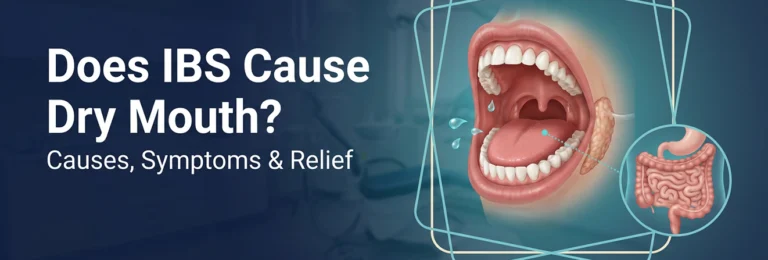
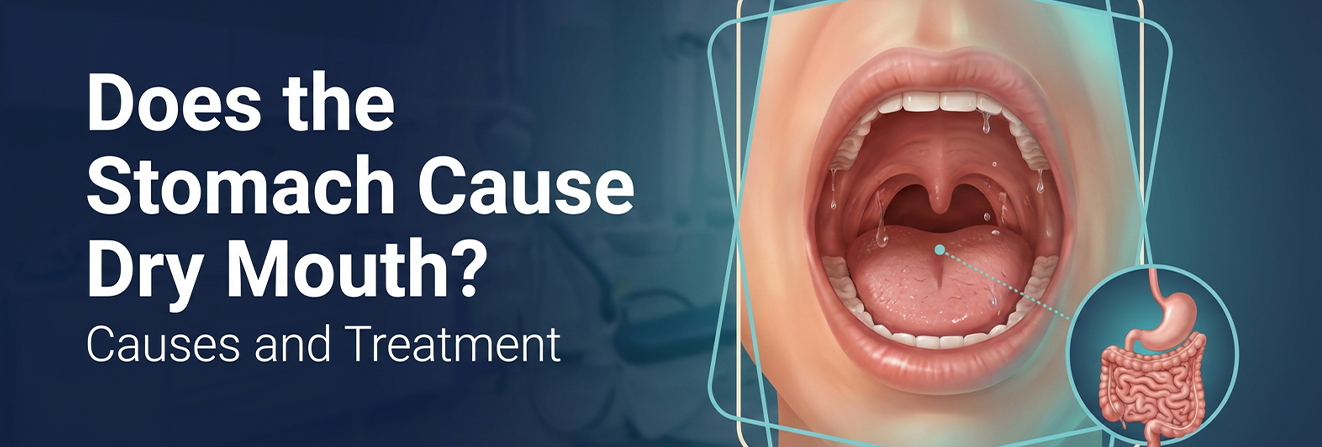

Does the stomach cause dry mouth? Yes, some digestive problems can contribute to dry mouth, especially when they cause vomiting, diarrhoea, dehydration, or acid reflux. However, stomach problems are not the only possible cause.
Dry mouth, often called xerostomia, is the subjective feeling of oral dryness. Hyposalivation is the objectively measured reduction in saliva flow; xerostomia can occur even when saliva production is within the normal range. Dry mouth may cause thirst, bad breath, difficulty swallowing, and a higher risk of tooth decay.
Understanding the difference between oral dryness and reduced saliva flow can help identify the cause and guide treatment.
Does the stomach cause dry mouth?
Yes, some stomach and digestive problems can contribute to dry mouth, usually indirectly. Vomiting, diarrhoea, dehydration, reduced fluid intake, and some medicines used for digestive symptoms can reduce saliva flow or make oral dryness more noticeable.
Repeated vomiting and diarrhoea cause fluid loss, which can lead to dehydration and temporarily reduce saliva production.
Gastritis is not an established direct cause of dry mouth, but vomiting, reduced fluid intake, or dehydration associated with it may contribute. GERD may cause sour taste, regurgitation, throat or mouth irritation, and changes in salivary characteristics; the evidence for an effect on measured salivary flow is limited and mixed.
How Can Digestive Problems Affect Saliva?
Digestive illness can affect oral moisture mainly through fluid loss, dehydration, reduced drinking, or irritation from reflux. These pathways are different from a proven direct reduction in salivary gland function, and the cause of persistent dry mouth should be assessed rather than assumed.
Digestive problems that may be associated with dry mouth include:
- Gastritis, particularly when accompanied by vomiting or reduced fluid intake.
- Acid reflux or GERD, which may cause oral irritation or a dry-mouth sensation.
- Repeated vomiting and diarrhoea.
- Dehydration caused by digestive illness.
Dry mouth alone does not reliably indicate a stomach disorder.
Digestive Problems That May Cause Dry Mouth
Certain digestive conditions may contribute to dry mouth through dehydration, fluid loss, or acid exposure. The following table summarizes the main conditions and how they may affect oral health.
| Digestive Condition | Common Symptoms | Possible Link to Dry Mouth |
| Gastritis | Upper abdominal discomfort, nausea, and sometimes vomiting | Not usually a direct cause; vomiting or reduced fluid intake may lead to dehydration and oral dryness. |
| Gastroesophageal Reflux Disease (GERD) | Heartburn, regurgitation, and sour taste | May be associated with oral or throat irritation, sour taste, and altered salivary characteristics. Evidence for reduced salivary flow is limited and uncertain. |
| Gastroenteritis | Vomiting, diarrhoea, and abdominal cramps | Fluid loss can cause dehydration and reduced saliva production. |
| Persistent Vomiting or Diarrhoea | Fluid loss, weakness, and thirst | Can directly contribute to dehydration and dry mouth, regardless of the underlying illness. |
Other Common Causes of Dry Mouth
Although the stomach can contribute to dry mouth, several other factors may be responsible.
1. Dehydration
Not drinking enough water, excessive sweating, fever, vomiting, and diarrhea can cause dehydration and reduce saliva production.
2. Aging
Ageing itself does not necessarily cause dry mouth. Dry mouth is more common in older adults mainly because medication use and associated health conditions are more frequent.
3. Mouth Breathing
Breathing through the mouth during sleep, nasal congestion, and snoring can cause dryness, especially upon waking.
4. Medical Conditions
Relevant medical causes and contributors include:
- Sjögren’s disease.
- Salivary gland disorders.
- Head and neck radiotherapy, which can damage salivary glands.
Diabetes, Sjögren’s disease, salivary gland disorders, and head and neck radiotherapy can reduce salivary function and increase the risk ofdental caries because saliva helps wash away food particles and neutralise acids.
Persistent dryness should be evaluated by a healthcare professional, especially when it affects eating, speaking, swallowing, or oral health.
Medications That Can Cause Dry Mouth
Some medicines reduce salivary secretion directly, while others may contribute to dehydration or mouth breathing. Not every medicine in these groups causes dry mouth.
Common examples include:
1. Blood Pressure Medications
Some antihypertensive medicines, including certain diuretics, may contribute to dry mouth through reduced salivary secretion or fluid loss.
2. Antidepressants and Anticholinergic Medicines
Some antidepressants and sedatives can affect saliva production, and anticholinergic medicines may make oral dryness more noticeable.
3. Antihistamines
Some antihistamines reduce saliva secretion and may cause noticeable oral dryness.
Do not stop or alter a prescribed medicine without advice from a doctor or pharmacist.
Foods and Drinks That May Worsen Dry Mouth
Certain foods and drinks can make dry mouth symptoms more noticeable.
- Salty foods: Pickles, processed foods, and salty snacks can increase thirst.
- Spicy foods: Hot peppers and spicy sauces may irritate the mouth.
- Sugary foods: Frequent sugar consumption increases the risk of tooth decay, particularly when saliva is reduced.
- Acidic foods: Citrus fruits and tomatoes may irritate sensitive oral tissues.
- Alcohol and caffeine: These may worsen dryness in some people.
Avoiding personal triggers and maintaining adequate hydration may improve oral comfort.
Good oral hygiene remains important when saliva is reduced, and an oral irrigator may help remove food debris from between the teeth and along the gumline, but it does not treat the underlying cause of dry mouth.
How to Treat Dry Mouth
Treatment depends on the underlying cause. Practical measures can relieve symptoms, but saliva substitutes do not necessarily restore natural salivary gland function.
1. Drink Enough Water
Drink water regularly throughout the day. When vomiting or diarrhoea causes dehydration, oral rehydration solutions may help replace lost fluids and electrolytes when appropriate.
If dry mouth is accompanied by tooth sensitivity, using toothpaste for sensitive teeth may help reduce associated tooth sensitivity, but it does not restore saliva production.
2. Use Sugar-Free Chewing Gum
Sugar-free chewing gum can stimulate saliva flow when it is safe and comfortable to chew.
3. Avoid Tobacco and Alcohol
Smoking and alcohol can worsen oral dryness and increase the risk of oral health problems.
4. Eat Water-Rich Foods
Water-rich foods can support overall fluid intake, but they do not replace treatment for salivary gland dysfunction.
5. Maintain Good Oral Hygiene
Brush twice daily with fluoride toothpaste, clean between the teeth, and attend dental check-ups to reduce the risk of cavities and gum disease.
Good oral hygiene may also include gentle tongue cleaning with a suitable tongue cleaning gel to help remove debris and reduce unpleasant breath; it is not a treatment for reduced saliva production.
6. Treat the Underlying Cause
Treating the underlying cause, such as dehydration, medication effects, reflux, diabetes, or a salivary gland disorder, may improve symptoms. A clinician or dentist may also recommend saliva substitutes such as oral gels or sprays for symptomatic relief.
When Should You See a Doctor?
Occasional dry mouth may be temporary. Persistent symptoms, however, can indicate dehydration, medication effects, an oral problem, or another medical condition.
Consult a healthcare professional if you experience:
- Dry mouth that persists despite adequate hydration.
- Ongoing vomiting, diarrhoea, stomach pain, or acid reflux.
- Difficulty swallowing.
- Recurrent mouth sores or infections.
- Unexplained weight loss, unusually frequent urination, or pronounced dry eyes when medically relevant.
Seek urgent medical attention if you develop severe dehydration, fainting, confusion, or an inability to keep fluids down.
Final Thoughts: Can Stomach Problems Cause Dry Mouth?
Does the stomach cause dry mouth? Sometimes, but usually indirectly through vomiting, diarrhoea, dehydration, reduced fluid intake, or related medicines. GERD may be associated with oral symptoms and altered salivary characteristics, but it is not a universally proven cause of reduced salivary flow.
Other dry mouth causes include medications, diabetes, mouth breathing, Sjögren’s disease, salivary gland disorders, and head and neck radiotherapy.
Identifying the underlying cause is the most important step towards effective dry mouth treatment. Hydration, fluoride-based oral hygiene, symptom relief, and professional advice when symptoms persist can help protect oral health.
Frequently Asked Questions About Whether the Stomach Causes Dry Mouth
Does the stomach cause dry mouth?
Yes, some digestive problems can contribute to dry mouth, particularly when vomiting, diarrhoea, dehydration, or reduced fluid intake is involved.
How do you treat dry mouth caused by stomach problems?
Treat the cause of the digestive problem and correct dehydration when present. Water, oral rehydration solutions when appropriate, sugar-free gum, and saliva substitutes may provide symptom relief.
Can acid reflux cause a dry mouth?
Acid reflux can cause sour taste, regurgitation, and throat or mouth irritation that may feel like dryness. GERD is also associated with changes in salivary characteristics, but it is not a proven cause of reduced salivary flow in every person.
Does gastritis cause dry mouth?
Gastritis is not usually a direct cause of dry mouth, but vomiting, reduced fluid intake, or dehydration may contribute.
Can H. pylori cause dry mouth?
The association sometimes described as H. pylori and dry mouth is not established. Dryness may occur because of vomiting, reduced intake, dehydration, or medicines used during treatment.
Why do I wake up with a dry mouth?
Mouth breathing, nasal congestion, snoring, dehydration, and certain medications can contribute to dry mouth in the morning.
Can dehydration cause a very dry mouth?
Yes. Dehydration can reduce saliva production and cause a dry or sticky feeling in the mouth.
Which medications cause dry mouth?
Antihistamines, antidepressants, diuretics, some antihypertensives, anticholinergic medicines, and certain gastrointestinal antispasmodics may cause dry mouth.
What is the fastest way to relieve dry mouth?
Water, sugar-free gum, and saliva substitutes may provide relief, but no single option works immediately or for everyone.
When should I worry about dry mouth?
Seek medical advice if dry mouth persists or occurs with recurrent oral infections, swallowing difficulty, unexplained weight loss, ongoing digestive symptoms, frequent urination, or pronounced dry eyes.
Sources
National Institute of Dental and Craniofacial Research (NIDCR)