

Simple Ways to Whiten Teeth have become increasingly popular as more people look for safe and affordable alternatives to chemical-based treatments. In 2015 alone, Americans spent over $11 billion on teeth whitening, including more than $1.4 billion on at-home whitening products a clear sign of how important a bright smile has become.
With so many options available, choosing the right teeth whitening method can feel overwhelming. Most commercial whitening solutions rely heavily on chemical ingredients, which raises concerns for many people. If you’re looking for a brighter smile while avoiding harsh chemicals, this guide explores 7 simple and natural ways to whiten teeth at home using safe, everyday ingredients.
Why Do Teeth Turn Yellow? | Simple Ways to Whiten Teeth?
Teeth discoloration happens for several reasons. As we age, enamel naturally wears down, revealing the yellowish dentin underneath. In addition:
- Certain foods and drinks stain the enamel
- Plaque buildup dulls the natural shine
- Poor oral hygiene accelerates discoloration
The good news? Many surface stains can be reduced with proper cleaning habits and natural whitening techniques.
You can reverse these effects and restore your teeth’s whiteness with a healthy brushing routine. The first and most important step is choosing a toothpaste with a professional formula designed for gentle whitening and removing surface stains.
Oil Pulling for Natural Teeth Whitening
Oil pulling is a traditional Indian practice used to cleanse the mouth and remove toxins. It involves swishing oil in the mouth to reduce bacteria that cause plaque and yellowing.
Traditionally, sunflower or sesame oil was used, but coconut oil has become the most popular option today due to its pleasant taste and added health benefits.
Coconut oil is rich in lauric acid, known for its anti-inflammatory and antibacterial properties. Some studies suggest that oil pulling with coconut oil may help reduce plaque buildup and gum inflammation.
Although there is no strong scientific evidence proving that oil pulling directly whitens teeth, many people report noticeably cleaner and brighter teeth after consistent use.
How to Use Coconut Oil for Teeth Whitening
- Place 1 tablespoon of coconut oil in your mouth (it may be solid at room temperature)
- Swish gently for 15–20 minutes
- Spit the oil into the trash (not the sink, as it solidifies)
- Rinse your mouth with water and brush as usual
Unlike many whitening methods, coconut oil does not expose teeth to acids or harsh abrasives, making it very safe for regular use.
To further enhance oral hygiene and reduce plaque between teeth, daily use of dental floss is highly recommended as it:
- Removes food particles unreachable by brushing
- Reduces gum inflammation
- Supports long-term oral health
Combining natural remedies with proper oral care habits is the best path to a healthy smile.
Brushing with Baking Soda
Baking soda (sodium bicarbonate) has natural whitening properties, which is why it’s commonly found in commercial toothpaste.
It acts as a mild abrasive, helping remove surface stains, and creates an alkaline environment in the mouth that limits bacterial growth.
While it doesn’t provide instant whitening, results appear gradually with consistent use.
How to Use Baking Soda Safely
- Mix 1 teaspoon baking soda with 2 teaspoons water
- Brush gently with this paste
- Use 2–3 times per week only
Overuse may wear down enamel, leading to increased sensitivity and yellowing.
To avoid the risk of corrosion and achieve fast, safe results without complicated mixtures, investing in a Powerful yellow stain remover is the smartest choice. This product eliminates the need for slow methods and gives you:
Hydrogen Peroxide as a Natural Whitening Agent
Hydrogen peroxide is a natural bleaching agent and antibacterial solution. It has long been used to disinfect wounds due to its ability to kill bacteria.
Many commercial whitening products contain hydrogen peroxide at higher concentrations.
While direct studies on home use are limited, research shows that toothpaste containing 1% hydrogen peroxide and baking soda can significantly improve tooth whiteness.
How to Use Hydrogen Peroxide
- Use a 5%–3% diluted solution as a mouth rinse before brushing
- Never swallow
- Alternatively, mix:
- 2 teaspoons hydrogen peroxide
- 1 teaspoon baking soda
- Brush gently
Limit use to a few times per week to avoid enamel erosion.
For deeper cleaning between teeth and improved gum care, a portable water flosser is an excellent addition to your oral hygiene routine.
Apple Cider Vinegar for Teeth Whitening
Apple cider vinegar has been used for centuries as a natural disinfectant. Its active ingredient, acetic acid, helps reduce bacteria.
A study on animal teeth found that apple cider vinegar may help whiten teeth—but it can also soften enamel if overused due to its acidity.
How to Use Apple Cider Vinegar
- Dilute with water
- Use as a mouth rinse for a few minutes
- Rinse thoroughly with plain water afterward
Avoid daily use to protect enamel.
Eating Fruits and Vegetables That Support Whiter Teeth
A diet rich in fruits and vegetables benefits both your body and teeth. While they don’t replace brushing, they help clean teeth naturally and stimulate saliva production.
Best Fruits for Teeth Whitening
Strawberries
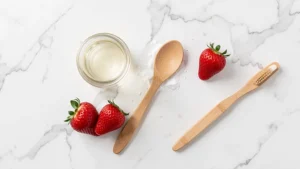
Contain malic acid, which may help reduce yellow stains. Some people mix mashed strawberries with baking soda, though this method lacks strong scientific backing. Use sparingly—no more than twice weekly.
Pineapple
Contains bromelain, an enzyme found in some whitening toothpaste formulas. However, eating pineapple alone does not guarantee the same effect.
Preventing Stains Before They Form
As we age, some yellowing is natural—but prevention makes a big difference.
Reduce Stain-Causing Foods & Drinks
Limit:
- Coffee
- Soda
- Dark berries
Brush after consuming these items when possible.
Avoid Smoking and Tobacco
Both significantly stain teeth and harm overall oral health.
Reduce Sugar Intake
High-sugar diets feed bacteria that cause plaque, bad breath, and gum disease. Always brush after sugary foods, especially before bed.
Increase Calcium Intake
Stronger enamel stays whiter longer. Calcium-rich foods include:
- Milk and cheese
- Broccoli
- Bananas
Some people also rub banana or orange peels on their teeth—anecdotal but harmless when done occasionally.
The real secret to a dazzling smile and perfect oral health lies in the daily removal of toxins that weaken enamel. To achieve this in a 100% natural and safe way, investing in a coconut oil mouthwash with a tongue scraper is the gold standard in your dental care routine.
Never Underestimate Brushing, Toothpaste, and Flossing
While tooth discoloration increases with age, plaque buildup is a major factor.
Regular brushing:
- Reduces bacteria
- Prevents plaque accumulation
- Helps maintain natural whiteness
Toothpaste gently breaks down stains, while floss removes bacteria trapped between teeth that brushing alone can’t reach—preventing odor and discoloration.
Conclusion
Naturally whitening your teeth at home is a safe and effective way to enhance your smile without relying on harsh chemicals. Combining proper oral hygiene, a healthy diet, and natural remedies like oil pulling, baking soda, and hydrogen peroxide can help maintain brighter teeth while supporting overall dental health. Consistency and prevention are key to achieving long-lasting results.
Related Dental Topics
FAQs about teeth whitening
How can I naturally whiten my teeth at home?
What are the best natural methods to whiten teeth without chemicals?
Use oil pulling, baking soda, hydrogen peroxide, and maintain good oral hygiene.
Is baking soda safe for teeth whitening?
Can I use baking soda to remove surface stains from my teeth?
Yes, in small amounts a few times per week, as overuse may erode enamel.
Does coconut oil really whiten teeth?
Can oil pulling with coconut oil make teeth brighter?
It may help reduce bacteria and improve appearance, though evidence is anecdotal.
Is hydrogen peroxide safe for home use?
Can I use hydrogen peroxide to whiten my teeth at home?
Yes, in low concentrations (1.5–3%) and not too frequently.
Can apple cider vinegar whiten teeth?
Does swishing apple cider vinegar help remove stains?
It may help, but frequent use can damage enamel, so dilute and rinse afterward.
Which fruits help whiten teeth naturally?
Can eating certain fruits improve tooth color?
Strawberries and pineapple may help, but should be combined with brushing.
How can I prevent teeth stains before they form?
What habits help avoid yellowing of teeth?
Limit staining foods/drinks, avoid smoking, reduce sugar, and practice daily oral care.
Is flossing important for white teeth?
Can using dental floss help maintain a bright smile?
Yes, flossing removes debris and plaque that brushing alone may miss.
Does calcium affect tooth color?
Can calcium-rich foods help keep teeth white
Yes, calcium strengthens enamel, which supports a whiter appearance.
How often should I use natural whitening methods?
What is the recommended frequency for at-home natural teeth whitening?
Use 2–3 times per week depending on the method to avoid enamel damage.
Sources
https://www.ada.org/resources/ada-library/oral-health-topics/whitening