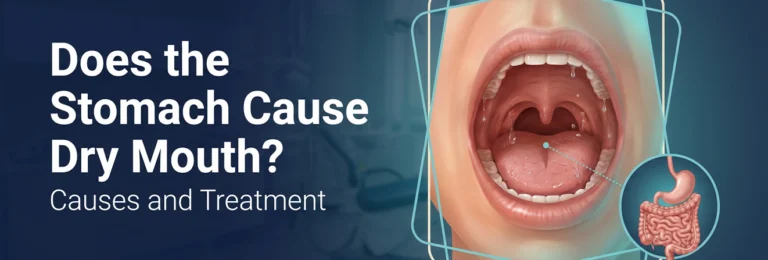


Does IBS cause dry mouth? Irritable bowel syndrome (IBS) is not an established direct cause of dry mouth, but people with IBS may experience oral dryness because of dehydration, medication side effects, stress, or other health conditions.
Frequent diarrhea may increase fluid loss, while certain medications used to manage IBS symptoms can reduce saliva production. Understanding these possible causes can help you find appropriate relief and recognise when a medical or dental assessment is needed.
Does IBS Cause Dry Mouth? Understanding the Connection
IBS does not directly cause dry mouth, but certain factors associated with the condition may contribute to oral dryness.
IBS is a disorder of gut–brain interaction characterised by recurring abdominal pain and changes in bowel habits, including diarrhea, constipation, or both. Dry mouth is not considered a defining symptom of IBS. However, several factors may explain why the two conditions occur together.
1. Can Stress and Anxiety From IBS Cause Dry Mouth?
Stress and anxiety may contribute to a dry-mouth sensation by affecting autonomic nervous system activity and salivary function. Because stress can also influence IBS symptoms, some people may notice oral dryness during periods of increased digestive discomfort. However, dry mouth should not automatically be attributed to anxiety without considering other possible causes.
2. Can IBS Medication Cause Dry Mouth?
Some IBS medications, including certain antispasmodics and antidepressants, may cause dry mouth, particularly those with anticholinergic effects. Consult your doctor if symptoms begin after starting a new medication.
3. Can IBS-Related Diarrhea Cause Dry Mouth?
Frequent diarrhea can lead to fluid loss. If these fluids are not replaced, dehydration may develop and reduce saliva production.
4. Does Acid Reflux Associated With IBS Cause Dry Mouth?
Acid reflux can occur in people who also have IBS, but it is a separate condition and is not an established direct cause of reduced saliva production. Reflux may cause a sour taste, heartburn, or throat irritation, which can sometimes be confused with other oral symptoms. Persistent dry mouth should be assessed independently rather than assumed to result from reflux.
5. Can Mouth Breathing Cause Dry Mouth in People With IBS?
Sleeping with your mouth open, nasal congestion, and snoring can cause moisture to evaporate, leading to dry mouth, especially in the morning.
Can IBS Medications Cause Dry Mouth?

Yes. Certain medications used to relieve IBS symptoms may affect saliva production.
Common examples include:
- Antispasmodics: Some reduce saliva production because of their anticholinergic effects.
- Antidepressants: Certain types used to manage IBS-related pain may cause dry mouth.
- Antihistamines: These can reduce saliva production even when taken for allergies.
- Some pain medications: Certain types may contribute to oral dryness.
If dry mouth begins or becomes worse after starting a medication, speak with your doctor or pharmacist. Some antispasmodics and antidepressants, particularly medicines with anticholinergic effects, can reduce saliva production. Your healthcare professional may review the dose or consider an alternative treatment when appropriate. Do not stop or change a prescribed medication without medical advice.
What Are the Common Causes of Dry Mouth Besides IBS?
Although IBS may be associated with dry mouth, other factors can also contribute to oral dryness.
Dry mouth, medically known as xerostomia, is the sensation of insufficient moisture in the mouth. It may occur with reduced salivary flow, although the feeling of dryness does not always mean that saliva production is measurably low. Saliva helps with chewing and swallowing, neutralises acids, and protects teeth and oral tissues.
The table below highlights common causes of dry mouth and their effects.
| Cause | How It Contributes to Dry Mouth |
| Medications | Some antidepressants, antihistamines, and blood pressure medications reduce saliva production. |
| Dehydration | Fluid loss from diarrhea, vomiting, or insufficient water intake can reduce saliva. |
| Aging | Medication use and certain health conditions may increase the risk of oral dryness. |
| Cancer Treatment | Chemotherapy and radiation therapy may affect salivary gland function. |
| Diabetes | High blood sugar can increase fluid loss and contribute to dehydration. |
| Sjögren’s Disease | This autoimmune condition affects the glands responsible for producing saliva and tears. |
| Smoking and Alcohol | Both can contribute to oral dryness and irritation. |
| Mouth Breathing | Breathing through the mouth, especially during sleep, causes moisture to evaporate. |
If dry mouth persists despite adequate hydration, consult a healthcare professional to identify the underlying cause.
Reduced saliva can also affect gum health, as explained in this guide to reduced salivary flow and gingival inflammation
What Are the Symptoms of Dry Mouth in People With IBS?
Dry mouth can cause several uncomfortable symptoms, including:
- Sticky or dry feeling inside the mouth.
- Thick or stringy saliva.
- Persistent thirst.
- Dry or cracked lips.
- Burning sensation on the tongue.
- Difficulty swallowing.
- Changes in taste.
- Bad breath.
People with persistent oral dryness may also experience dry mouth and bad breath, especially when saliva production is reduced.
Using a natural tongue-cleaning gel as part of your daily oral care routine may help remove accumulated debris and maintain a cleaner, fresher mouth.
- Increased risk of tooth decay.
Persistent dryness may also increase the risk of gum inflammation and oral infections because saliva normally helps protect the teeth and soft tissues.
How to Relieve Dry Mouth Caused by IBS
If you are wondering, “Does IBS cause dry mouth, and how can I relieve it?”, the first step is identifying the underlying cause.
The following measures may help reduce dryness and improve oral comfort.
1. Drink Water Regularly to Relieve IBS-Related Dry Mouth
Drink water throughout the day, taking small sips whenever your mouth feels dry.
If you experience frequent diarrhea, consider an oral rehydration solution to replace lost fluids and electrolytes.
2. Chew Sugar-Free Gum
Chewing sugar-free gum may stimulate saliva production and provide temporary relief from dry mouth. However, people with IBS should check the ingredients carefully. Sugar alcohols such as sorbitol, mannitol, and xylitol can trigger bloating, gas, or diarrhea in some individuals, particularly when consumed in larger amounts. Choose products according to your digestive tolerance, and consider saliva substitutes if chewing gum worsens your IBS symptoms.
3. Use Products Designed for Dry Mouth
Specially designed oral care products can provide temporary relief, including:
- Artificial saliva substitutes.
- Moisturizing mouth sprays.
- Oral moisturizing gels.
- Sugar-free lozenges.
Choose alcohol-free mouthwash to avoid worsening dryness.
An alcohol-free antiseptic mouthwash can also help control oral bacteria while supporting daily oral hygiene without unnecessarily irritating a dry mouth.
4. Reduce Caffeine and Alcohol
Excessive caffeine and alcohol may aggravate oral dryness in some people.
Try reducing coffee, strong tea, and alcoholic beverages while maintaining adequate water intake.
5. Breathe Through Your Nose
Try to breathe through your nose, particularly during sleep.
If nasal congestion or snoring makes this difficult, consult a healthcare professional to identify the cause.
6. Use Ice Chips
Allowing small pieces of ice to melt in your mouth can provide temporary moisture.
Avoid chewing hard ice because it may damage your teeth.
7. Maintain Good Oral Hygiene
Reduced saliva increases the risk of cavities and gum problems, making oral hygiene especially important.
Follow these habits:
- Brush twice daily with fluoride toothpaste.
Using a fluoride toothpaste daily helps protect tooth enamel against cavities, which is particularly important when reduced saliva increases the risk of tooth decay.
- Clean between your teeth daily.
- Use alcohol-free mouthwash.
- Clean your tongue gently.
- Visit your dentist regularly.
A tongue scraper can also help remove accumulated debris and reduce unpleasant breath.
8. Manage Stress and Stop Smoking
Stress management may help people whose IBS symptoms worsen during stressful periods.
Regular exercise, relaxation techniques, and adequate sleep can be useful. Avoiding smoking is equally important because tobacco can worsen oral dryness and damage gum health.
Does IBS Cause Tooth Pain or Other Oral Problems?
Reduced saliva increases the risk of tooth decay and oral infections, making preventive dental care especially important. To protect your oral health:
- Brush twice daily with fluoride toothpaste.
- Clean between your teeth every day.
- Gently clean your tongue to remove debris.
- Use an alcohol-free mouth rinse if appropriate.
- Attend regular dental check-ups, particularly if dryness persists.
Your dentist may recommend additional fluoride protection if you have a higher risk of cavities due to chronic dry mouth.
When Should You See a Doctor About IBS and Dry Mouth?
Occasional dry mouth may improve with simple self-care, but persistent or worsening symptoms deserve medical or dental assessment.
Consult a healthcare professional if:
- Dry mouth persists for several weeks despite self-care.
- You have difficulty chewing, swallowing, or speaking.
- You develop painful or persistent white patches, mouth sores, or recurrent oral infections.
- You experience dry eyes alongside persistent oral dryness.
- You have excessive thirst and frequent urination.
- You suspect a prescribed medication is contributing to your symptoms.
If diarrhea is accompanied by significant dizziness, very little urine, confusion, or an inability to keep fluids down, seek urgent medical care.
A doctor or dentist may review your medications, examine your mouth, and recommend tests based on your symptoms.
Frequently Asked Questions About Does IBS Cause Dry Mouth?
Does IBS Cause Dry Mouth Directly?
No. IBS is not a direct cause of reduced saliva production, but associated factors may contribute to oral dryness.
Can Irritable Bowel Syndrome Make Your Mouth Feel Dry?
Yes. Some people with IBS experience dry mouth because of anxiety, dehydration, or medication side effects.
Can IBS Medications Cause Dry Mouth?
Yes. Certain antispasmodics and antidepressants can reduce saliva production.
Does IBS-Related Diarrhea Cause Dry Mouth?
Yes. Frequent diarrhea can cause dehydration, which may reduce saliva production.
Can Stress From IBS Cause Dry Mouth?
Yes. Stress and anxiety can temporarily affect saliva production.
Does Acid Reflux Associated With IBS Cause Dry Mouth?
Acid reflux may cause throat irritation and an unpleasant taste, sometimes alongside oral dryness.
Why Do People With IBS Wake Up With a Dry Mouth?
Common causes include mouth breathing, nasal congestion, snoring, dehydration, and certain medications.
Can Dry Mouth Caused by IBS Lead to Tooth Decay?
Yes. Reduced saliva weakens the mouth’s natural protection against acids and bacteria, increasing the risk of cavities.
What Is the Fastest Way to Relieve Dry Mouth From IBS?
Drinking water, chewing sugar-free gum, and using moisturizing oral sprays can provide temporary relief.
When Should You Worry About Dry Mouth and IBS?
Seek medical advice if dryness persists or occurs with dry eyes, difficulty swallowing, recurrent infections, or excessive thirst.
source
https://www.nidcr.nih.gov/health-info/dry-mouth?