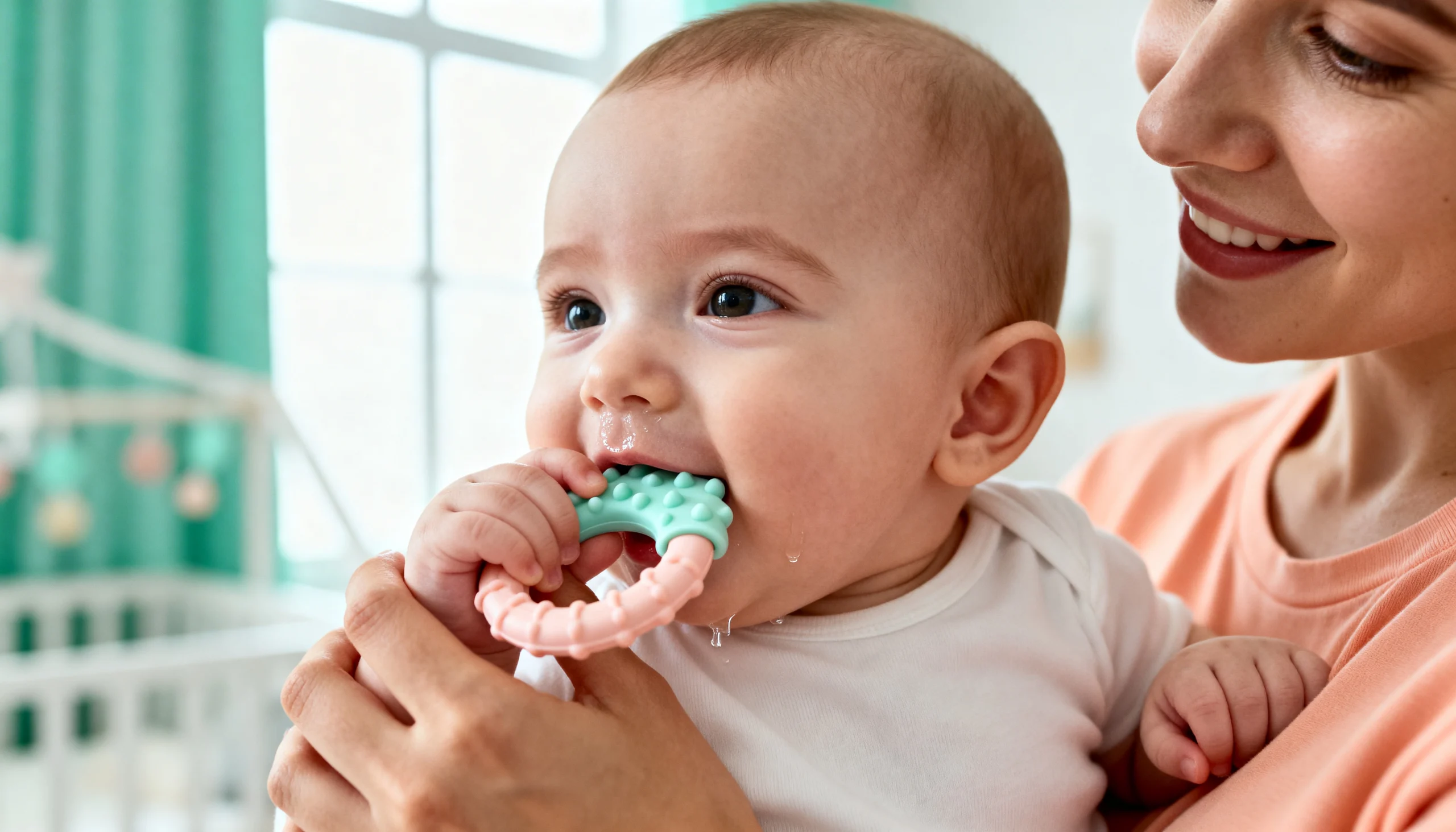

Teething in Infants is considered one of the most challenging stages an infant experiences during the first year of life. This is because teething is typically accompanied by a range of symptoms that cause discomfort and restlessness, leading the child to experience persistent pain and increased irritability without an obvious reason.
Sleep is often noticeably affected due to the discomfort associated with tooth eruption. Teething symptoms can be distressing for parents—especially first-time mothers who have not previously gone through this experience.
When Does Teething Begin in Infants?
The formation of a baby’s teeth begins while the fetus is still in the womb. However, these teeth usually do not appear in the mouth until the child reaches four to seven months of age in most cases. These early teeth are known as primary (deciduous) teeth.
In some children, the eruption of primary teeth may be delayed, and a child may reach the age of one year without any visible teeth.
We recommend purchasing the dual children’s toothbrush and teether set (two pieces); specially designed with ultra-soft rounded bristles and a handle that is completely safe for chewing (made from food-safe materials, Food-Grade).
Symptoms of Teething in Infants
With the emergence of primary teeth, several symptoms typically appear—signs that experienced mothers may easily recognize. First-time parents, however, may become concerned, fearing an underlying medical issue without realizing that these symptoms are related to teething.
Common symptoms include:
- Excessive drooling
- Continuous saliva exposure around the mouth and chin may lead to skin irritation or rash.
- This can be minimized by gently wiping the baby’s saliva throughout the day.
- Persistent irritability
- The baby may cry frequently and appear generally uncomfortable.
- Swollen gums, often warm to the touch.
- Slight increase in body temperature.
- Runny nose.
Although research indicates that fever and diarrhea are not directly caused by teething, many parental observations suggest a temporal association. Studies are ongoing to better understand this relationship.
What Do an Infant’s Gums Look Like During Teething?
During teething, the gums are typically swollen. You may notice:
- A small white spot emerging
- A fluid-filled blister
- A raised bump on the gum
The gums may be tender and painful, which can lead to difficulty sleeping or feeding.
Signs that may indicate teething include:
- Excessive drooling
- Chewing or biting objects
- Gum swelling or sensitivity
- Slight elevation in temperature (without true fever)
Gently massaging the gums with a clean finger or a cool, damp cloth may help relieve discomfort. Over-the-counter pain relievers such as ibuprofen or acetaminophen may be used when appropriate and under medical guidance.
If symptoms become severe, or if the child develops high fever or persistent diarrhea, medical consultation is recommended.
To soothe your baby’s discomfort, it’s medically recommended to gently massage swollen gums with a clean finger or a cool, damp cloth. However, for a healthier and more practical way to ensure lasting relief, a baby teether is the ideal solution and a smarter alternative to traditional methods.
How Can Teething Pain Be Relieved?
It is common for infants to lose interest in food during teething because chewing increases discomfort due to contact with inflamed gums.
Recommendations during this period include:
- Avoid offering warm foods.
- Provide cool foods, as they help soothe gum irritation.
- Refrigerate food briefly before serving.
Infants also tend to bite objects to relieve pressure. Safe options include giving large pieces of:
- Carrot
- Cucumber
- Apple
These must be large enough to prevent swallowing or choking.
A commonly used tool is a teething ring, typically made of soft rubber or plastic. Biting it creates counter-pressure on the gums, providing temporary relief.
For additional benefit:
- Place the teething ring in the refrigerator (not the freezer).
- Cooling reduces inflammation.
- Freezing should be avoided because it may harden the material and injure the gums.
If these methods fail to relieve symptoms, a physician may recommend child-safe medications such as paracetamol or ibuprofen, or prescribe treatments to reduce gum swelling.
How to Care for a Baby’s Teeth
Caring for primary teeth is essential because they:
- Help break down food before digestion.
- Assist in proper speech development.
- Guide the alignment and eruption of permanent teeth.
Problems affecting primary teeth may lead to long-term issues such as misalignment or spacing abnormalities.
Cleaning During Teething
Teeth can be cleaned using:
- A piece of gauze moistened with cool water.
- Gently wiping the teeth and gums without toothpaste.
This should be done once or twice daily. The cooling effect helps reduce discomfort, especially before bedtime, when teething pain often intensifies and disrupts sleep.
A specialized tool called a finger toothbrush may also be used. This is a soft rubber brush worn over the finger to clean the infant’s teeth gently.
If toothpaste is used, it must be specifically formulated for infants and contain low fluoride levels.
Causes of Delayed Teething in Children
Primary teeth usually appear before seven months of age. However, in some cases, eruption may be delayed until twelve months or later. Medical evaluation is advised to determine the underlying cause.
Possible causes include:
1. Genetic Factors
Delayed teething may be inherited from one or both parents. In such cases, there is typically no cause for concern, as the child’s teeth will emerge according to a similar familial timeline.
2. Nutritional Considerations
Proper nutrition during the first year is essential, particularly foods rich in iron, as iron deficiency is common in children and may contribute to delayed tooth eruption.
From six months onward, infants should begin consuming protein-rich foods such as:
- Meat
- Fish
- Poultry
Protein intake should constitute approximately one-quarter of the child’s total daily food consumption to support healthy tooth development.
3. Vitamin D and Tooth Growth
Vitamin D plays a crucial role in dental development. Children should regularly consume foods rich in this vitamin, such as:
- Carrots
- Kiwi
Consistent intake may support tooth eruption within one to two months.
Sunlight exposure is also an effective way to ensure adequate Vitamin D levels. Recommendations include:
- Daily exposure to mild sunlight.
- Best times: early morning or before sunset.
- Avoid exposure during intense heat.
Sunlight activates Vitamin D stored beneath the skin, converting it into its usable form. For this reason:
- The child’s arms and legs should be uncovered during exposure.
- Covering the skin reduces the benefit of sunlight.
- Minimal clothing (such as a diaper only) is preferable during safe exposure periods.
4. Calcium Intake
Children should consume calcium-rich foods such as:
- Eggs
- Milk
Calcium supplements may also be recommended when necessary, under medical supervision.
The strength of your child’s teeth from the inside is complemented by their protection from the outside. Once they erupt, daily care becomes essential to prevent bacterial growth. To make this task easy and convenient, choosing a professionally designed children’s toothbrush is the ideal solution.
Conclusion
Teething is a natural developmental stage that every infant experiences, yet it can be physically uncomfortable and emotionally stressful for both the child and caregivers. Understanding the normal timeline, recognizing common symptoms, and applying simple evidence-based comfort measures can significantly ease this transition. With proper nutrition, gentle oral care, and appropriate medical consultation when needed, parents can support healthy tooth eruption while ensuring the child remains comfortable and safe during this important milestone.
Related Dental Topics
FAQs about Teething in Infants
When does teething usually start in babies?
At what age should I expect my child’s first tooth to appear?
Teething commonly begins between 4 and 7 months of age, though variations are normal.
Is it normal for my baby to drool excessively during teething?
Why does my infant produce so much saliva when teeth are emerging?
Yes. Increased drooling is a common response to gum irritation during tooth eruption.
Can teething cause sleep disturbances?
Why is my baby restless or waking more often while teething?
Gum discomfort can temporarily disrupt sleep patterns.
Does teething lead to fever?
Should I worry if my child’s temperature rises slightly during teething?
A mild temperature increase may occur, but high fever is not typical and requires medical advice.
How can I soothe my baby’s sore gums safely?
What are the best ways to relieve teething discomfort at home?
Gentle gum massage, cool teething rings, and chilled (not frozen) foods can help reduce pain.
Why does my baby try to bite everything during teething?
Is chewing on objects a normal teething behavior?
Yes. Biting creates counter-pressure that helps relieve gum discomfort.
What foods should be offered during teething?
Should I change my baby’s diet while teeth are erupting?
Offer cool, soft foods and avoid warm items that may irritate sensitive gums.
How do I clean my baby’s teeth before they can brush?
What is the proper way to maintain oral hygiene during infancy?
Wipe the teeth and gums gently with clean, damp gauze once or twice daily.
Is delayed teething a cause for concern?
What if my child has no teeth by their first birthday?
Delays can be normal, but evaluation is recommended if no teeth appear by 12 months.
What nutrients support healthy tooth development?
Which vitamins and minerals are important for early dental growth?
Adequate intake of Vitamin D, calcium, iron, and protein supports proper tooth formation.
Sources