
Root canal treatment remains one of the most frequently searched dental procedures worldwide, as patients seek clarity on what to expect before committing to the treatment. Millions of individuals across North America, Europe, Asia, and the broader global dental health community ask the same critical question each year: Is root canal treatment genuinely painful, or does its fearsome reputation exceed the reality? The answer depends largely on procedural technique, the quality of local anaesthesia administered, and the severity of the underlying nerve inflammation. This comprehensive, evidence-based guide addresses every dimension of the question from intraoperative sensation to post-procedural recovery so that patients everywhere can make fully informed clinical decisions.
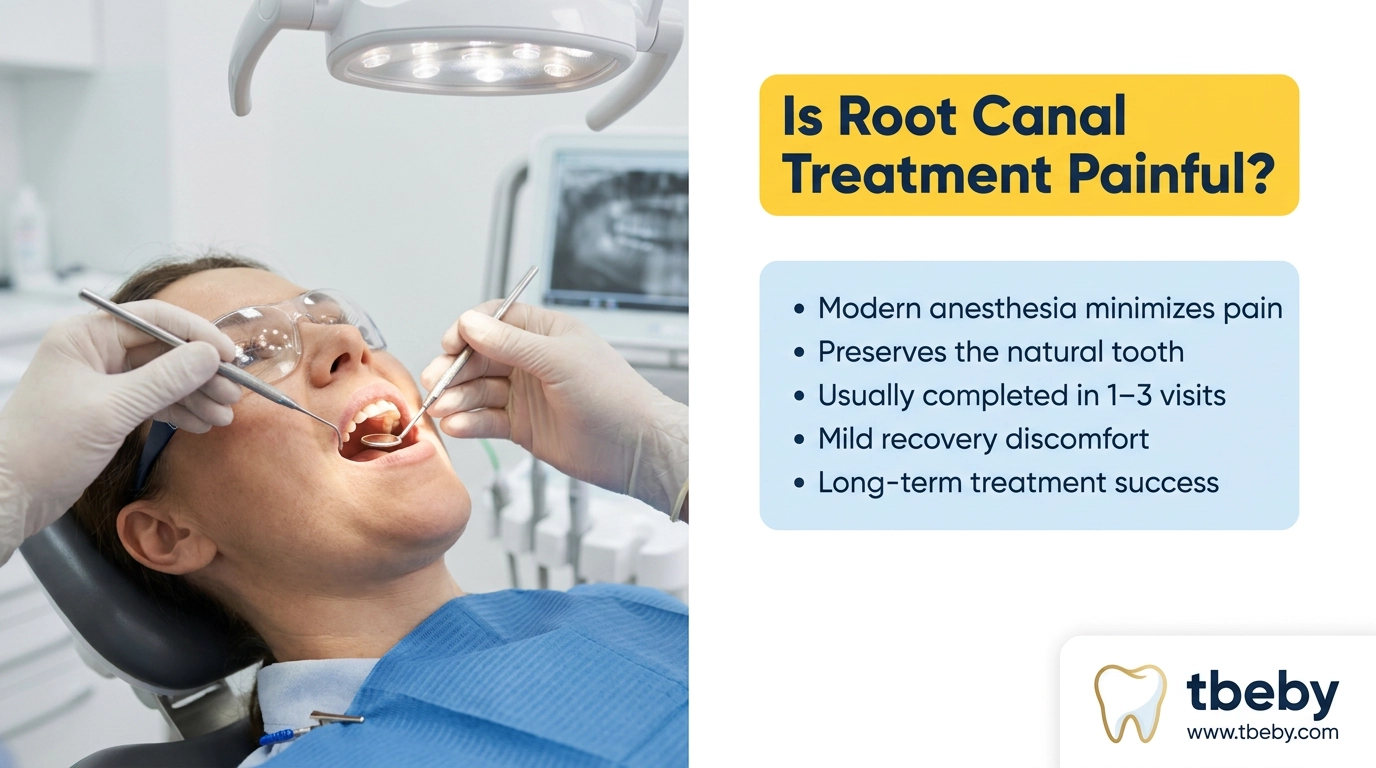
Is Root Canal Treatment Painful?

Root canal treatment is among the most misunderstood procedures in modern dentistry. The perceived pain associated with it is largely a product of historical practice, predating the widespread and refined use of local anaesthesia.
- The discomfort experienced during root canal treatment is primarily linked to the specific clinical steps the dental practitioner performs throughout the procedure.
- When a qualified dentist administers a well-dosed local anaesthetic directly at the site of the affected nerve and surrounding tooth structure, the intraoperative pain is minimal to negligible.
- Once the anaesthetic wears off, mild-to-moderate discomfort may persist for several days during the initial recovery phase.
- This post-procedural phase is commonly accompanied by sensations of headache, general sensitivity, and localised soreness at the treated site.
- However, this residual discomfort is entirely manageable through prescription or over-the-counter analgesics recommended by the treating dentist.
You can use Medical Gauze to gently protect the treated area and absorb any post-procedural bleeding during the initial recovery phase after your root canal.
Tooth Extraction vs. Root Canal Treatment: Which Is the Better Option?
One of the most debated questions among dental patients globally is whether tooth extraction is preferable to root canal treatment. The answer is neither universal nor simple; it is clinically determined on a case-by-case basis.
- A qualified dental specialist will evaluate the full condition of the affected tooth before determining the appropriate course of action.
- The treatment decision is individualised, based on the patient’s specific clinical presentation and the degree of structural damage.
- In general, most patients and clinicians prefer root canal treatment over extraction, as preserving the natural tooth supports superior chewing function compared to prosthetic replacements.
- However, in cases of complete and irreparable tooth decay, extraction becomes the only clinically viable option.
You can use Toothache Foam to temporarily relieve sharp dental pain while you consult your specialist and decide between extraction and root canal treatment.
Tooth Pain Years After Root Canal Treatment
Root canal treatment is designed to eliminate pain permanently; however, in certain documented cases, patients report recurrent discomfort years after the procedure was completed.
- One contributing cause is residual or recurrent pulpal inflammation stemming from sensitivity reactions or damage to nerve tissues adjacent to the originally treated canal.
- The use of sharp instrumentation during the procedure may inadvertently induce inflammation in the periradicular tissues surrounding the root canals.
- Such procedure-related factors can result in prolonged discomfort lasting several days beyond the treatment session.
- If pain persists or returns after multiple years, immediate consultation with a dental specialist is strongly advised.
- The most likely explanation in such cases involves accessory or hidden root canals that were not fully cleaned during the initial treatment session.
- Additionally, the biological process of tissue regeneration and renewed vascular circulation in the affected periapical region can temporarily produce pain sensations.
- Accurate diagnosis of the underlying cause is essential to determine the appropriate retreatment protocol.
How Long Does a Tooth Last After Root Canal Treatment?
The longevity of a tooth following root canal treatment varies across individuals, but clinical evidence generally places the average lifespan at 10 to 15 years. Several key factors influence this range:
| Factor | Detail |
| Tooth position in the mouth | Teeth in high-stress positions (e.g., molars) may have shorter functional lifespans. |
| Procedural quality | Correctly performed treatment produces minimal long-term complications. |
| Discolouration over time | The treated tooth may gradually darken compared to adjacent natural teeth |
| Brittleness after nerve removal | The tooth becomes more susceptible to fracture following pulp removal. |
| Crown placement | A protective crown significantly extends functional lifespan and prevents fracture. |
How Long Does Root Canal Treatment Take?
In addition to concerns about pain, patients frequently inquire about the time commitment involved in completing root canal treatment.
- In the majority of clinical cases, root canal treatment is completed across three sequential appointments.
- Contemporary dental literature indicates that the procedure typically requires between one and three sessions to reach full clinical completion.
- Advances in endodontic technology now enable experienced practitioners to complete root canal filling within a single appointment in uncomplicated cases.
- The total number of sessions required for root canal treatment is ultimately determined by the actual condition of the nerve at the time of treatment.
- Severe inflammation and complex canal morphology may necessitate two to three sessions to ensure thorough debridement and disinfection.
- Conversely, when inflammation is minimal and the canal anatomy is straightforward, a single session is frequently sufficient.
- The final clinical step in all cases involves the fitting and cementation of a dental crown to protect the treated tooth and restore its structural integrity.
You can use Toothpaste for Treating Sensitive Gums throughout your root canal appointments to soothe gum sensitivity and support a more comfortable recovery between sessions.
Is There Pain During Root Canal Treatment?
Clinical research in dentistry consistently confirms that root canal treatment can be associated with significant discomfort, though the intensity varies considerably by case.
- The primary objective of root canal treatment is the complete elimination of all infected or inflamed neural tissue from within the root canal system.
- Complete removal is essential to prevent reinfection of the treated tooth and surrounding periapical structures.
- This approach allows the natural tooth to be preserved, sparing the patient from the necessity of full extraction.
- From the patient’s perspective, the procedure is generally not painful at the time of treatment due to the effects of local anaesthesia.
- The dentist typically secures the treated tooth with a temporary or permanent crown to protect it from mechanical stress during the healing phase.
- All voids left within the debrided root canal system are filled with a biocompatible material to seal the canal and prevent bacterial recontamination.
- It is clinically imperative that root canal treatment be performed under adequate local anaesthesia at all times.
- Under proper anaesthetic conditions, the vast majority of patients report no significant intraoperative pain.
- Post-anaesthetic discomfort, however, is expected and typically subsides within a few days.
Can Root Canal Treatment Be Performed Without Anaesthesia?
A notable proportion of patients inquire whether it is feasible to undergo root canal treatment without anaesthetic administration. The clinical consensus is unequivocal.
- Root canal treatment is inherently a high-pain procedure; therefore, attempting to perform it without anaesthesia would be clinically inadvisable and practically intolerable for most patients.
- Prior to commencing treatment, the dentist takes periapical radiographs to precisely localise the source of pain and assess canal morphology.
- A local anaesthetic is then administered to the periradicular tissue, effectively eliminating sensation from the operative field.
- A rubber dam is subsequently placed around the tooth to isolate it from the oral environment and protect the surrounding soft tissues.
- The dentist proceeds to create an access cavity through the enamel and dentine layers to reach the pulp chamber located beneath.
- The root canals are then thoroughly irrigated and instrumented using chemical solutions designed to eliminate residual infected tissue and eradicate intracanal bacterial populations.
- These procedural steps confirm that root canal treatment, while manageable under anaesthesia, would indeed be painful without it.
- The prepared canal space is subsequently filled with an appropriate biocompatible material to seal the root canal system against future contamination.
- Finally, the outer enamel layer is restored, and a dental crown is fitted to maintain long-term structural health and prevent reinfection.
Your Safe Step Toward a Pain-Free, Healthy Smile
Root canal treatment is no longer the dreaded procedure it was once perceived to be. Through significant advances in endodontic technique and the refined administration of local anaesthesia, the procedure has become highly manageable for patients worldwide whether they are being treated in leading dental clinics in London, New York, Dubai, Sydney, or any other major global city.
The fundamental goal of root canal treatment is to save the natural tooth from extraction and permanently eliminate the debilitating pain caused by pulpal inflammation and bacterial infection. While mild post-procedural discomfort is expected after the anaesthetic wears off, it is readily controlled with prescribed analgesics.
Always remember: selecting a qualified dental specialist, adhering strictly to the prescribed treatment plan, and ensuring the placement of a protective crown upon completion are the three pillars that guarantee long-term treatment success and sustained dental health for years to come.
Frequently Asked Questions About Root Canal Treatment
Will I feel pain during the root canal procedure?
Does the nerve removal process cause discomfort while I am in the dental chair?
No, the use of local anaesthesia by the dentist ensures complete comfort throughout the entire procedure with no intraoperative pain.
Is it better to extract a damaged tooth or perform root canal treatment?
Should I choose tooth removal or root canal therapy to relieve my dental pain?
Root canal treatment is always the preferred option for preserving the natural tooth and chewing function; extraction is only indicated in cases of complete, irreparable tooth destruction.
How many appointments does root canal treatment require?
What is the total duration of a root canal therapy course in terms of dental visits?
Root canal treatment is typically completed in one to three sessions, with the number determined by the severity of the inflammation present.
How many years can a tooth survive after root canal treatment?
Does a tooth treated with root canal therapy remain functional over the long term?
A treated tooth can remain functional for 10 to 15 years; this lifespan is significantly extended with proper oral hygiene and the placement of a protective crown.
Can dental pain return years after root canal treatment?
What causes discomfort in a tooth that was treated with root canal therapy a long time ago?
Pain recurrence is uncommon, but when it occurs, it is most often attributed to previously undetected accessory canals that were inadequately cleaned, necessitating professional retreatment.
Is placing a dental crown mandatory after root canal treatment?
Why is it necessary to fit a crown over a tooth following root canal therapy?
Yes, crown placement is a clinical necessity, as the treated tooth becomes structurally weaker and significantly more prone to fracture after nerve removal.
Will the colour of the tooth change after root canal treatment?
Does root canal therapy cause permanent discolouration or darkening of the tooth?
Yes, treated teeth may gradually darken over time; however, a porcelain crown effectively resolves this aesthetic concern.
Is root canal treatment possible without local anaesthesia?
Can root canal therapy be performed successfully without any form of numbing agent?
This is strongly inadvisable, as the procedure involves substantial pain potential without anaesthesia; local anaesthesia is an essential prerequisite for a safe and effective outcome.
When can I resume normal chewing on the treated tooth?
How long should I wait before eating normally following a root canal treatment session?
Soft foods are recommended, and hard chewing on the treated tooth should be avoided for approximately one week to minimise the risk of complications.
How long does post-treatment dental pain last after root canal therapy?
How many days does discomfort persist following the completion of a root canal procedure?
Mild discomfort and sensitivity may persist for two to four weeks at most, gradually subsiding with the consistent use of prescribed analgesic medication.
Sources:
https://www.nhs.uk/tests-and-treatments/root-canal-treatment/