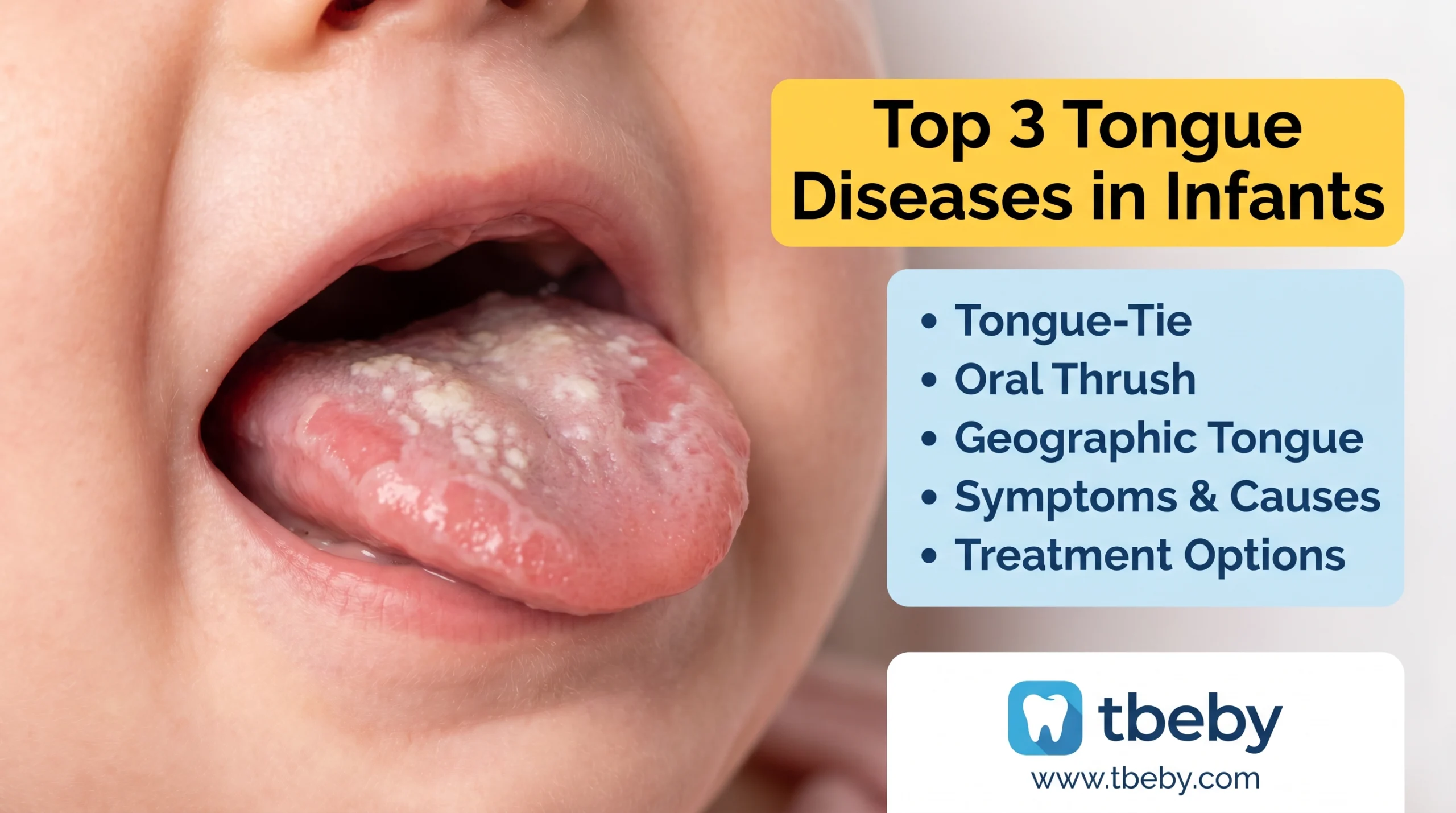

The top 3 tongue diseases in infants are among the most searched health concerns among new parents, given their significant impact on feeding and oral development. This comprehensive article addresses the three most common tongue conditions affecting infants: tongue-tie (ankyloglossia), oral thrush (white tongue), and geographic tongue.
Parents frequently ask about the causes, symptoms, and best prevention and treatment methods for these conditions.
This guide covers each issue in detail, equipping caregivers with the knowledge needed to recognize and address these problems early.
The Most Common Tongue Diseases in Children

Numerous tongue conditions affect both adults and children. However, clinical experience shows that three conditions are the most frequently observed among infants:
- Tongue-tie, also known as ankyloglossia
- White tongue (oral thrush)
- Geographic tongue (map-like tongue)
Each condition is discussed individually below.
You can use a children’s toothbrush to gently clean your infant’s mouth and help prevent common tongue and oral conditions.
1. Tongue-Tie (Ankyloglossia)
Tongue-tie has no single definitive cause. Some infants are born with a tongue anchored to the floor of the mouth, restricting normal movement and preventing them from lifting the tongue properly.
This condition results from an unusually thin band of tissue, known as the lingual frenulum, that tightly secures the underside of the tongue to the floor of the mouth. As a result, the infant cannot raise the tongue or extend it beyond the mouth.
The severity of tongue-tie varies significantly from one infant to another. In mild cases, the condition is often discovered incidentally during a routine pediatric examination. These mild cases typically require no treatment, produce no noticeable symptoms, and tend to improve naturally as the child grows.
Moderate and severe cases, however, present clear symptoms and complications that require timely treatment to prevent further difficulties.
Symptoms of Tongue-Tie in Infants
Tongue-tie is often identified due to breastfeeding difficulties. Common signs include:
- Maternal nipple damage from excessive biting during and after breastfeeding
- Painful or cracked nipples
- A tendency to bite rather than suckle
- Inadequate weight gain in the infant
- Visible discomfort or restlessness during feeding
When Should Tongue-Tie Be Treated?
Medical opinion remains divided on this question. Some physicians recommend early treatment to avoid future complications, while others advocate a watch-and-wait approach, since the condition may resolve on its own or never cause significant problems.
Potential Complications if Left Untreated
- Dental issues, including tooth decay, gum swelling, irritation, and gaps between the front teeth
- Gagging or choking sensations when the infant begins eating solid foods
- Speech difficulties, particularly with sounds such as R, D, N, and L
Treatment Options for Tongue-Tie
| Feature | Frenotomy | Frenuloplasty | |
| Best for | Standard tongue-tie cases | Unusually thick frenulum | |
| Setting | Specialist’s clinic (outpatient) | Surgical facility | |
| Anesthesia | Not required | Administered | |
| Technique | Sterile scissors | Specialized instruments or a laser | |
| Pain & Bleeding | Minimal (1–2 drops) | Managed post-operatively | |
| Effectiveness | Highly effective | Highly effective |
Both treatment approaches are highly effective and successfully prevent long-term speech, dental, or chewing complications.
2. Oral Thrush (White Tongue)
Oral thrush, commonly referred to as white tongue, is another prevalent condition among
This section explores its causes, severity, and treatment options.
You can use Medical gauze to gently wipe white patches from your baby’s tongue and mouth during oral thrush treatment.
Why Do White Patches Appear in an Infant’s Mouth?
White patches in an infant’s mouth typically indicate a common oral fungal infection known as thrush. This condition produces creamy white or yellowish patches on the sides and roof of the mouth, gums, lips, and tongue. In severe cases, thrush can spread to the throat, tonsils, or esophagus.
Is Oral Thrush Dangerous?
Oral thrush is generally not dangerous. However, if an infant experiences significant discomfort, the condition may interfere with breastfeeding and cause distress for both mother and child. While thrush can be uncomfortable, keeping the infant as comfortable as possible and following the physician’s treatment instructions typically resolves the condition quickly.
Causes of Oral Thrush (White Tongue)
Fungi are a natural part of everyone’s digestive system, but an imbalance can trigger infection. Several factors contribute to oral thrush in infants:
- Maternal vaginal yeast infections during pregnancy, which may be transmitted to the infant during vaginal delivery
- Antibiotic use, either by the mother before delivery or prescribed directly to the infant, can eliminate beneficial bacteria that normally keep fungal growth in check
- Cyclical transmission between mother and infant during breastfeeding
- Prolonged use of pacifiers or bottles, according to some theories, though exclusively breastfed infants without pacifier use can also develop thrush
Because multiple factors may contribute simultaneously, identifying a single definitive cause is often difficult.
Symptoms of Oral Thrush in Infants
- White patches on the lips, tongue, and inside the mouth
- Crying or fussiness during breastfeeding or bottle/pacifier use
- Light or dark red skin irritation in the diaper area
How Is Oral Thrush Treated?
If a pediatrician diagnoses oral thrush, an antifungal oral medication is typically prescribed. This medication should be applied to the white patches using the provided applicator or a clean finger several times daily for approximately 10 days.
Preventing Oral Thrush in Infants
Since antibiotics frequently trigger oral thrush, they should never be administered without strict medical supervision, as antibiotics are ineffective against viral infections. Regularly cleaning and sterilizing pacifiers also helps. Some physicians recommend that breastfeeding mothers allow their nipples to air-dry between feedings to help prevent thrush.
3. Geographic Tongue

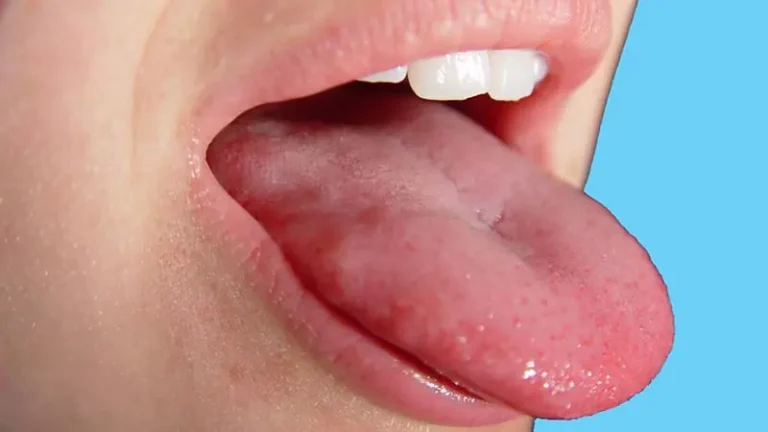
Geographic tongue is a benign oral condition that gives the tongue a map-like appearance, hence its name. While the visual appearance of geographic tongue can be concerning for parents, it poses no health risks and is not associated with infection or cancer.
This condition is typically painless, though it can occasionally cause tongue sensitivity or discomfort with certain substances. The characteristic patches often improve in one area of the tongue while gradually shifting to another.
Symptoms of Geographic Tongue
- Smooth, red patches of varying sizes and shapes appear on the upper surface of the tongue, sometimes causing discomfort
- The tongue may become irritated by spicy, acidic, or hot foods
- White or cream-colored borders surround the patches, which can change in size, shape, and location within minutes or hours, potentially causing anxiety
You can use Gum Repair Foam to soothe tongue sensitivity and ease the discomfort caused by geographic tongue patches.
Causes of Geographic Tongue
This condition is frequently observed among multiple family members, suggesting a strong genetic component. Additional contributing factors include:
- Stress and anxiety
- Food sensitivities
- Hormonal changes
- Psoriasis (a chronic skin condition)
When Should You See a Doctor?
Geographic tongue can occur at any age. While not typically a cause for serious concern, it can be uncomfortable. If symptoms persist for more than ten days, a dermatologist consultation is recommended.
To manage this condition, it is advisable to avoid tobacco products, spicy foods, hot beverages such as tea, acidic foods, including certain fruits, dry and salted nuts, and toothpaste containing flavoring agents or whitening compounds.
Conclusion
Paying close attention to your infant’s oral health and monitoring any changes in the tongue represents one of the most important early care measures for ensuring healthy development and comfort. As outlined above, whether tongue-tie affects breastfeeding, the discomfort of oral thrush, or the concerning appearance of geographic tongue, are all manageable conditions that respond well to timely diagnosis and treatment.
There is no need for excessive worry, as most of these conditions respond excellently to simple treatments or resolve on their own. Remain vigilant as your infant’s primary health monitor, and do not hesitate to consult a pediatrician or dental specialist upon noticing any of these symptoms to ensure proper evaluation and early intervention.
FAQs about the Top 3 Tongue Diseases in Infants
What is tongue-tie in infants?
How would you describe a tongue-tie condition in my baby?
Tongue-tie is a condition present at birth in which a thin band of tissue tightly connects the underside of the tongue to the floor of the mouth, restricting normal tongue movement.
Does tongue-tie affect breastfeeding?
Is tongue-tie the reason my baby struggles to breastfeed?
Yes, tongue-tie can cause difficulty suckling milk, along with pain and cracked nipples for the mother during breastfeeding.
How is tongue-tie treated?
What medical procedure resolves tongue-tie?
Treatment involves a quick, simple in-office procedure to cut the frenulum using sterile scissors or laser technology.
What causes a white coating on an infant’s tongue?
What does oral thrush mean in babies?
Oral thrush is a common fungal infection that appears as white or yellowish, cheese-like patches on an infant’s tongue and mouth.
Is oral thrush dangerous for my baby’s health?
Should I worry about white fungus in my infant’s mouth?
It is not dangerous, but it causes discomfort and pain during feeding and requires treatment to relieve symptoms.
Can oral fungal infections spread between mother and infant?
Can I pass thrush to my baby or vice versa?
Yes, mothers and infants can repeatedly exchange fungal infections during breastfeeding.
How do I treat white fungus (thrush) in my baby’s mouth?
What is the way to get rid of white tongue in infants?
Treatment involves a doctor-prescribed topical antifungal medication applied to the white patches for several consecutive days.
What is geographic tongue in children?
Why does my baby’s tongue look divided like a map?
Geographic tongue is a benign, harmless oral condition that appears as red patches of varying size and shape on the tongue’s surface.
What causes geographic tongue?
Why do these map-like patches appear on my infant’s tongue?
Genetics plays a primary role, alongside other factors such as stress, allergies, or hormonal changes.
Does geographic tongue require medical treatment?
When must I see a doctor about my baby’s geographic tongue?
No treatment is needed since it is harmless, but consulting a doctor is advised if symptoms persist or cause ongoing discomfort.