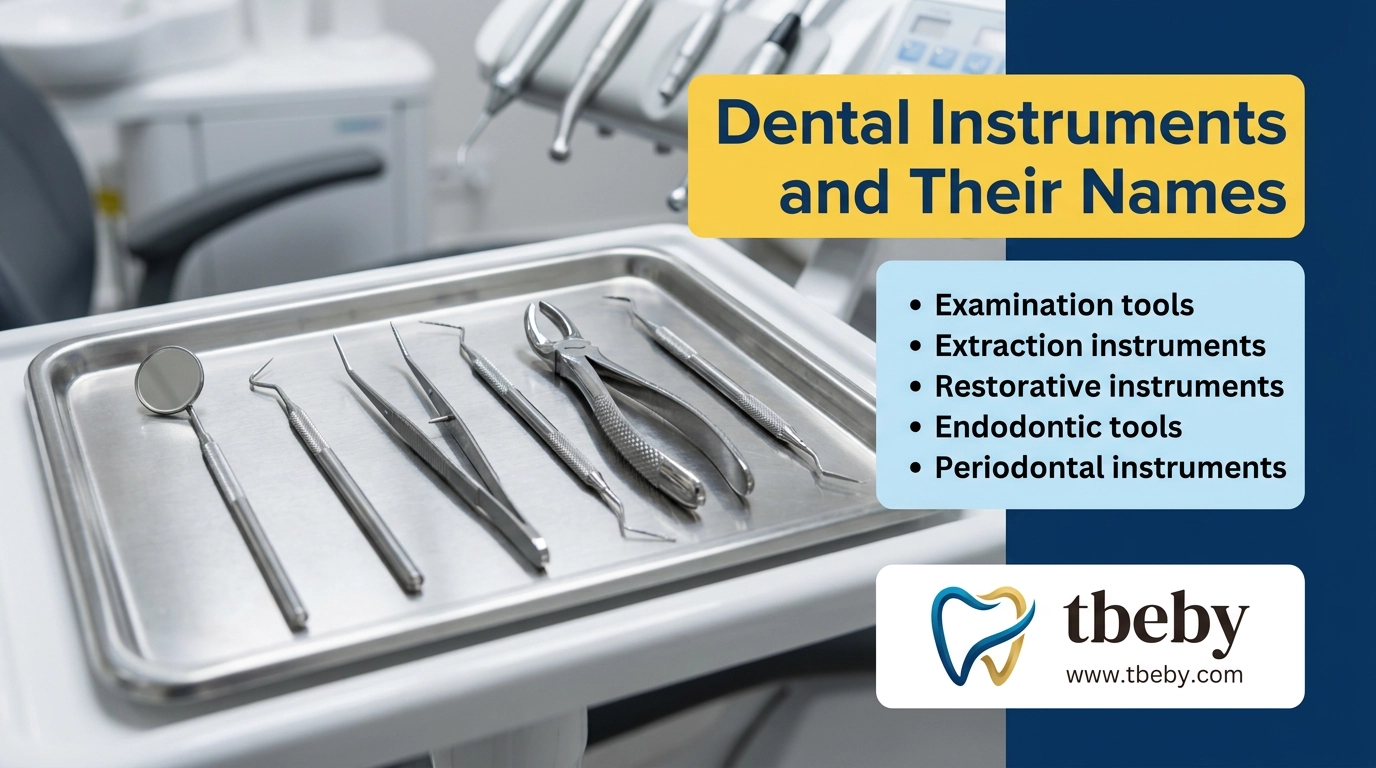

Dental instruments represent the foundational toolkit upon which every successful clinical practice is built, from routine examinations to complex surgical interventions. A dentist is, in many respects, both a scientist and an artist, navigating the intricate landscape of the oral cavity with precision-engineered tools designed to diagnose, treat, and restore. Whether you are a dental student beginning your clinical rotations, a practicing clinician seeking a structured reference, or a dental practice administrator overseeing equipment procurement, a thorough understanding of dental instruments, their names, classifications, and clinical functions is indispensable. This guide presents a comprehensive, SEO-optimized reference to dental instruments and their names in PDF-compatible format, complete with categorical descriptions and functional annotations suitable for global professional use.
Section I: Examination and Diagnostic Instruments
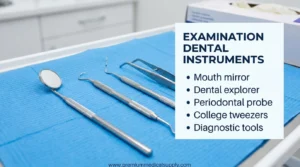
Diagnostic accuracy is the cornerstone of effective dental treatment. The following dental instruments are employed during clinical examination to assess oral health status and guide treatment planning.
You can use Hydroxyapatite Toothpaste daily to remineralize and strengthen tooth enamel, helping maintain the healthy surfaces your dentist examines at every visit.
1. The Mouth Mirror
The mouth mirror is among the most universally recognized dental instruments in clinical practice. It consists of a reflective circular head mounted on a slender handle, available in multiple sizes to accommodate varying anatomical requirements.
| Clinical Function | Description |
| Direct visualization | enables the clinician to observe accessible oral surfaces under magnification |
| Indirect visualization | allows examination of surfaces not directly visible, such as the palatal aspects of maxillary teeth and the lingual surfaces of mandibular teeth, without repositioning |
| Light reflection | directs illumination onto specific tooth surfaces, particularly useful when inspecting proximal carious lesions |
| Tissue retraction | gently displaces soft tissues, including the cheek, lip, and tongue, to improve field visibility |
The mouth mirror is particularly valuable when examining the palatal surfaces of upper teeth and the lingual surfaces of lower teeth, two areas that are inherently difficult to visualize without optical assistance.
2. The Dental Explorer (Probe/Sonde)
The dental explorer is a slender, hand-held dental instrument with a sharp working tip designed to enhance tactile sensitivity during examination.
Available configurations include:
- Straight explorer used for examining occlusal surfaces and detecting pit-and-fissure caries
- Curved (sickle) explorer crescent-shaped, effective for detecting occlusal surface anomalies
- Interproximal explorer specifically designed for detecting caries on proximal tooth surfaces
The sharp terminal point of the explorer amplifies the clinician’s sense of touch, enabling detection of surface irregularities, carious softening, and defective restorations that may not be radiographically apparent.
3. The Dental Tweezers (College Pliers)
Dental tweezers, commonly referred to as college pliers, serve essential material-handling functions within the oral cavity.
Clinical applications include:
- Placement and removal of cotton rolls and gauze pads
- Transfer of small restorative materials and components
- Manipulation of interproximal accessories during restorative procedures
Section II: Tooth Extraction Instruments
Exodontia requires a systematic approach supported by purpose-designed dental instruments that facilitate controlled luxation and removal of teeth from their alveolar sockets.
You can use a Children’s Toothbrush with soft bristles designed for small mouths to build your child’s brushing routine early and significantly reduce the risk of premature tooth extractions.
1. Periodontal Ligament Knives (Ligament Cutters)
These instruments sever the periodontal ligament fibers before extraction, reducing resistance and minimizing trauma to the surrounding bone.
Three primary configurations are available:
- Superior ligament cutter
- Inferior ligament cutter
- Lateral ligament cutter
2. Extraction Forceps (Dental Forceps)
Extraction forceps are the primary dental instruments used for tooth removal. Each forceps consists of:
- Handles two arms connected via a hinge joint
- Joined the pivot point, transferring mechanical force
- Beaks curved, working ends contoured to match specific tooth morphologies
Classification of dental forceps:
| Category | Application |
| Permanent dentition forceps | Adult teeth extraction |
| Primary dentition forceps | Pediatric tooth removal |
| Root forceps | Fractured root retrieval |
| Maxillary forceps | Upper arch extractions |
| Mandibular forceps | Lower arch extractions |
3. Dental Elevators (Luxators)
Dental elevators are mechanical dental instruments that work synergistically with forceps by creating initial tooth mobility through controlled leverage.
Available designs include:
- Straight elevators for anterior and accessible posterior teeth
- Angular/curved elevators for posterior teeth in restricted access sites
Section III: Restorative Treatment Instruments
Restorative dentistry relies on a specialized category of dental instruments for caries removal, cavity preparation, and definitive restoration.
1. Dental Handpieces (Turbines / Contra-Angles)
Dental handpieces transmit rotary motion to cutting burs, enabling high-speed and low-speed cavity preparation.
2. Rotary Dental Burs
Each bur comprises a head, neck, and shank, and is available in standardized lengths and diameters.
Classification of dental burs:
| Type | Function |
| Round bur | Initial caries excavation |
| Fissure bur | Cavity extension and outline form |
| Tapered bur | Divergent wall preparation |
| Finishing burs (diamond, carbide, tungsten carbide) | Final surface refinement |
| Dentine-trimming burs | Removal of carious dentine |
3. Matrix Bands and Retainers
Matrix systems substitute for missing tooth walls during restoration placement, confining restorative material within the prepared cavity and establishing proper proximal contour.
Available matrix systems include:
- Flat matrices
- Pre-contoured matrices (Tofflemire, sectional systems)
4. Wooden and Plastic Wedges
Wedges are inserted interproximally beneath the matrix band to:
- Seal the gingival margin
- Prevent overhanging restorations
- Compensate for matrix band thickness
5. Amalgam Instruments
| Instrument | Function |
| Amalgam carrier (gun) | Transports condensable amalgam into the prepared cavity |
| Amalgam condenser | Compacts amalgam vertically to eliminate voids. |
| Amalgam burnisher | Smooths and polishes the final amalgam restoration. |
Section IV: Endodontic (Pulp Treatment) Instruments
Endodontic therapy involves the removal of pulpal tissue and obturation of root canal systems using highly specialized dental instruments.
You can use Teeth Whitening Toothpaste to maintain surface brightness and reduce staining buildup on teeth that have undergone endodontic treatment.
1. Smooth Broaches
Smooth broaches are fine, tapered instruments with a smooth surface texture, available in three standardized sizes. They are used for:
- Locating root canal orifices
- Assessing canal curvature and anatomy
2. Barbed Broaches
Barbed broaches feature a conical profile with projecting barbs. They function to:
- Engage and extirpate the intact pulp tissue in a single controlled motion
- Remove vital pulp without leaving residual tissue fragments
3. Files and Reamers (Endodontic Instrumentation)
Also referred to as helical instruments, files and reamers are used for:
- Mechanical shaping and enlargement of root canals
- Removal of undulated dentine and organic debris
Clinical distinction: Files possess a greater number of flutes per unit length than reamers, affording superior cutting efficiency on canal walls
4. Rotary Endodontic Systems (NiTi Files)
Nickel-titanium (NiTi) rotary systems are semi-automated dental instruments mounted on an electric or air-driven contra-angle handpiece. Their features include:
- Conical cutting blades along lateral surfaces
- Reverse rotation capability for improved safety
- Efficient canal shaping in significantly reduced operative time
5. Obturation Instruments
| Instrument | Configuration | Function |
| Lateral condensers (spreaders) | Smooth, pointed tip | Lateral compaction of gutta-percha |
| Vertical condensers (pluggers) | Smooth, flat end | Vertical compaction of warm gutta-percha |
6. Electronic Apex Locator
The apex locator is an advanced electronic dental instrument that determines the working length of root canals by measuring electrical resistance and frequency. Modern multi-frequency apex locators offer:
- High accuracy regardless of canal moisture content
- Real-time digital readout of file position relative to the apical foramen
7. Automated Endodontic Handpiece
This wireless rotary device facilitates efficient pulp extirpation and canal shaping through:
- Variable rotation speed settings
- Multiple preparation system compatibility
- Reverse rotation function for enhanced safety
Section V: Periodontal (Peri-Dental) Instruments
Periodontal therapy employs a distinct category of dental instruments designed to assess and treat the supporting structures of the teeth.
1. Periodontal Probe
The periodontal probe is a calibrated instrument graduated in millimeter increments. It is used for:
- Measuring probing pocket depth around each tooth
- Determining the width of attached gingiva
- Quantifying gingival recession
The WHO periodontal probe is the most widely referenced and internationally standardized model.
2. Scalers, Curettes, and Root Planing Instruments
Sickle scalers available in straight and curved configurations are designed for:
- Supragingival calculus removal
- Root surface debridement
Gracey curettes, site-specific instruments with offset blades, are used for subgingival scaling and root planing.
3. Ultrasonic Scaling Device (Piezoelectric / Magnetostrictive)
The ultrasonic scaler is an electronic dental instrument generating high-frequency vibrations (ultrasonic range) transmitted to the working tip via a magnetostrictive or piezoelectric transducer.
Clinical advantages include:
- Efficient biofilm and calculus disruption
- Lavage effect through acoustic microstreaming
- Reduced operator fatigue compared to hand instrumentation
Section VI: Ancillary and Supportive Dental Instruments
1. Moisture Control Systems
Effective moisture control is a prerequisite for optimal adhesion and material performance.
Available systems include:
| System | Mechanism |
| Saliva ejector | Low-volume fluid removal |
| High-volume evacuator (HVE) | Rapid removal of blood, debris, and aerosols |
2. Rubber Dam System
The rubber dam is among the most important isolation dental instruments in modern clinical dentistry. Its documented benefits include:
- Complete isolation of the operative field from salivary contamination
- Enhanced patient airway protection (prevents ingestion of small instruments or materials)
- Facilitation of nasal breathing during lengthy procedures
- Reduction of gag reflex
- Improved visibility and access
Components of the rubber dam system:
| Component | Function |
| Rubber dam sheet | Latex or non-latex barrier membrane |
| Rubber dam clamp | Anchors the dam to the cervical tooth structure |
| Rubber dam punch | Creates apertures in the dam sheet |
| Rubber dam frame | Maintains dam tension and retraction |
3. Impression-Taking Instruments
Impression materials and trays are used to capture precise three-dimensional replicas of dental and soft tissue anatomy.
Components include:
- Rubber mixing bowls and spatulas
- Impression trays (stock and custom)
- Impression stamps/stock trays
- Impression materials (alginate, polyvinyl siloxane, polyether)
Clinical Summary Table: Dental Instruments by Category
| Category | Key Instruments | Primary Function |
| Examination | Mouth mirror, explorer, tweezers | Diagnosis and assessment |
| Extraction | Forceps, elevators, ligament cutters | Tooth removal |
| Restorative | Burs, matrices, amalgam instruments | Cavity preparation and restoration |
| Endodontic | Files, broaches, apex locator | Root canal treatment |
| Periodontal | Probe, scalers, ultrasonic unit | Gingival and bone treatment |
| Isolation | Rubber dam, HVE, saliva ejector | Field moisture control |
| Impressions | Trays, mixing bowls, materials | Prosthetic records |
Sterilization and Infection Control Standards
All dental instruments must adhere to internationally recognized sterilization protocols as established by the Centers for Disease Control and Prevention (CDC) and the World Health Organization (WHO).
Core sterilization standards include:
- Single-use disposable instruments must never be reused between patients
- Reusable instruments must be processed through validated autoclave cycles (steam sterilization at 121°C–134°C)
- Sterilization pouches must display a chemical indicator color change confirming cycle completion
- Instruments must be stored in sealed, sterile packaging until the point of use
- Regular biological monitoring (spore testing) must be performed to validate sterilizer function
FAQs About Dental Instruments
How can I download a PDF file of dental instruments and their names?
Where can I find a downloadable reference guide for dental instrument names and uses?
The comprehensive PDF file is available via the direct download link provided at the end of this article.
What is the primary function of the mouth mirror in dental practice?
Why does a dentist use a small mirror inside the patient’s mouth during examination?
It reflects light and enables visualization of hidden oral surfaces that cannot be directly observed by the naked eye.
How can a patient verify that dental instruments are properly sterilized before treatment?
What visual indicators confirm that a dental clinic’s instruments are free from microbial contamination?
Sterile instruments are delivered in sealed pouches bearing chemical color-change indicators that confirm successful autoclave processing.
What is a rubber dam, and why is its use important during dental procedures?
What is the purpose of the square rubber sheet placed around a tooth by the dentist?
It isolates the tooth completely from saliva, maintaining a dry operative field and protecting the patient from inadvertent ingestion of dental materials.
What is the fundamental difference between forceps and elevators in tooth extraction?
When does a dentist choose an elevator versus forceps for molar removal?
Elevators luxate and loosen the tooth from its periodontal ligament, while forceps grasp and deliver the mobilized tooth from the socket.
What is the primary function of the sharp-tipped dental explorer during clinical examination?
For what diagnostic purpose is the pointed metal probe used during a routine dental check-up?
It detects surface caries and dental defects by amplifying tactile feedback through its finely sharpened working tip.
How is periodontal pocket depth measured around teeth?
What instrument is used to assess the degree of gingival recession in periodontal evaluation?
Pocket depth is precisely measured using the periodontal probe, a millimeter-graduated instrument that assesses supporting tissue condition.
What are the essential endodontic instruments for root canal cleaning and shaping?
What does a dentist use to remove an inflamed dental nerve during root canal therapy?
The clinician relies primarily on barbed broaches, files, and reamers to extirpate pulpal tissue and thoroughly shape the root canal system.
What is the function of the electronic apex locator in dental practice?
How does a dentist determine root canal working length with precision?
It electronically measures the length of the root canal to ensure the obturation material reaches the apical terminus accurately and safely.
What is the clinical importance of rotary dental burs in restorative dentistry?
How does a dentist successfully remove decay and prepare a tooth for restoration?
Diamond or carbide burs rotate at high speed on dental handpieces to excise carious dentine and shape the cavity preparation for definitive restoration.
Sources:
https://www.cdc.gov/dental-infection-control/hcp/dental-ipc-faqs/dental-sterilization.html