

Care after tooth extraction, patients enter a critical healing phase that demands strict adherence to medical instructions to ensure proper wound closure and complication-free recovery. Understanding and following these guidelines is the key to a smooth and safe healing process.
In this article, we will outline all the essential recommendations and protocols to follow after tooth extraction, helping you accelerate healing and prevent wound reopening.
What to Do Immediately After Leaving the Dental Clinic

Once the extraction is complete, your dentist will place a sterile gauze pad over the wound to facilitate clotting and absorb any bleeding from the surgical site.
Keep the gauze firmly in place, applying gentle pressure to stabilize it, and avoid excessive pressure, as this may trigger further bleeding. Do not remove or shift the gauze unnecessarily.
If the gauze becomes saturated with blood, replace it promptly with a fresh sterile piece, repeating this process periodically until bleeding ceases entirely.
You can use Coconut Pulling Oil to cleanse your mouth and support oral hygiene during the early recovery period.
Post-Extraction Care Guidelines: First 24 Hours
After tooth extraction, the following protocols must be strictly observed during the first twenty-four hours:
- Avoid spitting or rinsing vigorously, as this creates intraoral pressure that may reopen the wound.
- Do not use a drinking straw, as the suction action generates negative pressure that can dislodge the forming blood clot.
- Take all prescribed medications as directed by your dentist without exception.
- Sleep on the side opposite the extraction site; avoid lying flat on your back.
- Brush your teeth gently, but keep the toothbrush away from the wound area entirely.
- Avoid dental floss near the extraction site to prevent irritation of the surrounding gum tissue.
- Use an antiseptic mouthwash as advised by your dentist to reduce the risk of oral infection.
- Smoking is strictly prohibited during this period, as it significantly increases the risk of infection and delayed healing.
- Maintain complete rest for a full day to prevent physical strain that could compromise the wound.
- Stay well hydrated. Adequate water intake accelerates tissue healing and keeps the oral environment moist.
It is recommended to apply a cold sterile compress externally on the cheek corresponding to the extraction site. Cold application constricts blood vessels, reduces pain and congestion, and significantly minimizes swelling associated with pre-surgical inflammation. Many patients in Egypt find this particularly helpful in managing post-operative discomfort at home.
How Long Does the Gum Take to Heal After Tooth Extraction?
Bleeding may continue for one to two days, and in some cases may stop within just a few hours, depending on how carefully the patient follows post-operative instructions.
The wound itself requires a longer recovery period. Cells gradually regenerate, forming a protective white layer that prevents further bleeding. Subsequently, tissue regeneration begins to seal the wound, accompanied by collagen synthesis.
This process typically takes one to two weeks before the gum fully returns to its pre-extraction condition, depending on the individual’s cellular regeneration rate and tissue response.
You can use Banana Baby Teether as a gentle silicone option for soothing sensitive gums during the early stages of oral tissue recovery.
Diet and Nutrition After Tooth Extraction
After tooth extraction, your dietary choices play a critical role in avoiding complications. Follow these nutritional guidelines:
- Avoid spicy and heavily seasoned foods entirely.
- Eliminate pickled and excessively salty foods from your diet.
- During the first twenty-four hours, avoid any solid foods that require significant chewing effort.
- Refrain from consuming meat for at least three days, as it requires intensive chewing prior to swallowing.
- Immediately after tooth extraction, rely exclusively on liquids and soft foods requiring no chewing.
- Incorporate soft food options such as yogurt and cream cheese into your meals.
- Gradually introduce rice, pasta, and mashed potatoes into your diet.
- Consume cool, healthy juices and beverages to help soothe pain and slow bleeding.
- As healing progresses, slightly firmer foods such as soft meats may be reintroduced, always chewing on the side opposite the wound.
It is advisable to continue applying cold compresses to the cheek externally while consuming these light meals. The combined internal and external cooling effect reduces swelling caused by mild chewing activity and prevents excessive blood flow to the extraction site, noticeably accelerating recovery.
| Timeframe | Recommended Foods | Foods to Avoid |
| First 2–3 hours | Water, cold juices, ice chips | All solid foods, hot beverages |
| First 24 hours | Yogurt, cream cheese, cold smoothies, and broth | Spicy foods, pickles, crunchy snacks, and meat |
| Days 2–3 | Mashed potatoes, soft pasta, rice, scrambled eggs | Hard bread, raw vegetables, nuts |
| Days 4–7 | Soft-cooked vegetables, soft fish, oatmeal | Tough meats, sticky foods, popcorn |
| After 1 week | Gradual return to normal diet (chew opposite side) | Extremely hard or crunchy foods until fully healed |
Can I Exercise Care after tooth extraction?
Physical exercise or any strenuous activity is strictly prohibited immediately after tooth extraction. Complete rest is essential to prevent accidental trauma to the mouth, which could significantly increase bleeding.
After twenty-four hours have passed, light physical activity and routine daily tasks may be resumed cautiously. However, any impact on the mouth or pressure on the gum tissue must be avoided to prevent reopening of the wound or renewed bleeding.
How Long Does Pain Last After Tooth Extraction?
Your dentist administers a local aesthetic during the extraction procedure, ensuring a completely pain-free experience throughout the operation. The aesthetic effect typically persists for one hour or more after the procedure; once it wears off, the patient begins to experience post-operative discomfort.
Pain generally lasts between one and three days after tooth extraction and can be effectively managed through prescribed analgesics or safe natural remedies that reduce inflammation and alleviate discomfort.
Post-Extraction Medications
Your dentist may prescribe the following medications for use during the recovery period:
1. Analgesics (Pain Relievers)
Pain management is a fundamental necessity after tooth extraction, as post-operative pain can be severe. However, analgesics should only be used when absolutely necessary to avoid side effects and long-term complications.
Commonly used analgesics include paracetamol, ibuprofen, or effervescent formulations. Do not exceed one tablet every eight hours.
Avoid blood-thinning analgesics such as aspirin, as they increase bleeding tendency and delay wound healing.
2. Anti-Inflammatory Medications
Your dentist may prescribe an anti-inflammatory course, which often overlaps with analgesic medications, to prevent swelling and gum inflammation following the extraction. These are typically taken two to three times daily at maximum, and in many cases only a single daily dose is required.
3. Antibiotics
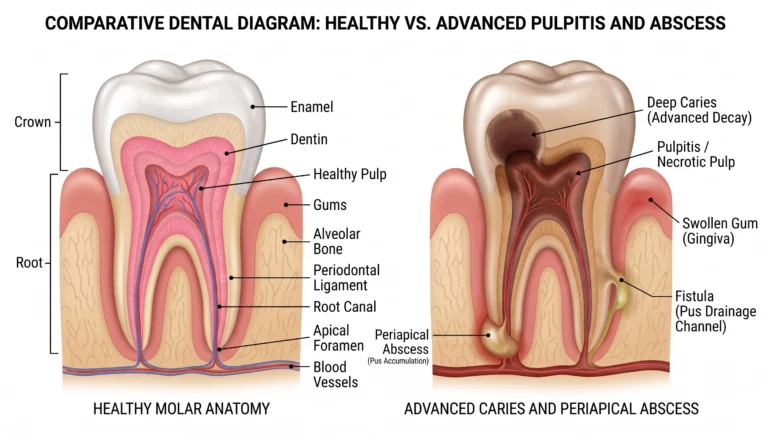
Antibiotic therapy may be prescribed to prevent bacterial infection within the oral cavity and gum tissue. The exposed gum and presence of blood create an environment highly susceptible to bacterial colonization, potentially leading to abscess formation and wound infection.
Penicillin-class antibiotics such as Augmentin or Hi-Biotic (500 mg) may be prescribed, taken every twelve hours for three days to prevent infectious complications.
It is recommended to use an ultra-soft-bristle toothbrush to gently clean teeth away from the wound area. This helps reduce the overall bacterial load within the mouth and prevents microbial migration toward the extraction site.
Natural Home Remedies After Tooth Extraction
Several evidence-informed home remedies can support wound healing and reduce bleeding:
1. Saltwater rinse:
After twenty-four hours have passed, gently rinse your mouth with warm saltwater to disinfect the oral cavity and reduce bleeding.
2. Cold compress:
Apply an ice-cold compress externally over the extraction site for ten to twenty minutes at a time to reduce swelling and inflammation.
3. Olive oil rinse:
Rinsing with olive oil either diluted with water or used in concentrated form, has demonstrated anti-inflammatory properties and may help prevent the spread of oral infection.
Your Commitment Is the Bridge to Safe Recovery
It is important to remember that the success of a tooth extraction procedure does not end when you leave the dental chair. Recovery depends fundamentally on your awareness and consistent adherence to home care instructions during the critical initial days.
Strictly following proper nutritional guidelines, maintaining your medication schedule, and avoiding harmful habits such as smoking or disturbing the wound are the only guarantees for accelerated healing and protection from serious complications including alveolar osteitis (dry socket) and bacterial infections.
Prioritise your oral health and do not hesitate to contact your dental specialist if any abnormal symptoms arise, to ensure the fastest possible restoration of your smile and overall well-being.
Related Dental Topics
- Does Tooth Extraction Affect Pregnant Women
- Tooth Extractionfor Children
- Smoking After Wisdom Tooth Extraction
- Care after tooth extraction
FAQs About Post-Tooth Extraction Care
When can I start eating after a tooth extraction?
What is the appropriate time to have food following the procedure?
You may consume soft, cool foods once the anesthetic has fully worn off and initial bleeding has stopped.
Is smoking permitted immediately after tooth extraction?
When can I resume smoking following the procedure?
Smoking must be completely avoided for a minimum of 72 hours to prevent bleeding and wound healing failure.
How long does pain last after tooth extraction?
When does discomfort at the extraction site typically subside?
Normal post-operative pain generally lasts one to three days and can be effectively managed with prescribed analgesics.
How can I reduce swelling after tooth extraction?
What is the most effective way to minimize cheek swelling following the procedure?
Apply cold compresses externally to the face for 20 minutes repeatedly throughout the first twenty-four hours.
Why is using a drinking straw prohibited after extraction?
Does drinking through a straw negatively affect the wound?
Straw usage creates suction pressure that may dislodge the blood clot, reopen the wound, and cause renewed bleeding.
When can I rinse with saltwater after a tooth extraction?
What is the safe time to begin oral disinfection with saline solution?
Begin gentle warm saltwater rinses after a full 24 hours have elapsed since the extraction procedure.
What should I do if bleeding continues after leaving the clinic?
How should I respond if blood flow from the wound does not stop?
Place a clean sterile gauze over the wound and apply gentle biting pressure for 45 to 60 continuous minutes.
Can I brush my teeth after tooth extraction?
How do I clean my mouth with a toothbrush without disturbing the wound?
You may brush gently the following day, taking care to completely avoid any direct contact with the wound area.
When can I exercise after a tooth extraction?
Is vigorous physical activity prohibited following the procedure?
Complete rest is required for the first 24 hours; light physical activity may be gradually resumed after two days.
Why is aspirin discouraged as a pain reliever after extraction?
Can I take aspirin to relieve post-extraction dental pain?
Aspirin is contraindicated as it increases blood thinning, potentially prolonging bleeding and delaying gum tissue healing.
Sources:
https://www.mayoclinic.org/tests-procedures/wisdom-tooth-extraction/about/pac-20395268