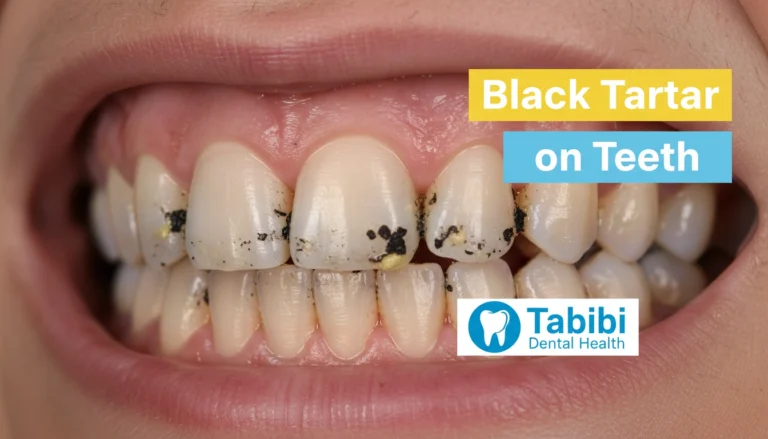
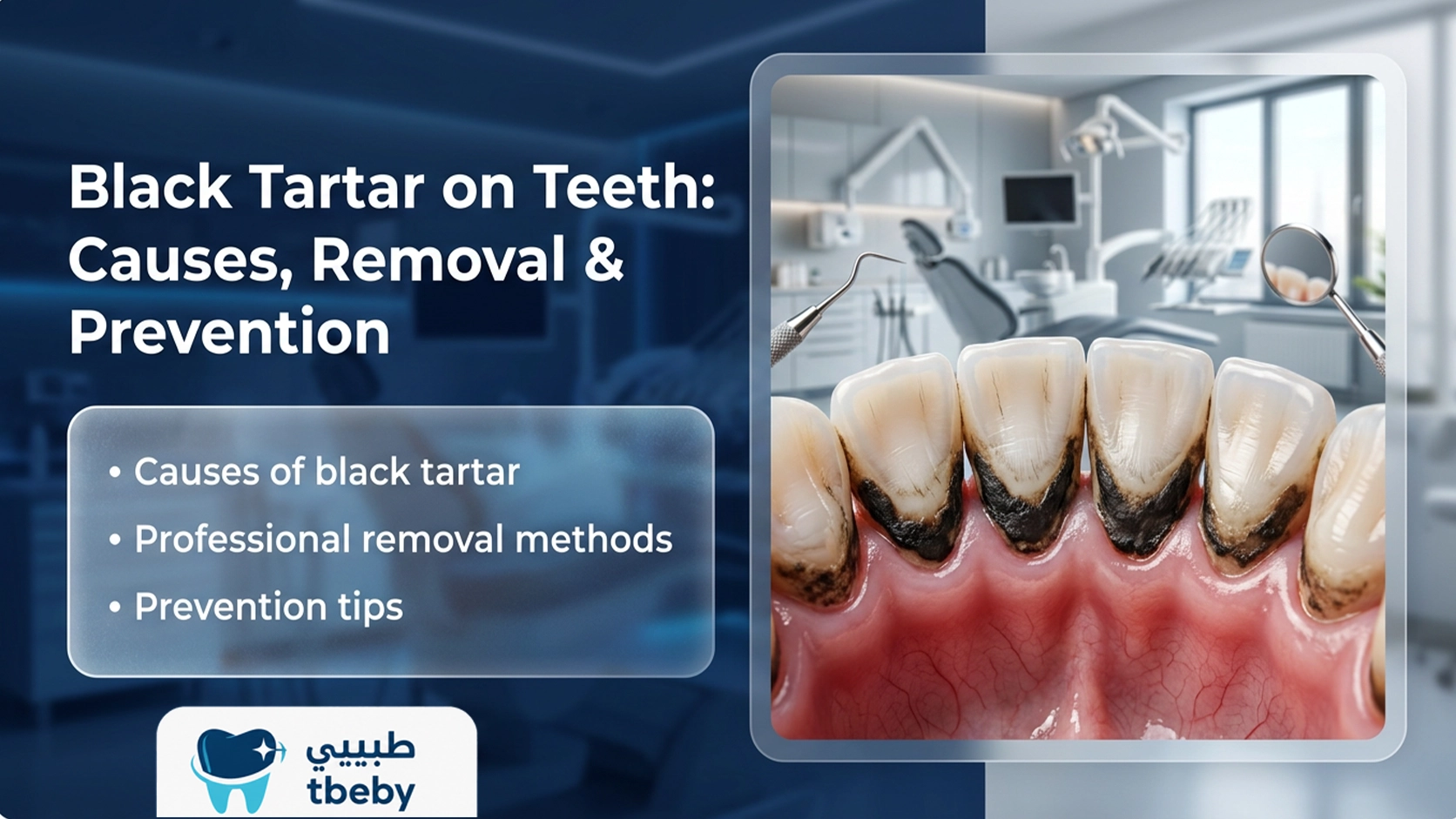

Black tartar on teeth represents one of the most stubborn and damaging forms of dental calculus, developing when soft plaque hardens into a dense, dark layer that firmly adheres to the tooth surface.
Many people wonder how black tartar forms, whether it can be removed at home, and what steps can genuinely prevent it.
This comprehensive guide addresses all of these questions with clinically grounded information.
What Is Black Tartar on Teeth?
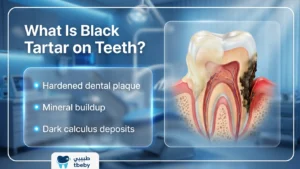
Black tartar on teeth is a hardened plaque layer that accumulates progressively on the tooth surface. It forms from a combination of saliva, oral bacteria, and the acidic byproducts these bacteria produce as they break down food debris trapped between and around the teeth.
In its earliest stage, the deposit exists as soft plaque, a biofilm that can still be removed with proper brushing and flossing. When left undisturbed, this plaque mineralizes and hardens into tartar. Over time, particularly in the presence of contributing factors such as smoking or poor oral hygiene, the tartar darkens and expands in surface area, ultimately becoming black tartar, the most advanced and difficult-to-remove form.
Symptoms of Black Tartar Accumulation
When black tartar develops on the teeth, a range of clinical signs typically becomes apparent. Recognizing these symptoms early is essential to preventing irreversible damage:
- Persistent bad breath (halitosis)
- Red, inflamed, or swollen gums
- Tooth mobility or loosening
- Visible gaps and spaces forming between teeth
- Gums that bleed easily, even with gentle contact
- Dark or black deposits are visibly accumulating on the tooth surface
- Hard calcified deposits lodged between teeth
To reduce the buildup of black tartar and hard deposits between teeth, the use of an electric toothbrush with sonic cleaning technology is strongly recommended, as it delivers a deep-cleaning action that mechanical brushing cannot replicate.
How Is Black Tartar on Teeth Removed?
Black tartar cannot be removed at home; it requires professional dental scaling using ultrasonic and hand instruments. Dentists recommend a cleaning appointment every six months to prevent mild tartar from progressing to the harder, darker stage. Between visits, brushing at least twice daily is the single most effective way to disrupt plaque before it mineralises.
Prevention Strategies for Black Tartar on Teeth
Dental professionals emphasise prevention above all else. The core evidence-based practices are:
Maintain Consistent Oral Hygiene
Brush at least twice daily to remove food debris and break up the bacterial biofilm that leads to tartar.
Use an Electric Toothbrush
Electric toothbrushes remove plaque more effectively than manual brushes, particularly along the gumline, helping clear early-stage deposits before they harden.
Choose a Fluoride-Containing Toothpaste
Fluoride strengthens enamel and limits bacterial activity, reducing the conditions that allow tartar to form. For an advanced alternative,
You can use Hydroxyapatite Toothpaste, a fluoride-free formula that rebuilds enamel at the mineral level and has been shown to reduce plaque adhesion just as effectively.
Incorporate Dental Floss Daily
Flossing clears plaque and food particles from between teeth that a toothbrush cannot reach before they can calcify.
Use an Antimicrobial Mouth Rinse
An antibacterial rinse reduces the overall bacterial load in the mouth, providing a supplementary line of defence against tartar formation. As a natural complement,
You can use Coconut Oil Teeth Whitening, an oil-pulling method that draws out bacteria and toxins from the oral cavity, helping to keep the environment clean between brushing sessions.
Follow a Low-Sugar Diet
Sugary foods and drinks accelerate plaque formation. Cutting refined carbohydrates and sweet beverages directly lowers tartar risk.
Quit Smoking
Tobacco compounds hasten the darkening and hardening of tartar deposits; cessation is one of the most impactful steps for long-term dental health.
Health Risks and Complications of Black Tartar on Teeth
Black tartar on teeth carries a range of documented health consequences that extend well beyond cosmetic concerns. Understanding these risks underscores the importance of timely professional treatment.
Chronic Bad Breath (Halitosis)
The bacteria embedded within tartar deposits continuously produce acids and sulphur-containing gases as metabolic byproducts. This bacterial activity is the primary biological cause of chronic bad breath, a condition that can significantly affect quality of life and social confidence.
Tooth Decay and Enamel Erosion
Tartar-harbouring bacteria metabolize dietary sugars and starches, releasing acidic compounds that progressively demineralize tooth enamel. This process weakens the structural integrity of affected teeth and eventually leads to dental caries cavities that, if untreated, can progress to severe infection and tooth loss. To help restore enamel brightness while fighting bacterial buildup,
You can use Whitening Toothpaste formulated to gently lift surface stains without compromising enamel integrity.
Gingivitis and Periodontal Disease
Beyond tooth decay, black tartar is a direct causative factor in gingival inflammation. When the sticky, bacteria-laden tartar layer adheres to the tooth surface at or below the gumline and is not removed promptly, it triggers an inflammatory response in the surrounding gum tissue. This condition, known as gingivitis, presents with swelling, redness, and bleeding, and can progress to more serious periodontal disease if left untreated.
Periodontal disease is classified into two broad categories:
- Inflammatory conditions directly caused by tartar accumulation
- Inflammatory conditions occurring independently of tartar
Complications of Advanced Periodontal Disease
Advanced periodontal disease, a potential consequence of untreated black tartar, can extend well beyond the gums, affecting the supporting bone structures of the jaw. Patients who delay treatment risk the following serious complications:
| Complication | Description |
| Periodontal pockets | Deep gingival pockets from severe tissue inflammation, causing pain and increased bacterial colonisation |
| Progressive enamel erosion | Long-term weakening of tooth structure, increasing susceptibility to fracture and loss. |
| Damage to the periodontal ligament | Structural compromise of the fibrous connective tissue anchoring teeth to the alveolar bone |
| Gingival recession | Retraction of gum tissue away from the tooth, exposing the root surface |
| Alveolar bone damage | Destruction of the bony support surrounding the teeth and jaw |
| Tooth mobility and tooth loss | Advanced bone loss leading to loose or missing teeth |
| Acute necrotizing ulcerative gingivitis (trench mouth) | A severe, rapidly progressing form of gingival infection |
Additional Health Risks Associated with Black Tartar
Beyond direct oral complications, black tartar has been associated with systemic health consequences, including:
- Increased dental hypersensitivity
- Severe and persistent dental pain
- Difficulty chewing and eating due to oral dysfunction
- Potential exacerbation of pre-existing cardiovascular or pulmonary conditions
- An elevated risk of preterm birth in pregnant individuals
Reclaim Your Oral Health: The Definitive Guide to Eliminating Black Tartar
Black tartar on teeth represents an advanced and particularly resistant stage of plaque accumulation. What begins as a manageable soft biofilm can, without intervention, evolve into a serious threat to both oral health and overall well-being.
Fortunately, prevention remains far more achievable than treatment. Committing to a rigorous daily oral hygiene routine encompassing regular brushing, consistent flossing, antimicrobial rinsing, and avoidance of tobacco and high-sugar foods creates the oral environment necessary to prevent black tartar from forming.
It is critical to remember that once black tartar has established itself, no home remedy will remove it. Professional dental scaling is the only effective intervention. Do not delay scheduling a professional cleaning appointment. Early treatment protects your teeth, preserves your gums, and averts the progression of a problem that, left untreated, becomes exponentially more difficult and costly to manage.
FAQs About Black Tartar on Teeth
What exactly is black tartar on teeth?
What causes the hard, dark layers that form on teeth?
Black tartar is hardened dental plaque formed by the interaction of oral bacteria, saliva, and food debris accumulating over time on tooth surfaces.
Can black tartar be removed at home?
Are there natural remedies that effectively eliminate black tartar from teeth?
No black tartar can be removed through home methods and requires professional dental scaling using specialized clinical instruments.
What are the symptoms of black tartar buildup?
How can I tell if I have black tartar on my teeth?
Common signs include gum bleeding and swelling, persistent bad breath, and the visible appearance of dark, hard deposits between the teeth.
How can I prevent black tartar from forming?
What steps effectively stop hard tartar deposits from developing on teeth?
Prevention involves brushing at least twice daily, using dental floss consistently, and rinsing regularly with an antibacterial mouth rinse.
Does smoking cause black tartar on teeth?
What is the connection between cigarettes and the darkening of dental tartar?
Yes, tobacco compounds significantly accelerate tartar accumulation and are a primary cause of tartar acquiring its characteristic black discoloration.
What are the risks of leaving black tartar untreated?
What happens if accumulated tartar is left without professional cleaning?
Neglecting black tartar leads to tooth decay, enamel erosion, periodontal disease, and may ultimately result in tooth mobility and loss.
How often should teeth be professionally cleaned?
What is the ideal interval for dental tartar removal appointments?
Dental professionals recommend a professional cleaning every six months to prevent plaque from hardening into black tartar.
Does an electric toothbrush help prevent black tartar?
Which is more effective for tartar prevention, a manual or an electric toothbrush?
Electric toothbrushes are significantly more effective, as their technology provides a deep clean that efficiently removes early-stage plaque before it can mineralize.
Why is fluoride important in toothpaste for preventing tartar?
How does fluoride in toothpaste help fight tartar buildup?
Fluoride strengthens tooth enamel and reduces bacterial activity in the mouth, directly limiting the conditions that allow tartar to accumulate.
Does black tartar permanently cause bad breath?
What is the source of the unpleasant Odor associated with dental tartar?
Yes, the bacteria embedded within tartar continuously release acids and gases that cause chronic bad breath, clinically referred to as halitosis.
Discover what black tartar on teeth is, why it’s dangerous, and how to prevent it. Learn expert-recommended removal methods and daily habits to protect your smile.