
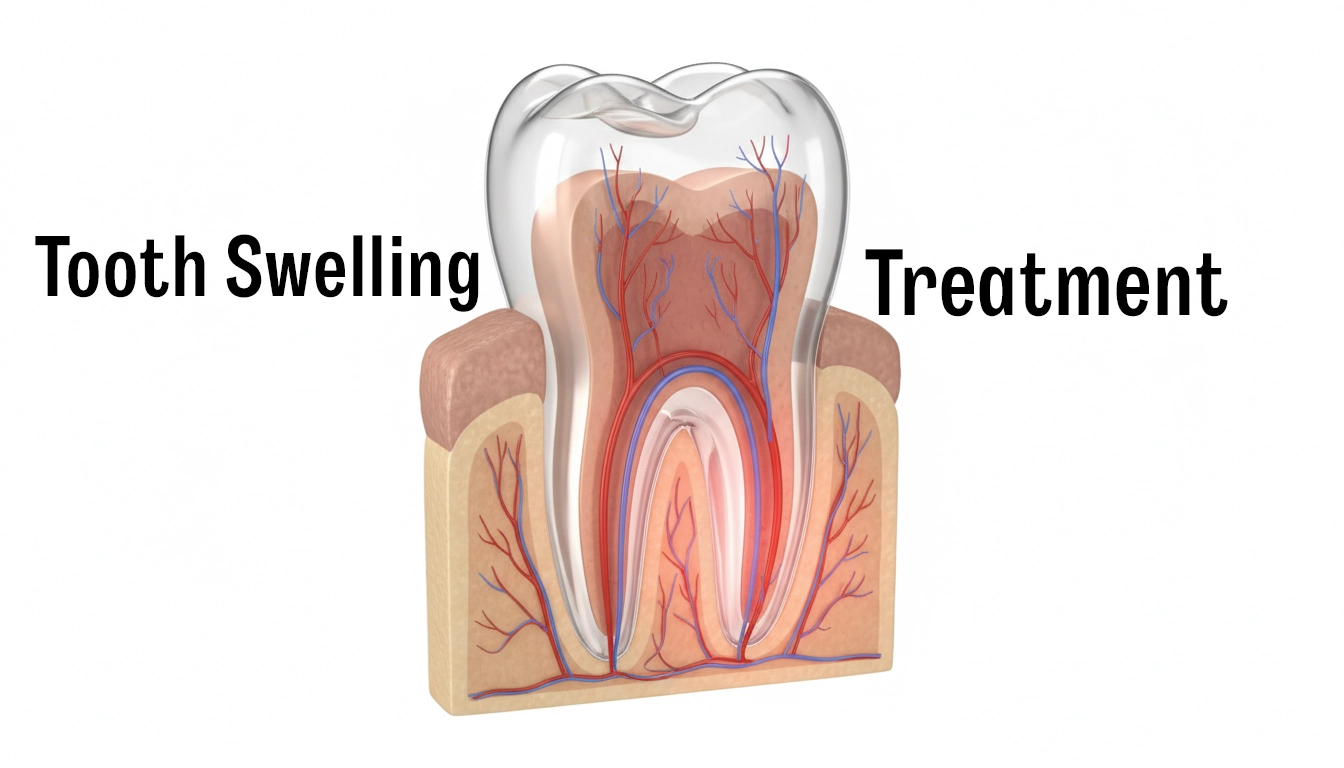



Tooth swelling treatment is a concern for a wide segment of the population in Saudi Arabia and across the Arab world, as dental swelling ranks among the most common oral health complaints affecting daily quality of life.
Whether the swelling originates from a bacterial infection, advanced tooth decay, or gum inflammation, understanding the root cause is the essential first step toward effective recovery.
In this article, we present a comprehensive guide covering all aspects of tooth swelling from its underlying causes to professional medical interventions, pharmaceutical options, and natural home remedies.
Causes of Tooth Swelling

Understanding why a tooth becomes swollen is fundamental to selecting the appropriate tooth swelling treatment. The following are the most frequently identified causes:
1. Tooth Decay
When bacterial decay progresses without intervention, it erodes the surrounding gum tissue and may cause fibrosis in the soft tissues adjacent to the affected molar, leading to localized swelling. Early decay that goes untreated tends to spread to neighboring teeth, compounding the inflammatory response.
2. Gum Disease
Periodontal conditions, whether presenting as gingivitis, gum recession, or active infection, are among the primary triggers of dental swelling. In Saudi Arabia, gum disease is frequently underdiagnosed, making routine dental check-ups particularly important for early-stage intervention.
3. Root Infection
When bacterial infection reaches the root canals and nerve tissue beneath the molar, it produces intense pain and progressive inflammation. In advanced cases, a pus-filled abscess may form beneath the tooth, causing visible swelling of the jaw and surrounding soft tissue.
4. Improper Dental Filling
A poorly placed filling or faulty dental restoration creates pressure imbalances within the tooth structure, irritating the surrounding gum tissue and triggering inflammation. Patients in Saudi Arabia who have undergone dental restoration procedures should monitor for post-treatment sensitivity or swelling.
5. Tooth Fractures and Enamel Erosion
Structural damage to a tooth, whether through fracture, external trauma, or gradual enamel erosion, exposes the nerve endings and sensitizes the surrounding tissue. Progressive sensitivity in these cases often culminates in gum swelling if left unaddressed.
6. Wisdom Teeth Eruption
One of the most widely recognized causes of tooth swelling is the emergence of wisdom teeth. As the third molar pushes through the gum line, it exerts pressure on adjacent tissue, frequently causing painful inflammation that extends to the cheek and jaw area. This condition is especially prevalent among young adults in Saudi Arabia between the ages of 17 and 25.
7. Sinusitis
Bacterial infections of the paranasal sinuses can exert direct pressure on the nerves supplying the upper molars, producing a referred sensation of dental pain and swelling. This connection between sinus health and dental discomfort is often overlooked in self-diagnosis.
You can use Teeth Whitening Powder to keep the wisdom tooth area clean, reduce bacterial buildup, and maintain fresh breath during the eruption period.
Tooth Swelling Treatment at the Dental Clinic
Seeking professional dental care remains the most reliable approach to tooth swelling treatment, regardless of the severity or suspected cause. In Saudi Arabia, dental clinics affiliated with both government and private sectors offer comprehensive diagnostic and therapeutic services for this condition.
Upon the patient’s arrival, the dentist conducts a thorough clinical examination and typically requests dental X-rays to assess the condition of the root, detect any abscess formation, and determine the appropriate course of action.
If decay is identified as the causative factor, the dentist removes the necrotic tissue, disinfects the affected area, and places a new filling. In cases involving faulty restorations or structural fractures, the filling is replaced, or the damaged portion is restored accordingly.
For patients presenting with wisdom tooth-related swelling, extraction is generally recommended as the definitive treatment for tooth swelling to prevent recurrence and eliminate future complications.
In all clinical scenarios, the dentist prescribes analgesics and anti-inflammatory medications to manage pain and reduce swelling. Antibiotic therapy is added when a bacterial infection is confirmed.
You can use a Children’s Toothbrush to build healthy brushing habits early and protect your child’s teeth from decay and future dental complications.
Treating Cheek Swelling Caused by Dental Abscess
When diagnostic imaging confirms the presence of a subgingival abscess, tooth swelling treatment requires surgical drainage of the infected site. The dentist applies local anesthesia first, topical, then injectable to ensure complete numbness of the area.
A small access point is created in the tooth to expose the root canal, through which the accumulated pus and necrotic tissue are fully drained. The canal is then thoroughly irrigated and disinfected.
A temporary filling is placed at the end of the session, accompanied by a prescribed course of antibiotics. At the subsequent visit, a permanent filling or root canal treatment is completed, and a dental crown may be applied to reinforce the tooth structure.
Antibiotic Therapy for Tooth Swelling Treatment
In cases involving bacterial infection, particularly those presenting with abscess or purulent discharge, antibiotic therapy forms an indispensable component of comprehensive tooth swelling treatment. The table below summarizes the most commonly prescribed antibiotic options for dental infections:
| Antibiotic Class | Active Ingredient(s) | Brand Names | Dosage | Duration | Administration |
| Penicillins | Amoxicillin + Clavulanic Acid | Augmentin, Hi-Pectoc, Megamox | 500 mg or 1,000 mg twice daily | 4–7 days | After meals |
| Macrolides | Azithromycin | Zithrocin | 500 mg once daily | 3–5 days | On an empty stomach |
Herbal and Natural Remedies for Tooth and Cheek Swelling
While natural remedies do not constitute a standalone tooth swelling treatment, they serve as effective adjuncts for temporary symptom relief. The following options have demonstrated practical utility:
1. Olive oil rinsing:
Possesses antimicrobial properties that reduce oral bacterial load.
2. Garlic:
Acts as a natural immune stimulant and anti-inflammatory agent.
3. Clove oil:
One of the most clinically recognized natural analgesics and antiseptics for dental pain, clove buds can also be applied directly to the affected area.
4. Oregano oil:
Topical application to the swollen area has demonstrated notable anti-inflammatory effects.
5. Warm saltwater rinse:
Widely regarded as one of the safest and most effective home measures, it disinfects the oral cavity, reduces bacterial concentration, and draws excess fluid from swollen tissue.
6. Frankincense resin (Boswellia):
When applied as a paste over an abscessed tooth, it may assist in drawing pus toward the surface and facilitating natural drainage.
All of the above remedies should be used in conjunction with professional dental consultation, not as replacements for it.
Key Preventive Tips to Avoid Tooth Swelling
Preventing the need for tooth swelling treatment begins with consistent oral hygiene practices. The following recommendations apply to all age groups and are particularly relevant given the dietary habits common in Saudi Arabia, where high sugar consumption is a known risk factor:
- Brush teeth twice daily using fluoride toothpaste, and replace the toothbrush every two to three months.
- Avoid smoking, alcohol, excessive sugar intake, and refined carbohydrates, all of which promote bacterial proliferation and compromise gum integrity.
- Schedule a professional dental examination every six months to detect early signs of decay, gum disease, or structural damage before they escalate.
Toward Sustainable Oral Health Awareness Is the First Step
Tooth swelling is not a trivial or transient inconvenience. It is the body’s alarm signal indicating an underlying pathology that demands attention, whether that is a bacterial infection, deep-seated decay, or an erupting wisdom tooth. Across Saudi Arabia and the broader Gulf region, dental health awareness has grown significantly, yet many individuals still delay professional consultation in favor of self-medication.
Accurate diagnosis, timely specialist consultation, and consistent oral hygiene form the three pillars of effective tooth swelling treatment. Natural remedies and analgesics offer temporary comfort, but they cannot replace professional care. Protecting your smile is a long-term commitment, one that begins with awareness and is sustained through action.
Related Dental Topics
FAQs About Tooth Swelling Treatment
What are the causes of sudden tooth swelling?
Why does a tooth and gum swell abruptly without warning?
Sudden swelling is most commonly caused by a bacterial infection, a dental abscess resulting from deep decay, or acute gum inflammation.
Does antibiotic therapy permanently resolve tooth swelling?
Is taking an antibiotic sufficient to eliminate dental swelling?
Antibiotics control the infection only; a dentist must treat the underlying cause to prevent recurrence.
How can I reduce tooth swelling at home?
What natural methods can decrease cheek and gum inflammation?
Rinsing with warm salted water or applying clove oil directly to the affected area provides temporary antiseptic and analgesic relief.
Does wisdom tooth eruption always cause swelling?
Why does the cheek swell when a wisdom tooth emerges?
In most cases, yes, the tooth exerts pressure on the gum during eruption, and the area is difficult to clean, allowing bacteria to accumulate.
When does tooth swelling become a medical emergency?
When should I seek immediate dental care for a swollen tooth?
Seek emergency care if swelling is accompanied by difficulty breathing or swallowing, extension toward the eye or neck, or high fever.
Can sinus problems cause tooth swelling?
Is there a connection between sinusitis and dental pain or swelling?
Yes, sinusitis compresses the nerves of the upper molars, producing pain and a sensation of swelling in that region.
How is a dental abscess beneath a filling treated?
What should be done if pus forms under an old dental filling?
The dentist removes the old filling, cleans and drains the root canals, and places a new sterile restoration.
Is saltwater rinsing effective against tooth inflammation?
What are the benefits of warm saltwater rinses for swollen teeth?
Salt acts as a natural antiseptic that draws fluid from swollen tissue and reduces bacterial presence in the mouth.
What is the most effective antibiotic for dental infections?
Which medications are most effective against molar bacteria?
Amoxicillin-based formulations (such as Augmentin) are the most widely prescribed and clinically effective, and must be taken under medical supervision.
How can I prevent recurring tooth swelling?
What are the best protective measures against dental infections and damage?
Brush twice daily, use dental floss regularly, and attend a professional dental check-up every six months.
Sources:
https://www.mayoclinic.org/diseases-conditions/tooth-abscess/diagnosis-treatment/drc-20350907





Pingback: علاج آلام الأسنان في المنزل: نصائح فعالة للتخفيف من الألم