
Dental braces are among the most sought-after orthodontic solutions for individuals struggling with misaligned, crowded, or widely spaced teeth. Beyond aesthetics, this procedure restores oral function and rebuilds self-confidence, making it a long-term investment rather than a cosmetic luxury.
This guide covers everything you need to know about dental braces installation: prerequisites, step-by-step procedure, treatment duration, advantages, drawbacks, and current pricing in Egypt.
Prerequisites for Dental Braces Installation
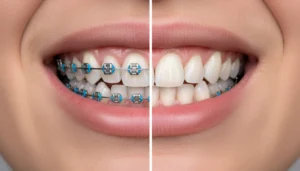
Before undergoing dental braces installation, a set of clinical conditions must be evaluated and resolved to ensure oral health integrity and prevent complications such as enamel erosion or structural fractures.
1. Gum health
must be confirmed before treatment. Any signs of gingivitis, periodontal abscess, or gum recession require complete resolution before orthodontic work begins.
2. Tooth decay
must be fully treated. Existing cavities introduce bacterial risk that worsens under wire tension; all damaged tissue must be restored before braces are fitted.
3. Jawbone density
is a structural requirement. The bone must be strong enough to withstand the sustained pressure exerted by orthodontic wires throughout the treatment period.
4. Systemic health conditions
such as uncontrolled diabetes, must be assessed, as they compromise gum integrity and accelerate bone resorption around the jaw.
5. Informed consent
Patients must understand potential side effects, proper maintenance protocols, and realistic outcome expectations before committing to treatment.
You can use Resin Temporary Tooth Repair Beads to provide temporary support and fill structural gaps while your jaw is being evaluated for braces readiness.
Pre-Installation Preparation
1. Diagnosis
The orthodontist conducts a comprehensive clinical evaluation to determine whether braces are necessary and which appliance type, fixed or removable, best suits the patient’s condition. Full medical and dental history is reviewed at this stage.
2. Radiographic Examination
X-rays and CT scans of both the upper and lower jaw are taken to produce a detailed picture of tooth positioning, root depth, and structural anomalies that may not be visible during a surface examination.
3. Tooth Extraction (When Required)
In cases of severe crowding, the orthodontist may extract specific teeth to create the space required for proper alignment. In less severe cases, selective enamel reduction, removing as little as 0.25mm from tooth surfaces, may suffice to allow wire placement without extraction.
You can use Interdental Brushes to keep the spaces between teeth clean and clear before your radiographic scans, ensuring accurate imaging results.
Step-by-Step Dental Braces Installation Procedure
Once all preparatory steps are completed and the appliance type is confirmed, the dental braces installation process follows a structured clinical sequence designed to ensure precision, safety, and long-term effectiveness.
| Step | Stage | Description |
| 1 | Oral Sterilization | The mouth is rinsed with a clinical antiseptic solution to minimize infection risk during and after the procedure. |
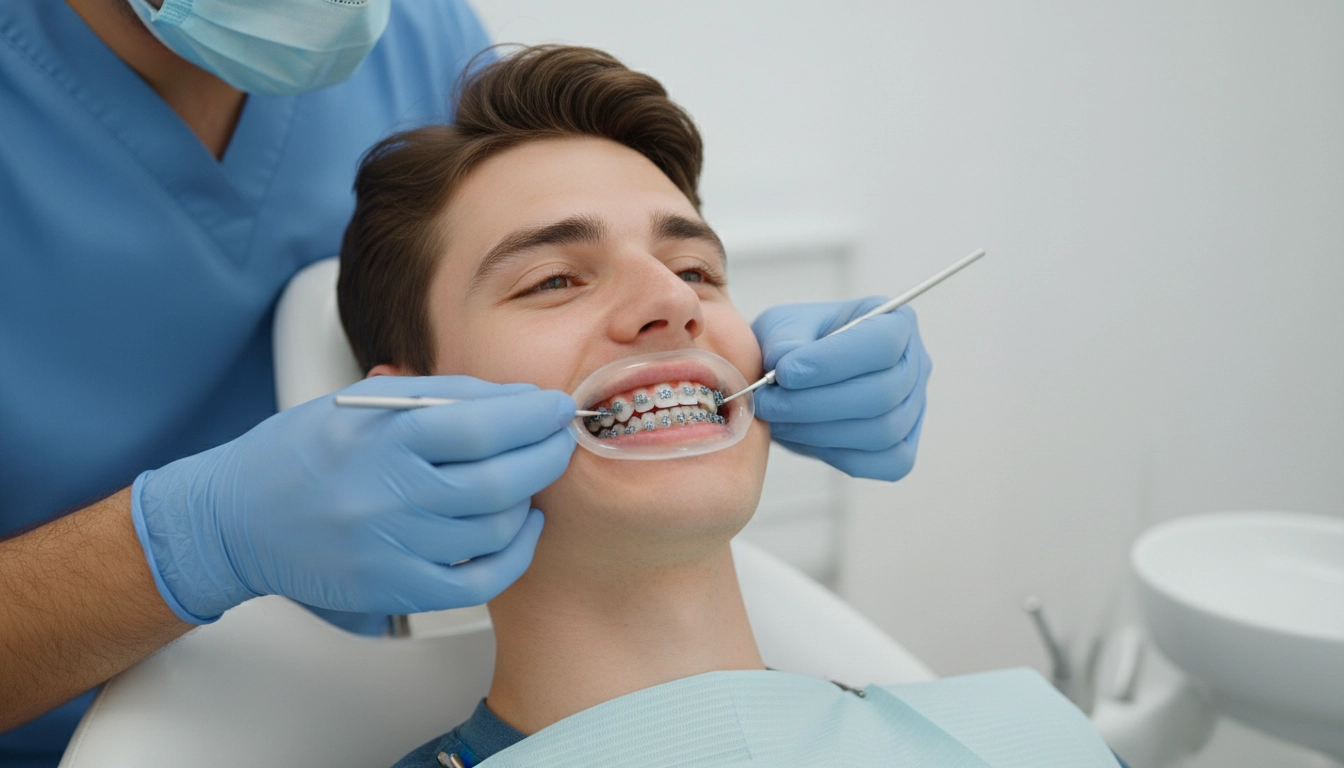
| 2 | Mouth Retractor Placement | A spacer device is inserted to keep the mouth fully open, giving the orthodontist unrestricted access to the entire dental arch. |
| 3 | Molar Band Fitting | Small metal anchoring bands are secured onto the back molars on both sides, forming the structural foundation of the brace system. |
| 4 | Dental Impression | A physical impression or digital scan of the arch is taken to study tooth positioning and plan precise bracket placement. |
| 5 | Second Sterilization & Adhesive Application | The mouth is sterilized again, then a dental-grade bonding adhesive is applied to each tooth surface in preparation for bracket attachment. |
| 6 | Bracket Bonding | Brackets are bonded to each tooth at a precisely calculated angle based on the patient’s individualized correction plan. |
| 7 | UV Curing | The bonding adhesive is hardened using an ultraviolet light device, securing each bracket firmly in its designated position. |
| 8 | Archwire Ligation & Tension Setting | Orthodontic archwires are threaded through the brackets and ligated with calibrated tension, the force that gradually repositions teeth over time. Monthly follow-up visits are scheduled to monitor progress and adjust wire tension as needed. |
How Long Does Dental Braces Installation Take?
The installation appointment itself typically takes between one and two hours, excluding diagnostic and preparatory stages.
The overall treatment duration, the time required to achieve full correction, varies significantly by case severity and patient response. For standard fixed braces, the timeline typically ranges from 18 months to three years. Some cases may resolve faster depending on the degree of misalignment and the patient’s biological response to orthodontic force.
Benefits of Dental Braces
- Enhances overall facial aesthetics, not only the smile line
- Restores self-confidence and improves social comfort
- Corrects jaw protrusion, both upper and lower
- Resolves crowding and excessive spacing between teeth
- Eliminates tooth overlapping and irregular occlusion
- Improves chewing efficiency and distributes bite force evenly
- Reduces plaque and tartar accumulation caused by misalignment
Drawbacks of Dental Braces Installation
- Minor abrasions or soft tissue irritation during initial adjustment periods
- Increased food retention around brackets if oral hygiene is neglected, raising infection risk
- Extended treatment duration before visible results is achieved
- Significant financial investment that may be prohibitive for some patients
- In rare cases, minor relapse may occur post-treatment, though significantly reduced with the use of retainers
You can use White Gauze Medical Bandage to protect and soothe areas of soft tissue irritation or minor abrasions caused by bracket friction during the initial adjustment period.
Cost of Dental Braces in Egypt
There is no fixed price for dental braces installation in Egypt, as costs vary considerably based on the clinic, the orthodontist’s experience level, appliance type, and whether diagnostic fees are bundled into the treatment plan.
Current pricing in Egypt generally ranges between EGP 12,000 and EGP 25,000, with costs potentially exceeding this range for complex cases or premium appliance systems.
Many dental clinics and cosmetic dentistry centres in Egypt offer seasonal promotions and interest-free installment plans, allowing patients to pay an initial deposit and distribute the remaining balance across several months.
Closing Note
Dental braces installation is not merely a cosmetic procedure; it is a clinically significant intervention that improves oral function, prevents long-term bone deterioration, and enhances quality of life. Success depends on selecting a qualified orthodontist, resolving all pre-existing dental conditions beforehand, and maintaining consistent follow-up throughout treatment.
The investment in time and cost is justified by permanent, functional results. Consult a certified orthodontist to assess your specific condition and determine the most appropriate treatment pathway for you.
Related Dental Topics
FAQs about Dental Braces Installation
Can I get braces if I have cavities?
What are the health requirements for starting orthodontic treatment?
All cavities and gum issues must be treated first to ensure a healthy environment for tooth movement.
Why does the dentist need to pull some teeth before braces?
Is tooth extraction a mandatory step for installing braces?
Extractions are only necessary in cases of severe crowding to create enough space for teeth to align properly.
How long does the actual installation appointment take?
How much time will I spend at the clinic to get my braces put on?
The procedure typically takes between one and two hours, depending on the complexity of the case.
How long will I need to wear my braces in total?
When can I expect to see the final results of my orthodontic treatment?
On average, treatment lasts between 1.5 and 3 years, depending on how your teeth respond to the alignment.
Can a person with diabetes get dental braces?
Are there specific health conditions that prevent me from getting braces?
Yes, as long as blood sugar levels are well-controlled to prevent gum complications during treatment.
What is the average cost of braces in Egypt currently?
How much should I expect to pay for a full orthodontic treatment?
Prices generally range from 12,000 to 25,000 EGP, varying based on the clinic and the type of braces used.
Is the process of getting braces painful?
What kind of discomfort should I expect after the wires are tightened?
You may feel mild pressure or soreness for a few days, which is easily managed and temporary.
Will my teeth shift back to their old positions after removal?
How do I ensure my teeth stay straight after the treatment ends?
Wearing a retainer as instructed by your doctor is essential to keep your teeth in their new, correct positions.
How do I maintain oral hygiene while wearing braces?
What is the best way to clean my teeth with metal brackets and wires?
Use specialized orthodontic brushes and floss after every meal to prevent plaque buildup and tooth decay.
What are the main benefits of orthodontics beyond aesthetics?
How does fixing my bite improve my overall quality of life?
Braces improve chewing efficiency, prevent jawbone wear, and make it easier to keep your teeth clean.
Sources:
https://www.nhs.uk/tests-and-treatments/braces-and-orthodontics/